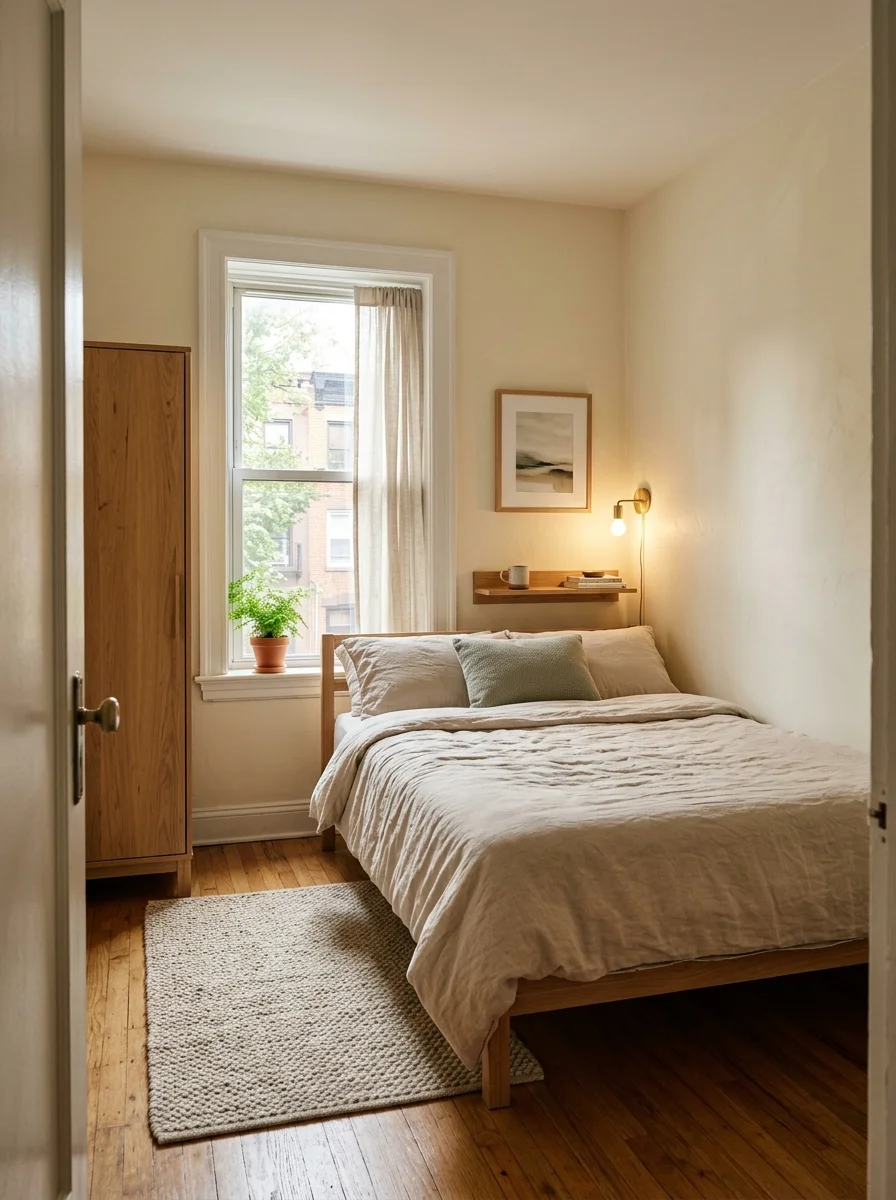
A small bedroom doesn’t need to feel cramped to be cozy.
The difference often comes down to what the room is being asked to hold.
A bed, bedside storage, clothing, lighting, and somewhere to put the things you use every day can quickly consume most of a compact bedroom. Add a desk, dresser, laundry basket, decorative pieces, and a few things that don’t really belong there, and the room can start feeling crowded almost immediately.
That doesn’t mean you need to remove everything that makes the bedroom comfortable.
Instead, the goal is to make the room’s limited space work more deliberately.
The best small bedrooms aren’t necessarily minimalist. They can have soft bedding, artwork, books, curtains, warm lighting, and plenty of personality. What makes them successful is that the larger pieces are properly scaled, storage has a purpose, and there is enough visual breathing room around the bed.
The bed will usually remain the largest object in the room. So rather than trying to disguise it, design everything else around it.
Think about where you walk when you enter. Where clothes naturally collect. What you reach for before bed. Whether both sides of the bed need equal access. Where morning light enters the room.
Once those everyday patterns are understood, a small bedroom becomes much easier to design.
Start With the Bed
Before choosing bedside tables, wardrobes, benches, or decorative furniture, establish the bed. It is the largest and most important piece in the room, so its position determines almost everything else.
In a small bedroom, the bed doesn’t always need to sit perfectly centered on the main wall.
- Sometimes pushing it slightly toward one side creates more useful floor space.
- Sometimes placing the headboard beneath a window is the most practical option.
- Sometimes a slightly smaller bed size is the change that makes the entire room function better.
The right arrangement depends on the architecture. The goal is not perfect symmetry—the goal is comfortable movement and useful everyday space.
1. Choose the Right Bed Size for the Room
A larger bed can be comfortable, but it also affects every other part of a small bedroom.
Before upgrading to a larger mattress, consider how much usable floor space will remain around it. A slightly smaller bed may allow you to keep a proper wardrobe, comfortable walking path, or useful bedside surface.
This is particularly important in apartments where the bedroom may need to accommodate both sleeping and clothing storage.
Don’t think only about the mattress dimensions. Include the bed frame thickness, headboard depth, side clearance, and the space required to make the bed comfortably each morning.
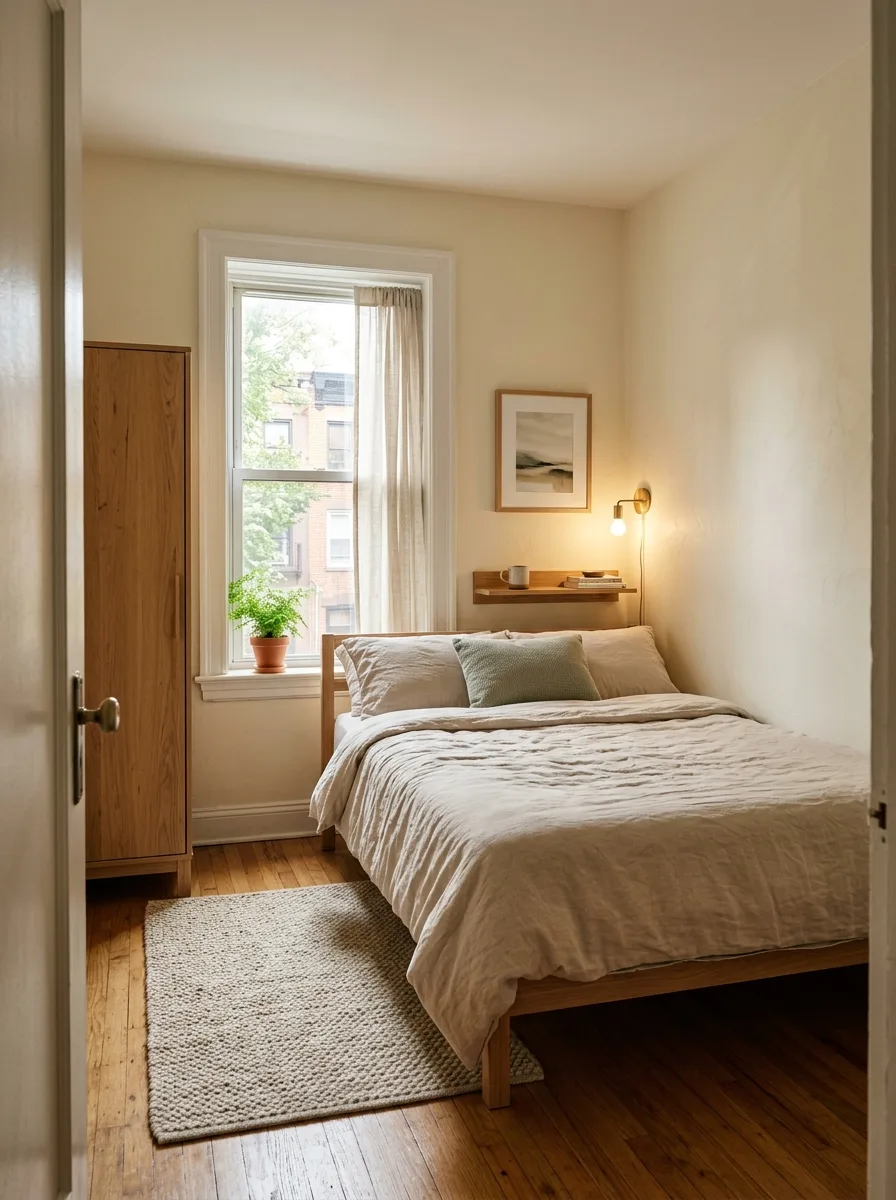
Design Principle: The largest bed that fits isn’t necessarily the best bed for the room.
2. Push the Bed Toward One Side When Necessary
Symmetry looks beautiful in photographs, but it isn’t always practical in real life.
If placing the bed centrally leaves awkward 12-inch strips of unusable floor on both sides, consider moving it closer to one wall.
This can create enough space for a full wardrobe, dresser, compact desk, or wider walking path on the open side.
A slightly asymmetrical room can still feel intentional. Use artwork, lighting, or textiles to balance the visual weight rather than forcing the furniture into rigid symmetry.
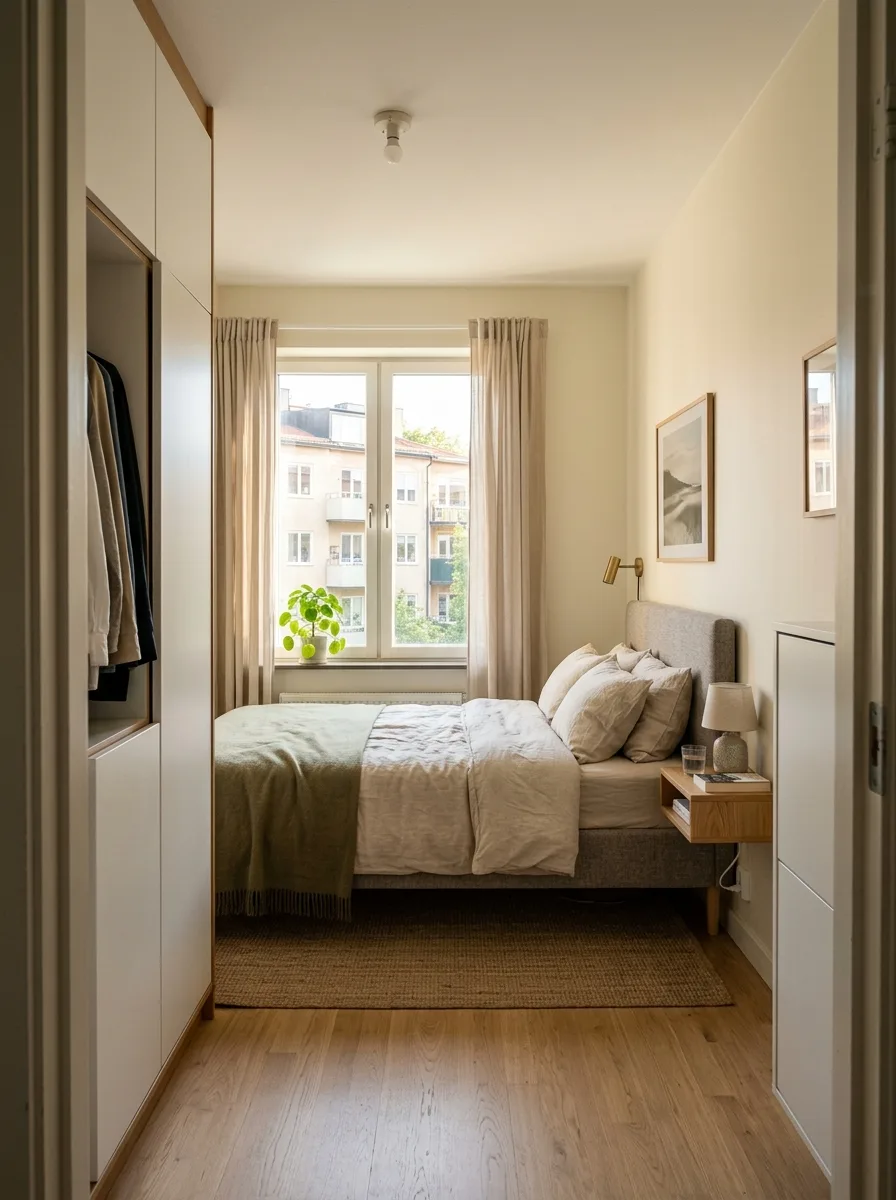
Design Tip: Leave at least 24 to 30 inches on the primary entry side for comfortable movement and bed-making.
3. Use a Slim Headboard
A thick, bulky upholstered headboard can consume 6 to 10 inches of valuable room depth.
In a small bedroom, a slim upholstered panel, simple wood headboard, or wall-mounted fabric headboard can provide the visual softness of a traditional bed without adding unnecessary bulk.
If the room is particularly narrow, consider a headboard that extends vertically rather than dramatically outward. This can also create a stronger focal point that draws the eye toward the ceiling.
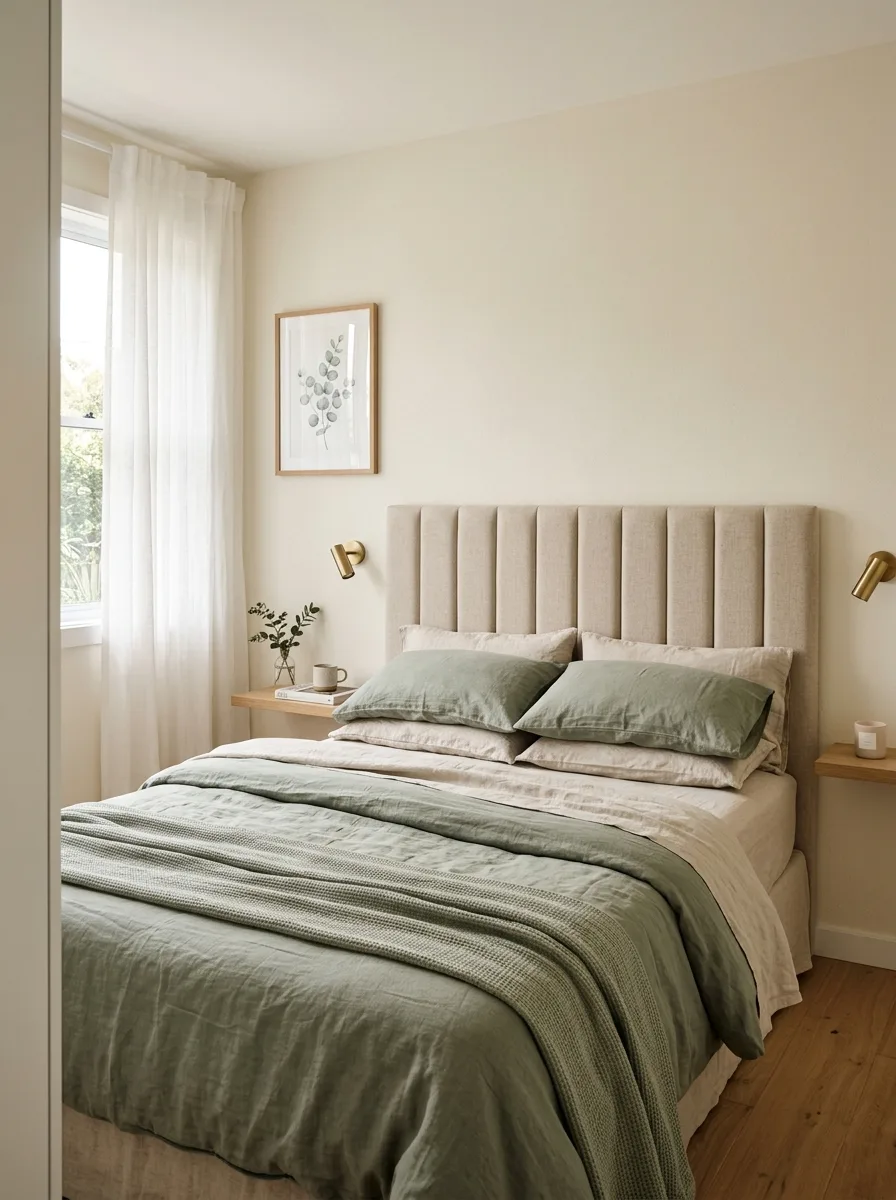
Design Tip: Wall-hung headboard cushions attach directly to the wall, saving precious floor inches.
4. Replace Bulky Bedside Tables With Narrow Alternatives
A bedside table doesn’t need to be a full drawer cabinet.
If the room is tight, try a small floating shelf, narrow pedestal table, wall-mounted nightstand, or slim drawer unit.
The essentials usually don’t require much surface area:
- A small lamp or sconce switch
- Phone or alarm clock
- A book or journal
- Glass of water
A smaller bedside surface can free several inches of valuable floor space on both sides of the bed.
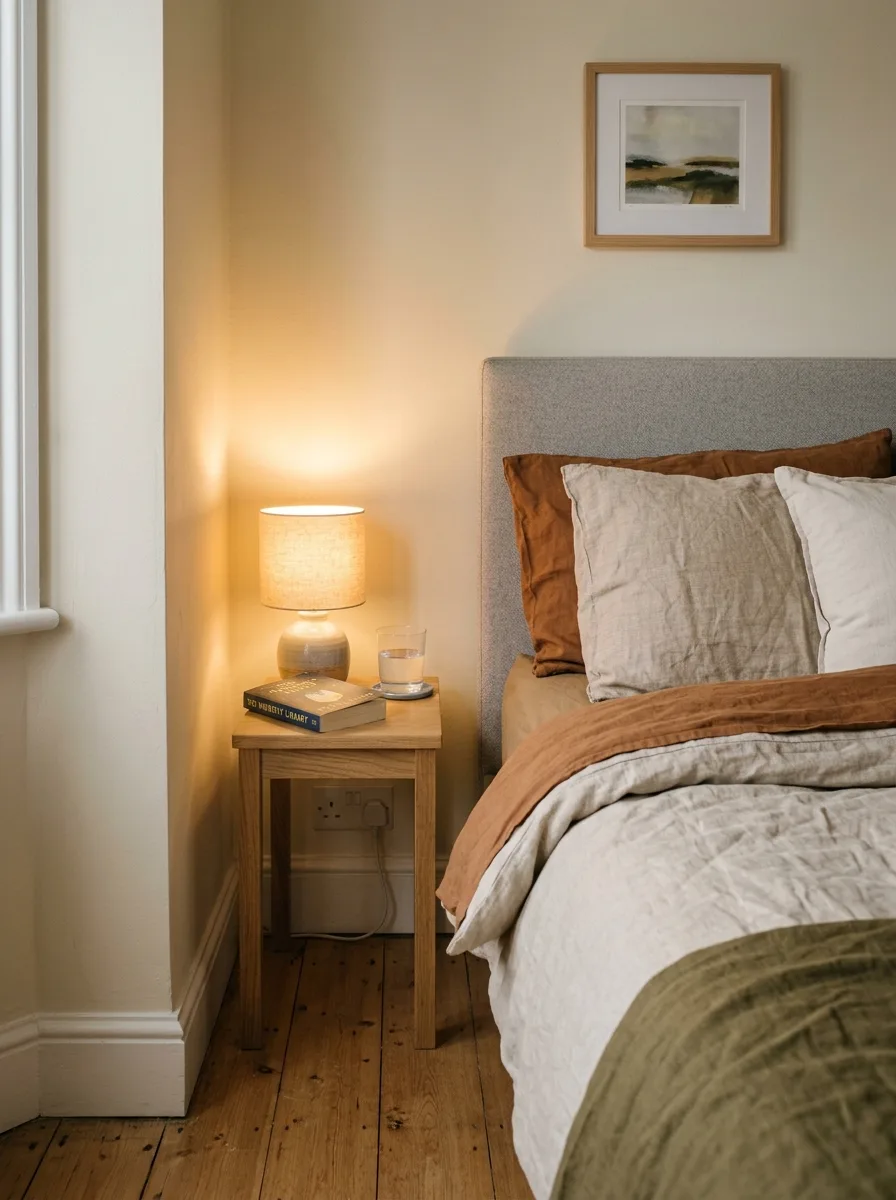
Design Tip: Round nightstands remove sharp corners along tight walking paths beside the bed.
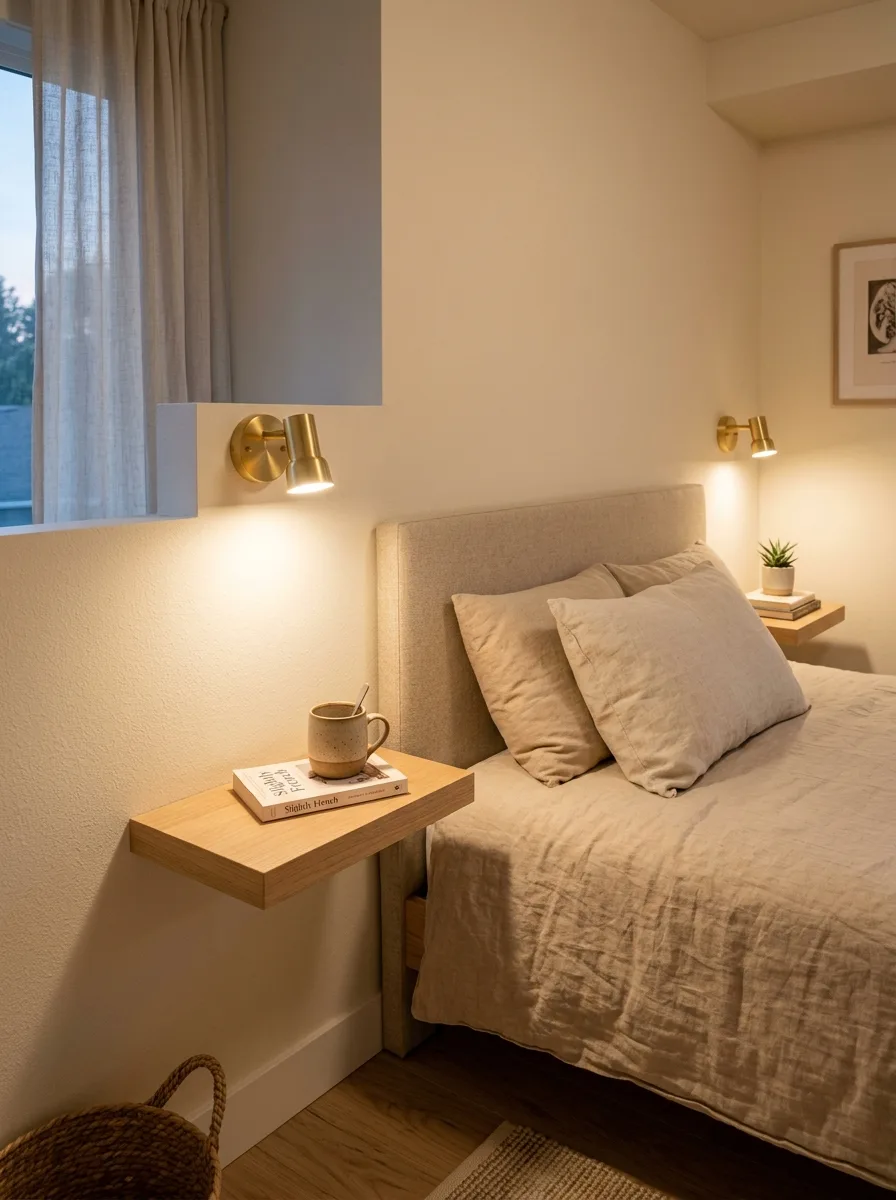
5. Use Wall-Mounted Bedside Storage
Floating bedside shelves are particularly useful in very small bedrooms.
Because they don’t reach the floor, they keep the visual area beneath them open. This makes vacuuming easier and helps the room feel significantly less crowded.
You can also install a small wall-mounted reading light above the shelf, eliminating the need for a table lamp. The result is a compact bedside setup that handles the essentials without becoming another heavy piece of furniture.
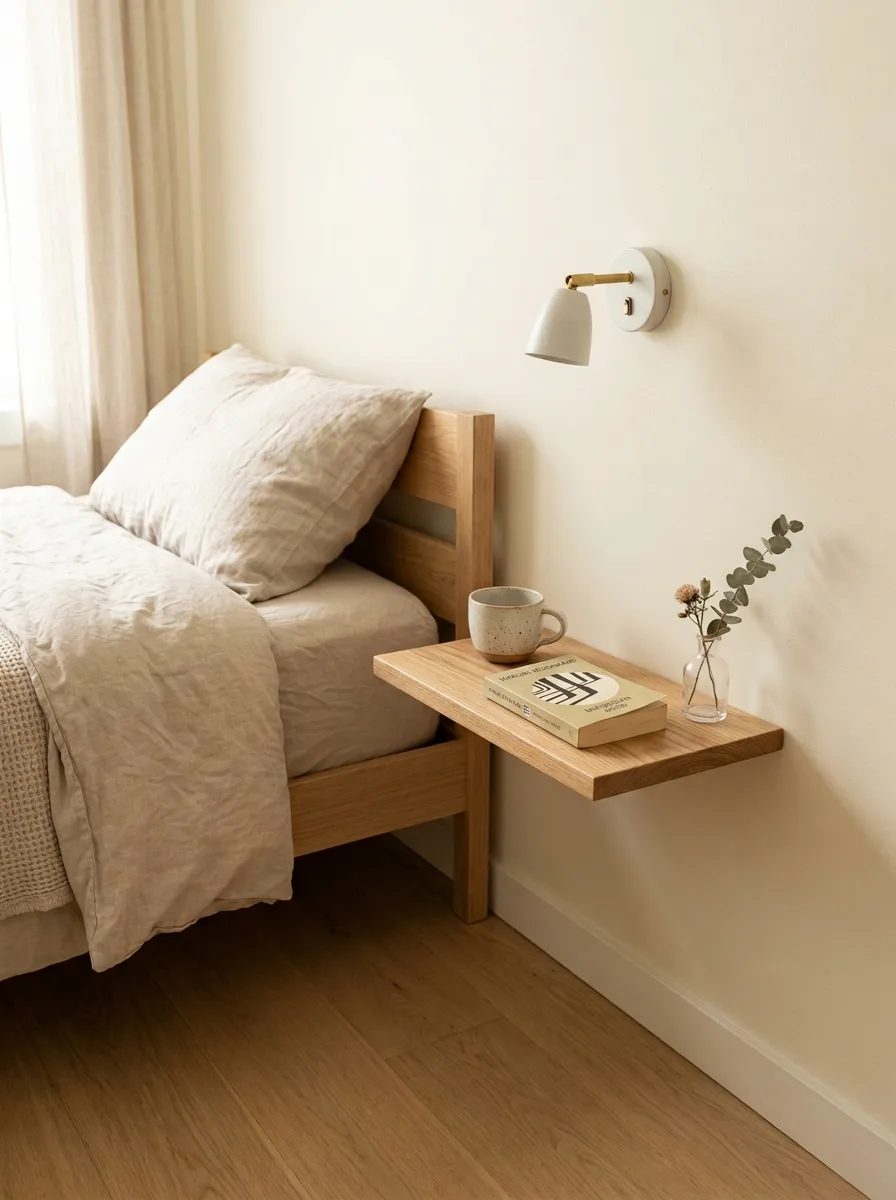
Design Tip: Choose a floating shelf with a small integrated drawer to tuck lip balm, charging cords, and glasses out of sight.
6. Make the Wardrobe Work Harder
In a small bedroom, wardrobe organization matters almost as much as wardrobe size. A poorly organized closet can force additional storage furniture into the room.
Look at the vertical space inside the wardrobe:
- Could you add a second hanging rail for shirts and trousers?
- Could modular shelves hold folded knitwear?
- Could small baskets contain belts and accessories?
- Could the inside of the door hold lightweight hooks or organizers?
Increasing the usefulness of the existing wardrobe is almost always better than adding another freestanding cabinet.
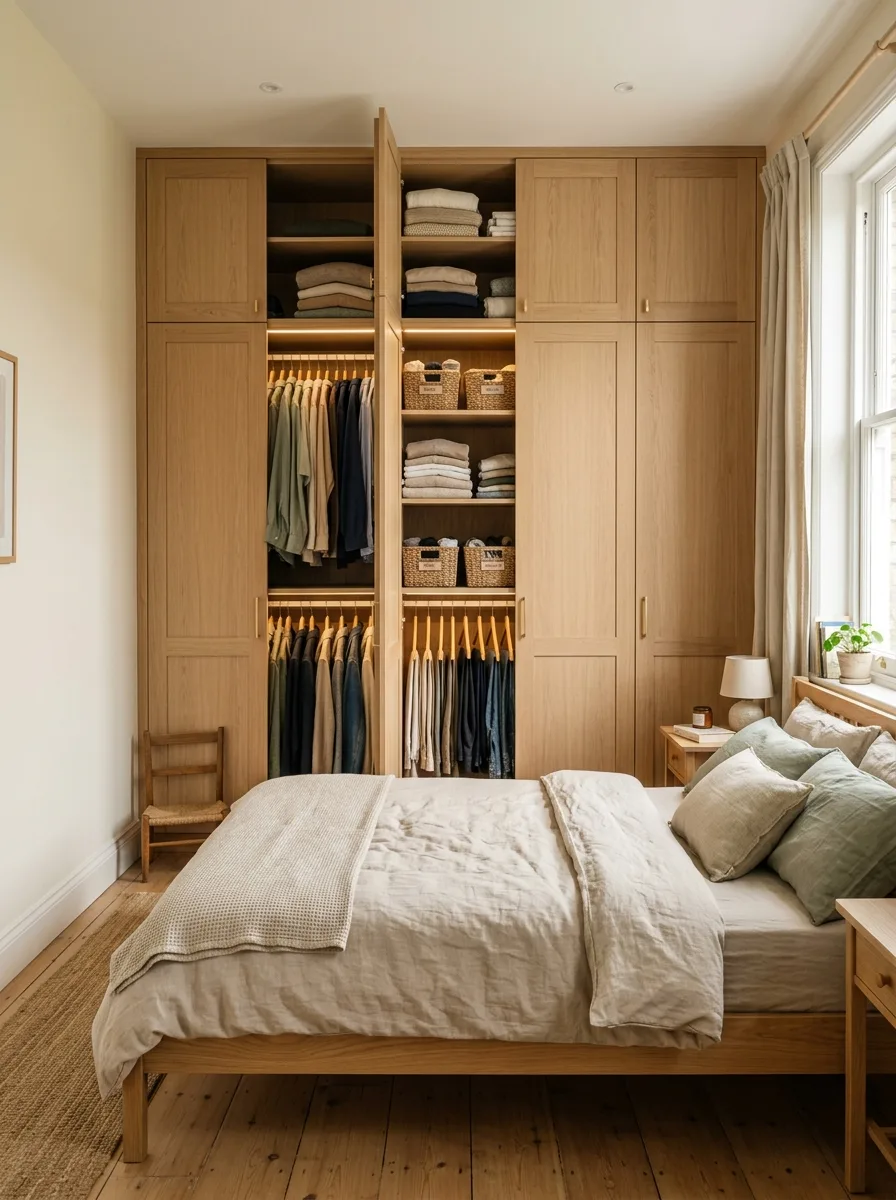
Design Tip: Double your hanging capacity by installing high and low rods for tops and folded pants.
7. Choose Sliding Doors for a Tight Bedroom
Traditional wardrobe doors need room to swing open. In a particularly narrow bedroom, that door swing can collide with the bed frame or block the main walkway.
Sliding wardrobe doors eliminate that swing entirely. They also create a cleaner, more streamlined visual line when closed.
If you are renovating or choosing new fitted storage, this is well worth considering early. For renters, freestanding wardrobes with sliding doors provide a similar advantage without construction.
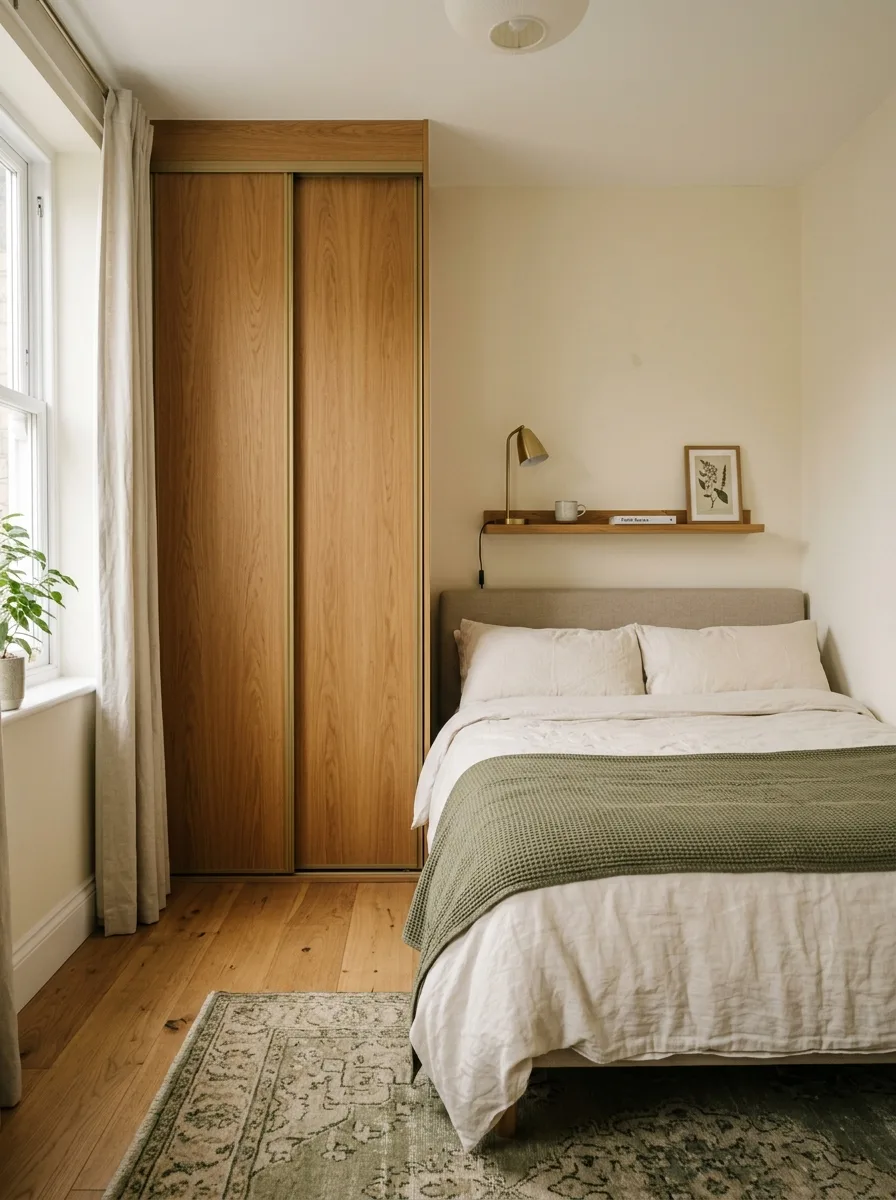
Design Tip: Mirrored sliding wardrobe doors perform double duty by eliminating the need for a separate floor mirror.
8. Use the Space Under the Bed
The area beneath the bed is prime hidden storage real estate.
It can comfortably hold seasonal clothing, spare bedding, shoes, luggage, or extra pillows that aren’t needed every day.
Use low-profile containers on wheels that are easy to slide out, and label them clearly. Avoid filling the entire under-bed cavity simply because it exists. The purpose is to keep less frequently used items out of primary storage, not to create a neglected catch-all.
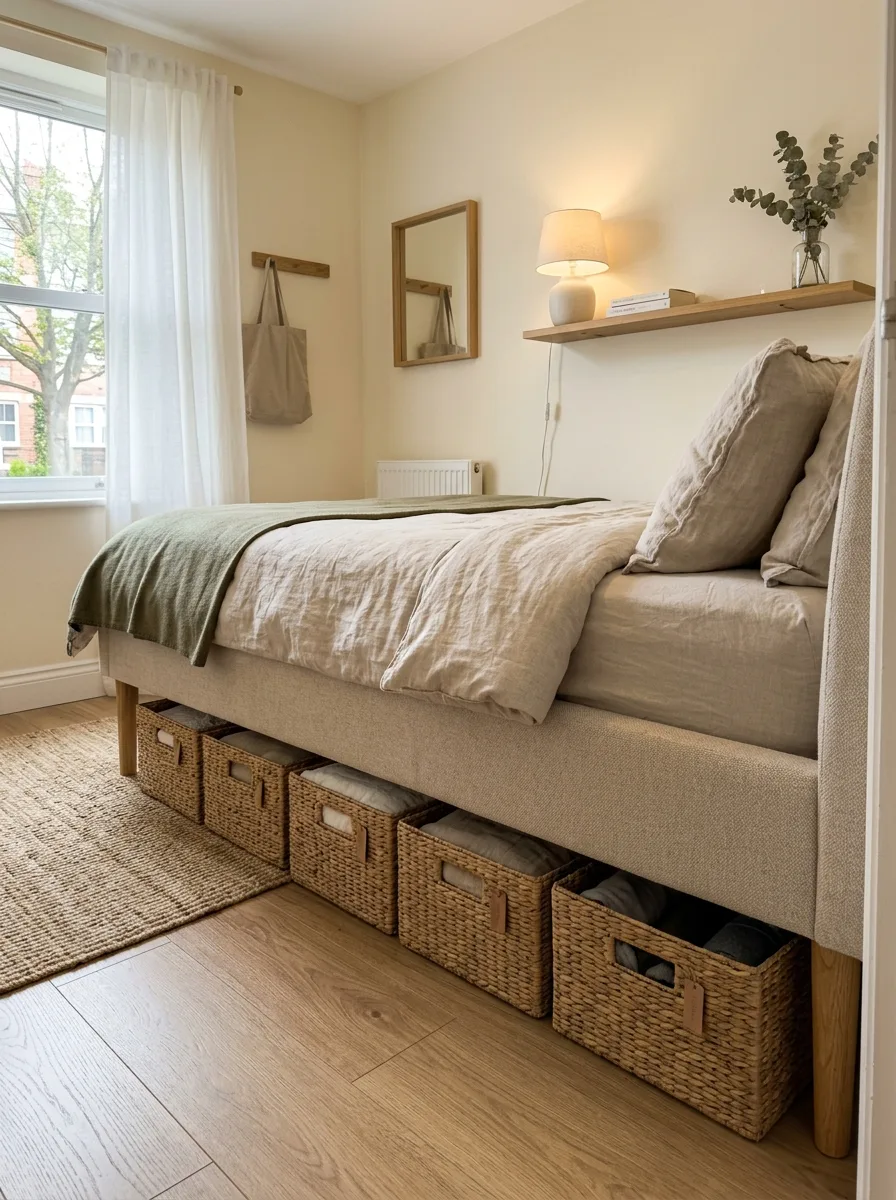
Design Tip: Use fabric storage bins with clear vinyl zip tops to protect linens from dust while remaining easy to identify.
9. Take Storage Up Instead of Out
When a bedroom is short on floor space, think vertically.
A tall wardrobe can often hold considerably more than a wide low chest while consuming half the floor area.
Tall bookcases, narrow shelving, and upper wardrobe compartments can also make use of otherwise wasted wall height. Keep everyday items within comfortable reach, and reserve higher shelves for seasonal duvets or occasional belongings.
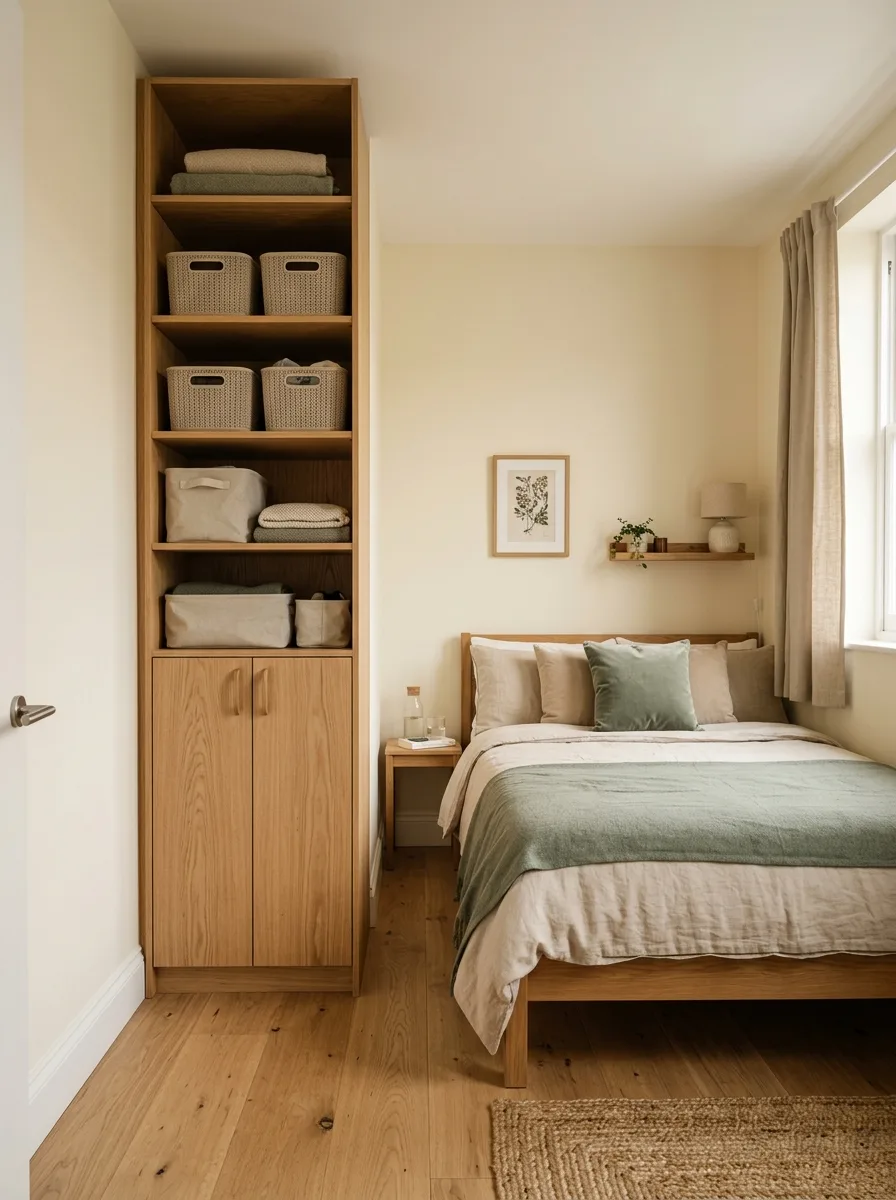
Design Tip: Extending cabinetry up to the ceiling prevents dust from accumulating on top and eliminates visual gaps.
10. Use One Piece as a Multi-Function Zone
If your bedroom needs to accommodate a workspace, vanity, or dressing area, look for a piece that can perform more than one role.
A narrow console desk can double as a morning dressing vanity. A wall-mounted drop-leaf desk can disappear visually when not in use. A small dresser can provide clothing storage while its top serves as a perfume and jewellery station.
The goal is not to make every single piece multifunctional. It’s to prevent one compact bedroom from accumulating separate furniture for every minor activity.
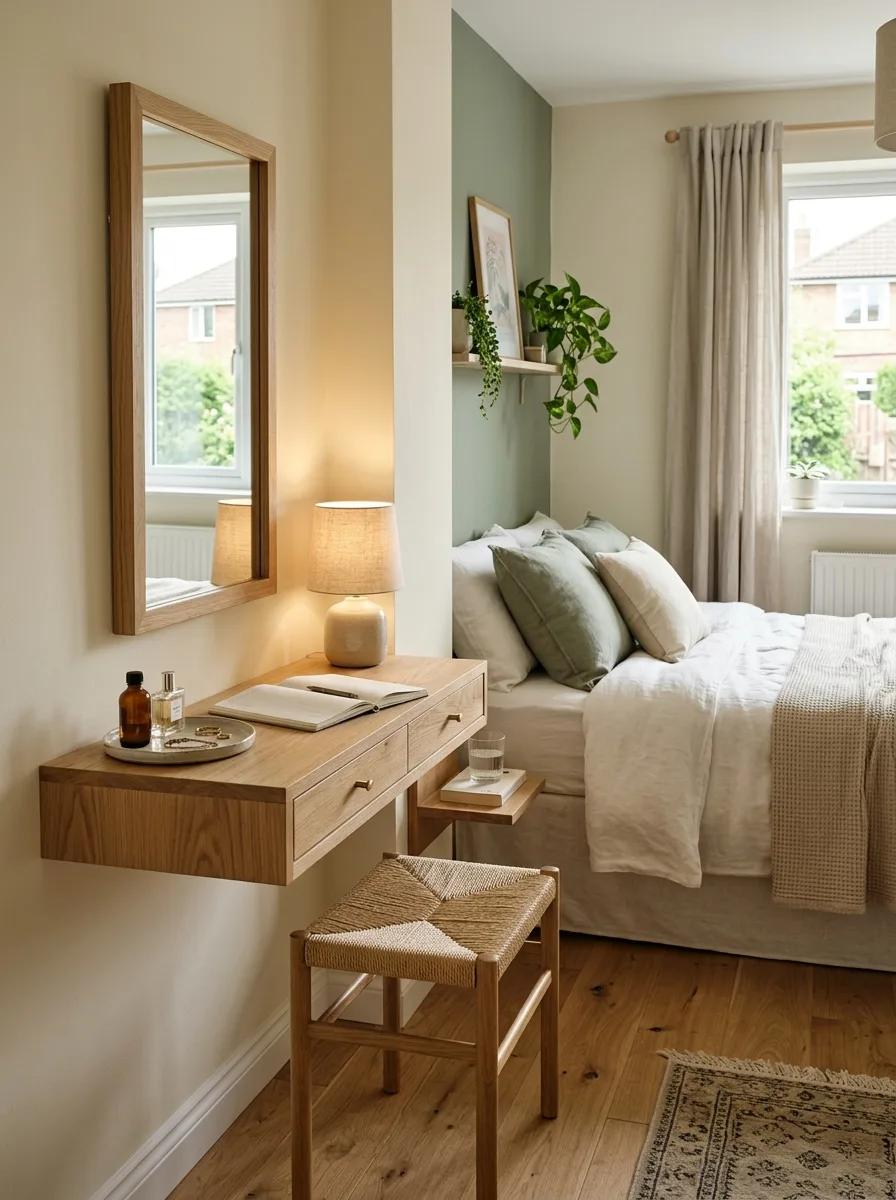
Design Tip: Pair the desk with a stool that tucks completely underneath when not in use.
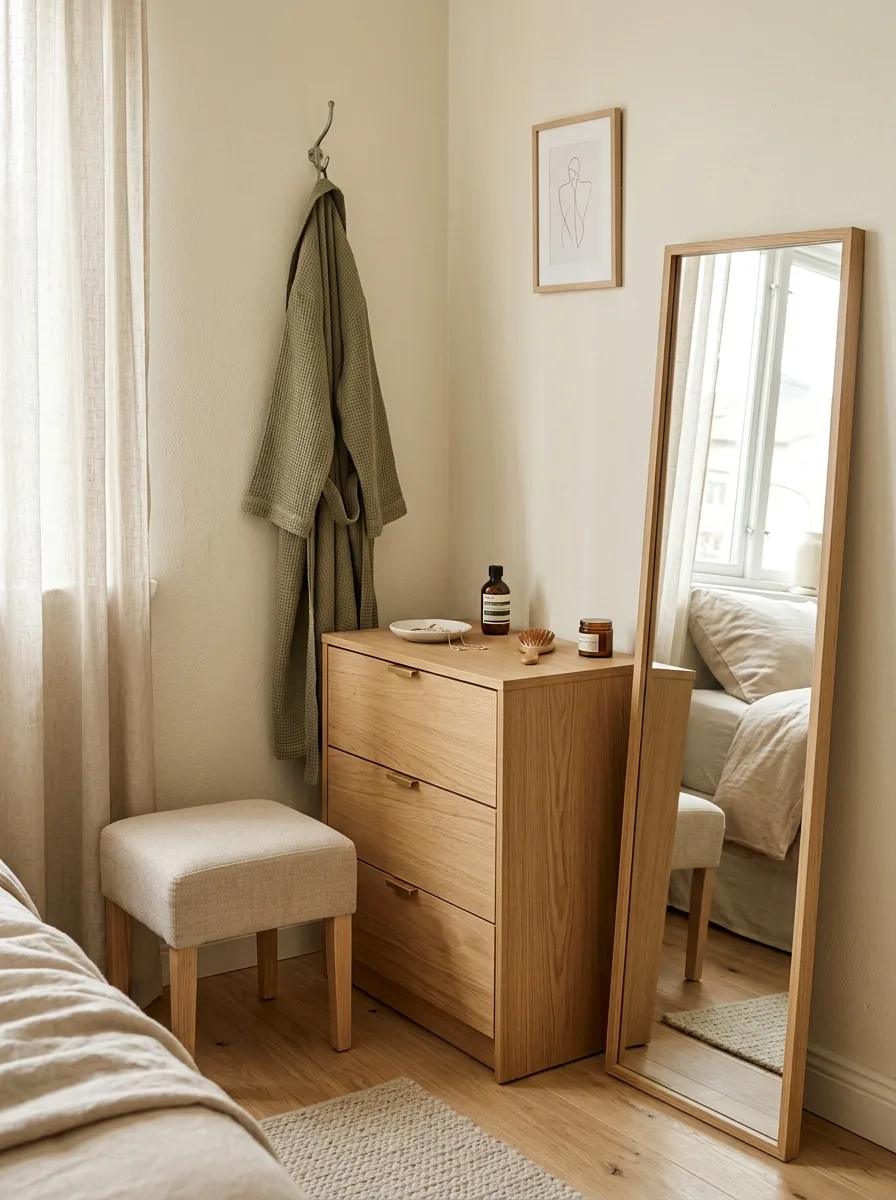
11. Create a Quiet Dressing Area
A small bedroom can still have a dedicated dressing zone.
Use a narrow full-length mirror, compact dresser or wall hooks, and one stool rather than trying to fit a bulky dressing table and armchair.
Position the mirror where it receives good natural daylight. Keep the area visually simple. The more functions you assign to a small bedroom, the more important it becomes to visually edit each zone.
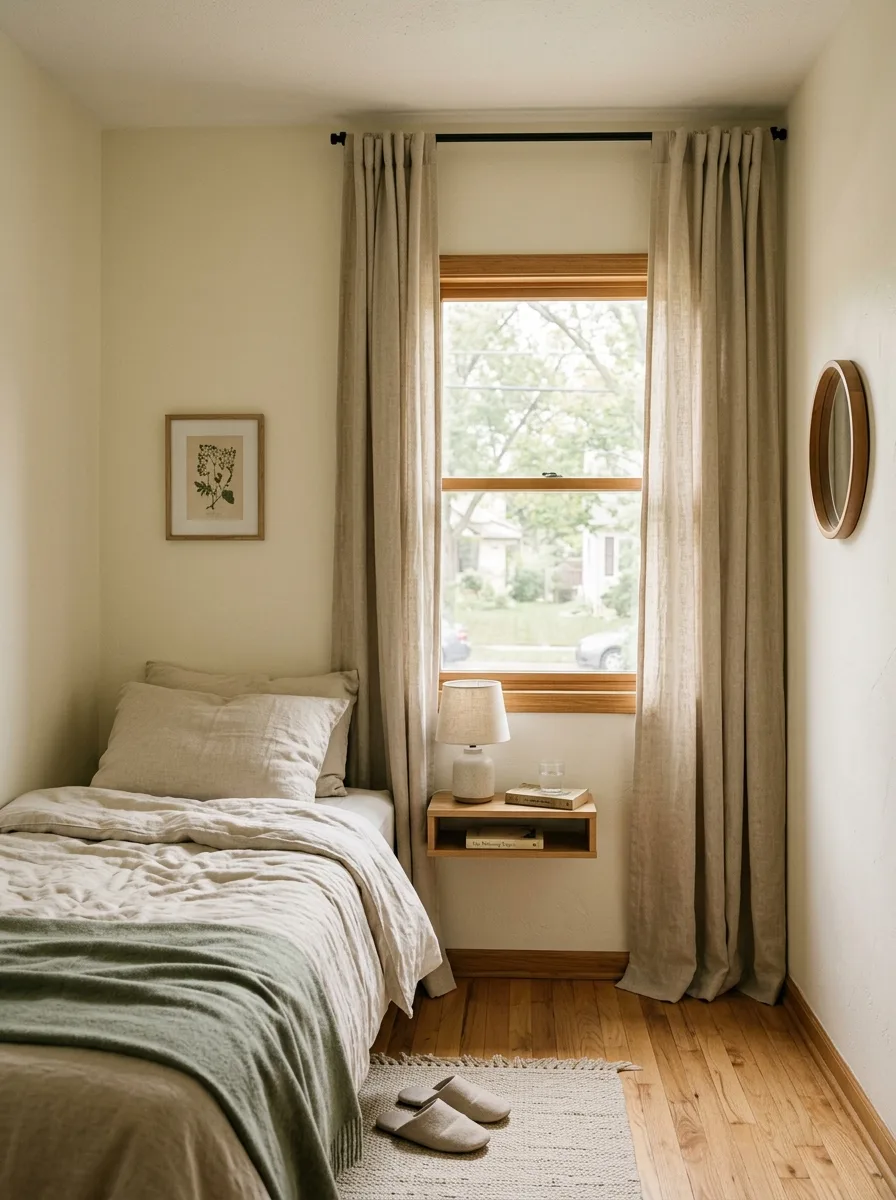
Design Tip: Keep accessories and beauty products inside drawers or lidded boxes to maintain tabletop calm.
12. Use Curtains to Add Height
Window treatments can make a compact bedroom feel significantly taller and more gracious.
Hang curtain rods close to the ceiling where the architecture allows, and let the fabric panels fall straight to the floor with a subtle kiss.
Soft linen or linen-blend curtains add rich tactile texture without visually weighing down the room. Avoid overly complicated valances or heavy swags in a small space—simple, flowing panels create a clean vertical line.
Design Tip: Extend the curtain rod 8 to 12 inches past the window frame on each side so the drawn curtains don’t block daylight.
13. Keep the Bedding Layered but Controlled
A small bedroom doesn’t need completely plain bedding to feel spacious.
You can still layer quilts, blankets, cushions, and throws for inviting comfort. The key is to keep the palette connected and harmonious.
Instead of introducing several competing patterns, rely on rich textures to create interest:
- Soft washed linen duvet cover
- Quilted cotton coverlet
- One tactile wool throw blanket
- Two or three supportive pillows in tonal hues
This gives the bed inviting softness without making the largest object in the room visually chaotic.
Design Tip: Stick to 2 standard sleeping pillows and 1 or 2 accent cushions. Too many decorative pillows clutter small bedrooms.
14. Use a Large Mirror Strategically
A mirror can add optical depth and reflect natural daylight, but placement is everything.
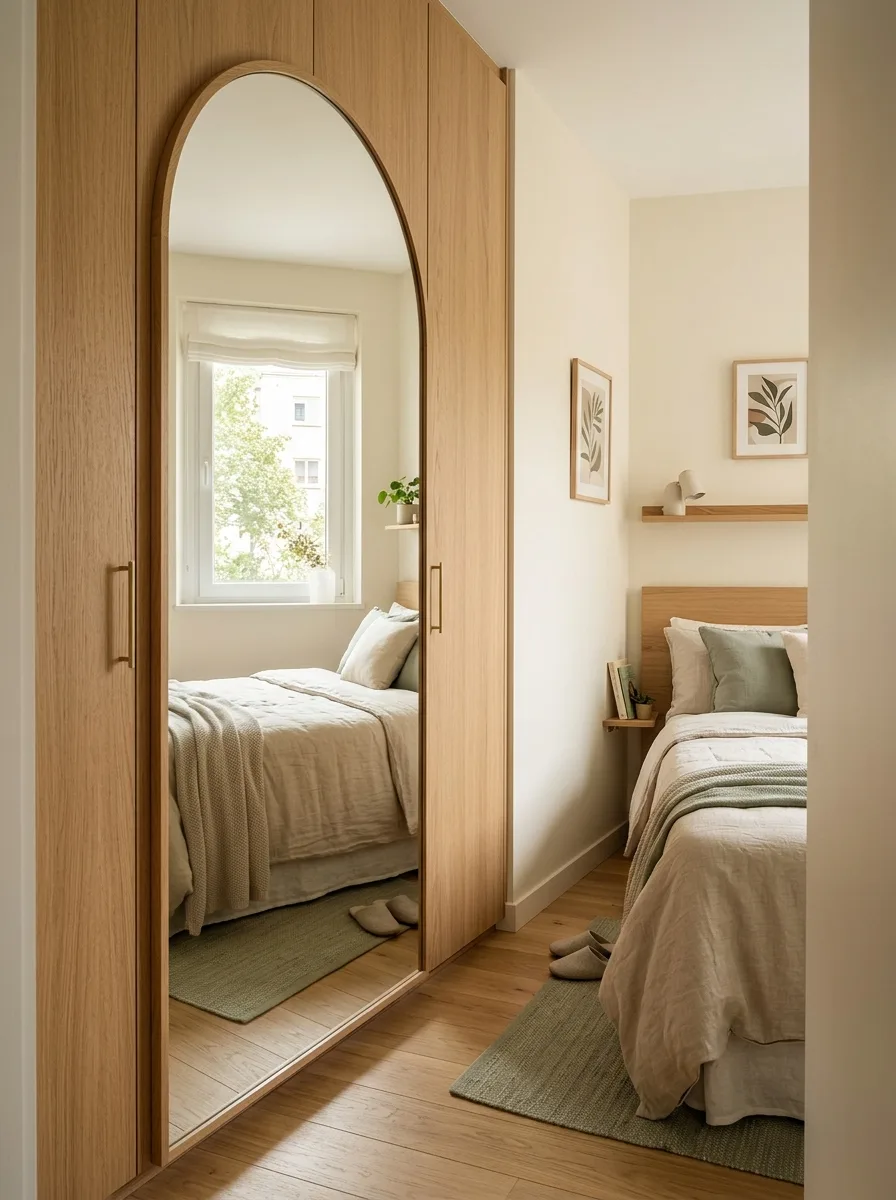
A full-height mirror mounted on a wardrobe door provides everyday function without taking up an inch of floor area. A large wall mirror opposite a window bounces light throughout the room. A smaller decorative mirror above a dresser creates a balanced focal point.
Choose the position based on what the mirror reflects: the goal is to extend the sense of space, not duplicate a messy corner.
Design Tip: Avoid positioning mirrors directly opposite the bed if you prefer a calmer, less reflective sleep environment.
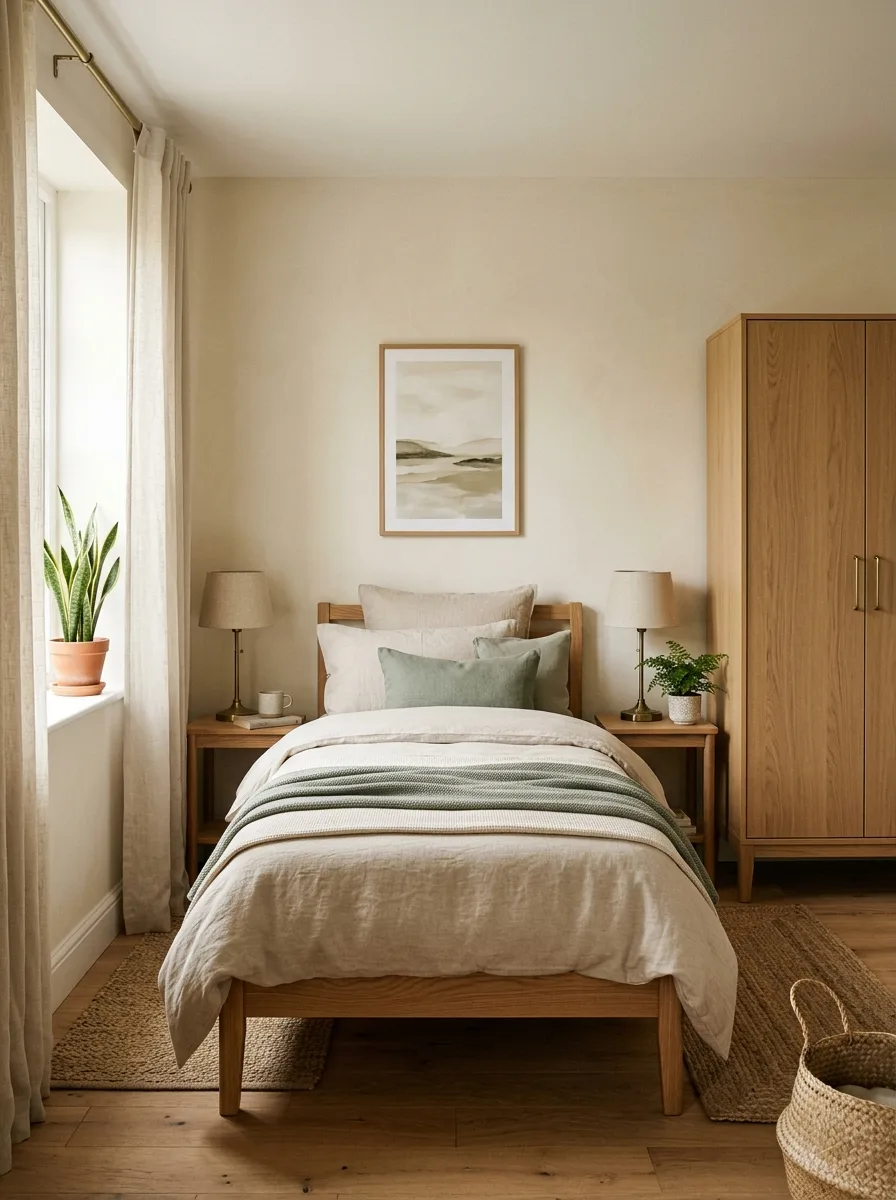
15. Keep the Color Palette Soft and Connected
A small bedroom doesn’t have to be painted stark white. Warm ivory, soft beige, muted sage, dusty blue, gentle taupe, and warm gray can all create a soothing sanctuary.
The important part is maintaining continuity.
If the walls are warm ivory, repeat related tones in the bedding, curtains, rug, and furniture accents. This creates a calm visual field where individual pieces don’t constantly fight for attention.
Design Tip: Use the 60-30-10 color rule: 60% dominant wall/bedding neutral, 30% secondary texture tone, 10% subtle accent color.
16. Use Lighting Instead of Extra Decoration
Lighting can provide rich atmosphere without occupying valuable tabletop or floor space.
Wall-mounted swing-arm reading lights are particularly useful beside the bed, freeing up nightstand surfaces completely. A delicate pendant suspended above a corner can also create ambient warmth.
Use warm 2700K lighting in the evening to promote restfulness. The fewer floor and table surfaces you need to decorate with lamps, the easier it is to keep a compact bedroom visually tranquil.
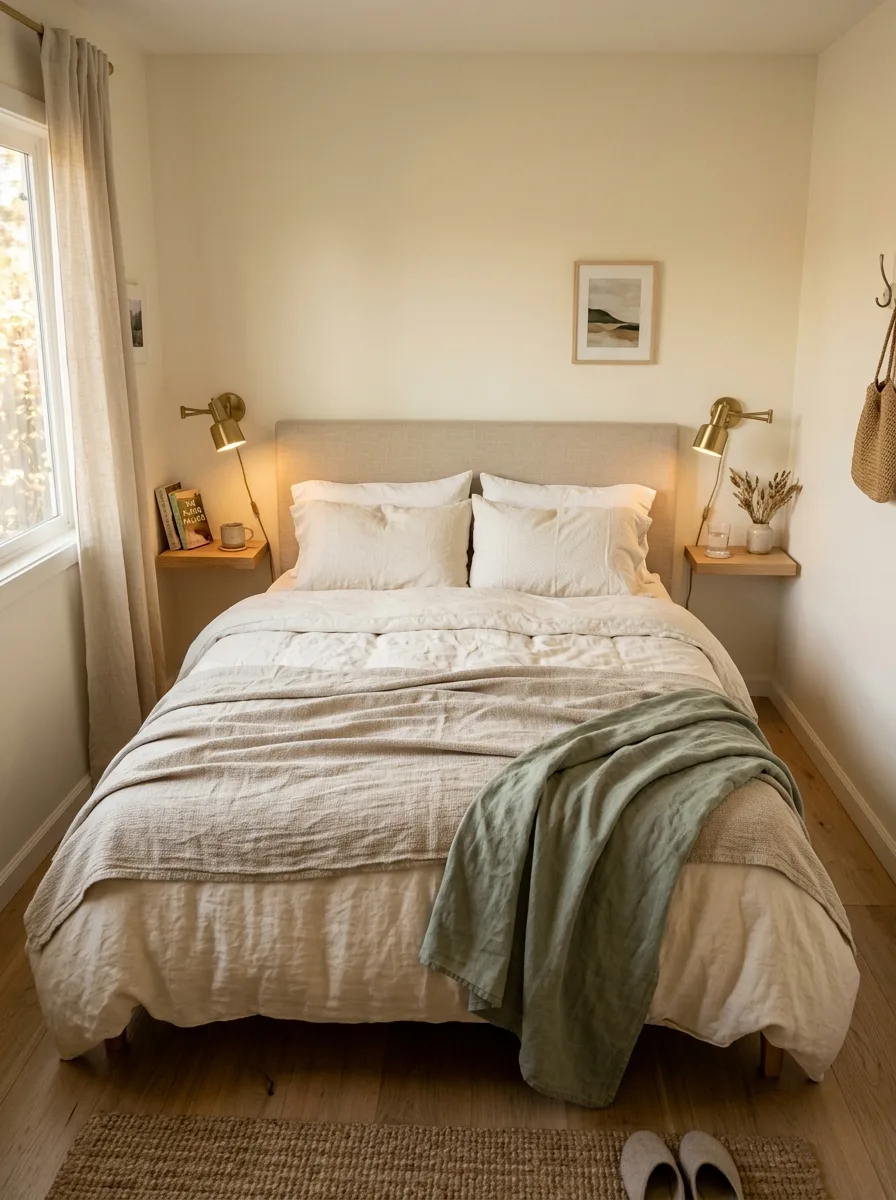
Design Tip: Choose sconces with built-in dimmer switches so you can adjust brightness from reading to sleep mode.
17. Give Laundry a Proper Home
Laundry is one of those everyday essentials that can make a bedroom feel permanently untidy if neglected.
Instead of leaving an open plastic basket wherever there happens to be floor space, give it a defined home:
- A slim fabric hamper tucked beside the wardrobe
- A tall woven lidded basket in a narrow corner
- A pull-out hamper integrated inside the closet
The best location is close enough to be convenient, but out of the immediate bed sightline so it doesn’t become visually dominant.
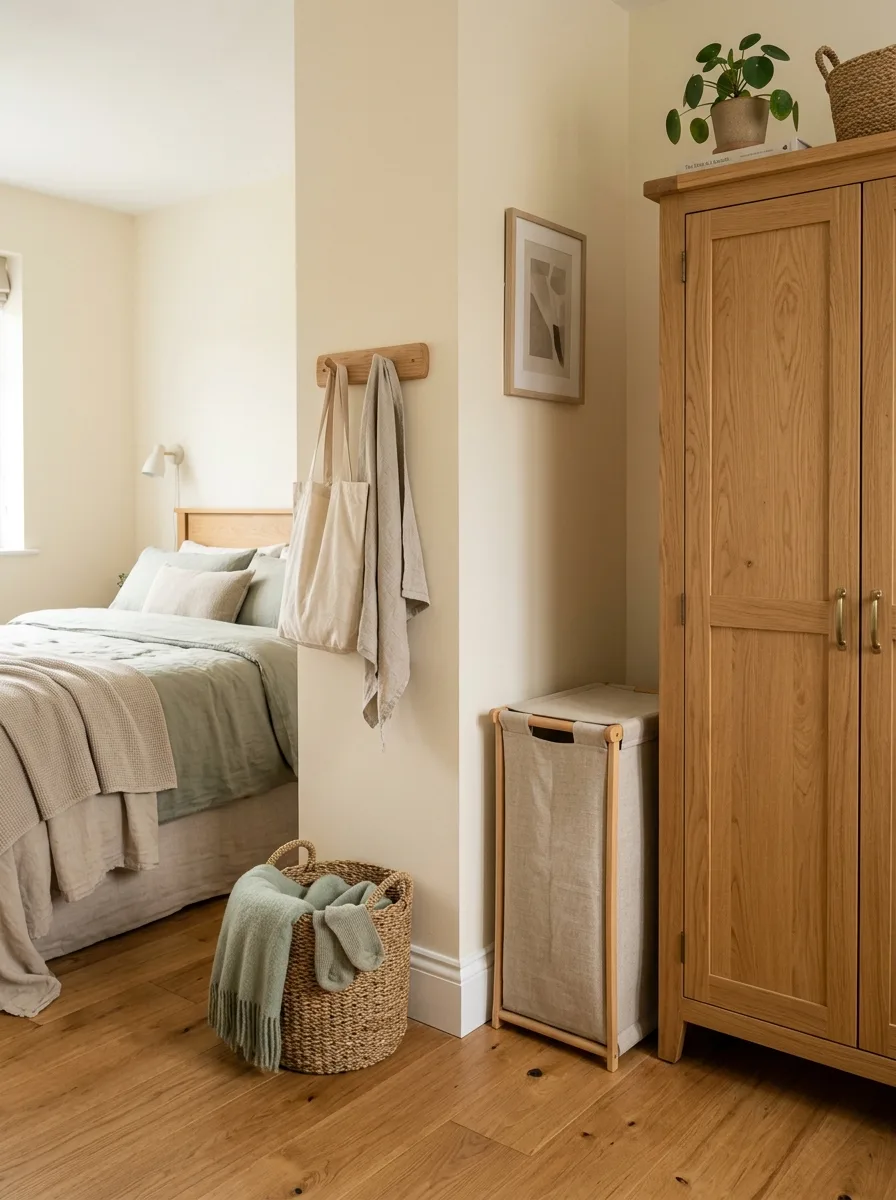
Design Tip: Choose a lidded hamper with an internal removable canvas bag for effortless trips to the laundry room.
18. Use a Bench Only If It Earns Its Space
An upholstered bench at the foot of the bed looks elegant, but in a small bedroom it can quickly become an unnecessary obstacle.
Before adding one, ask what practical purpose it will serve:
- Will you sit there to put on socks and shoes?
- Does it provide concealed storage for extra blankets?
- Will it leave at least 24 inches of clear walking space between the bench and opposite wall?
If not, leave the foot of the bed open. If seating is genuinely useful, choose a narrow bench with integrated storage or an open-leg design.
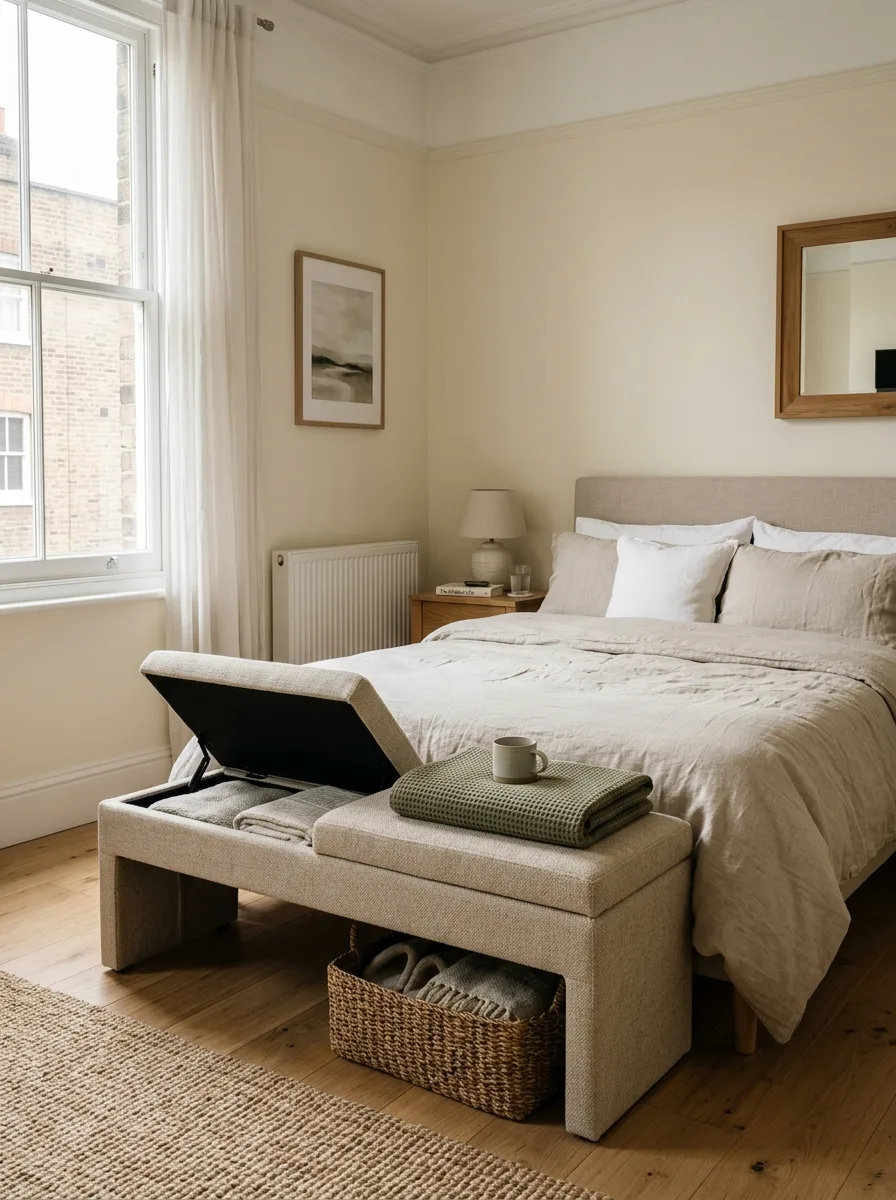
Design Tip: Ensure the bench width is 6 to 10 inches narrower than the mattress on each side for balanced proportions.
19. Keep the Floor Visually Open
The more continuous floor area your eyes can see, the less crowded the bedroom feels.
This doesn’t mean every piece must float on the wall. But choosing bed frames with visible legs, floating nightstands, or raised dressers creates crucial sightlines underneath furniture.
Avoid heavy furniture that sits directly on the floor with thick skirts, and keep the walking paths around the bed completely uncluttered.
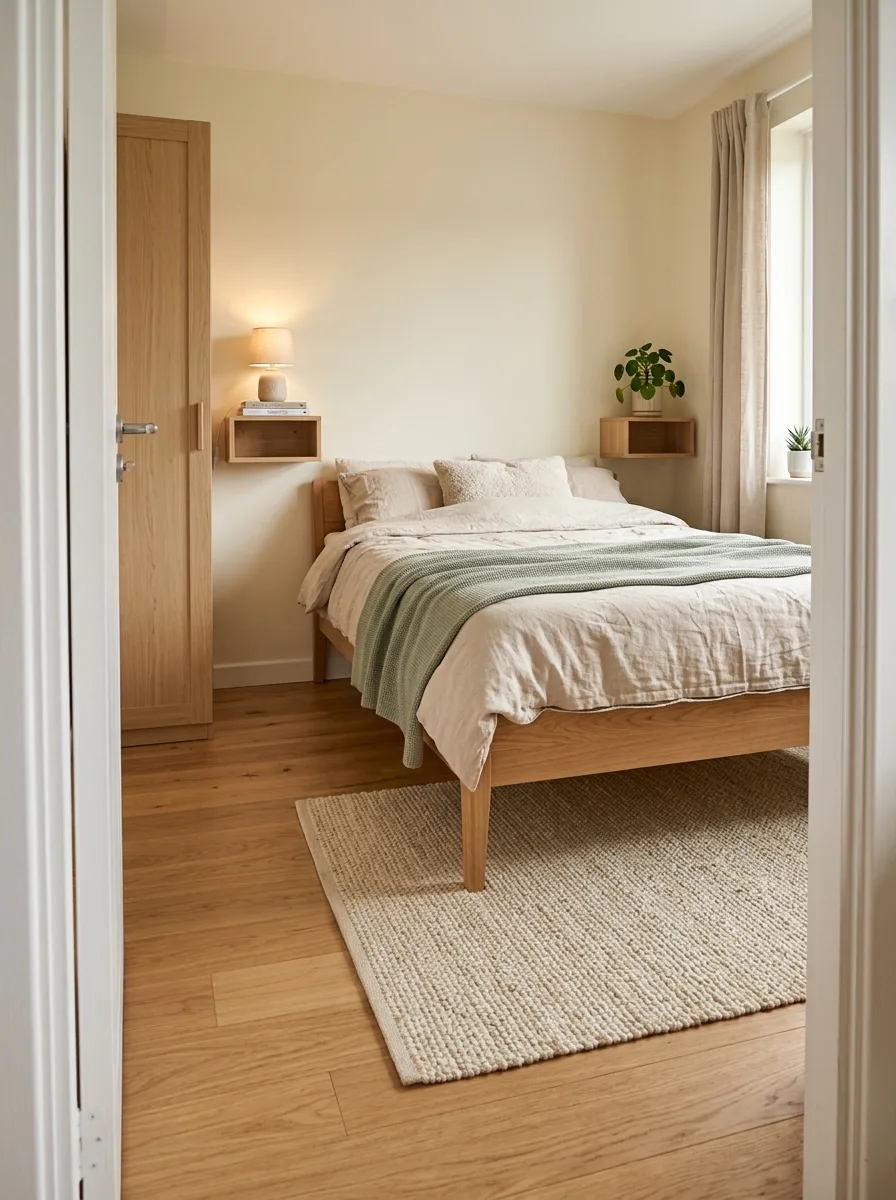
Design Tip: A low-profile platform bed with exposed tapered legs makes ceilings feel noticeably higher.
20. Give the Room One Strong Focal Point
A small bedroom doesn’t need multiple competing design features. Choose one primary focal point and let everything else play a quiet supporting role:
- A beautifully styled bed with a textured headboard
- A single substantial piece of framed art above the bed
- A warm textured limewash or wood-paneled accent wall
- A striking sculptural pendant light
This creates clear visual hierarchy and prevents a compact room from feeling as though every surface is shouting for attention.
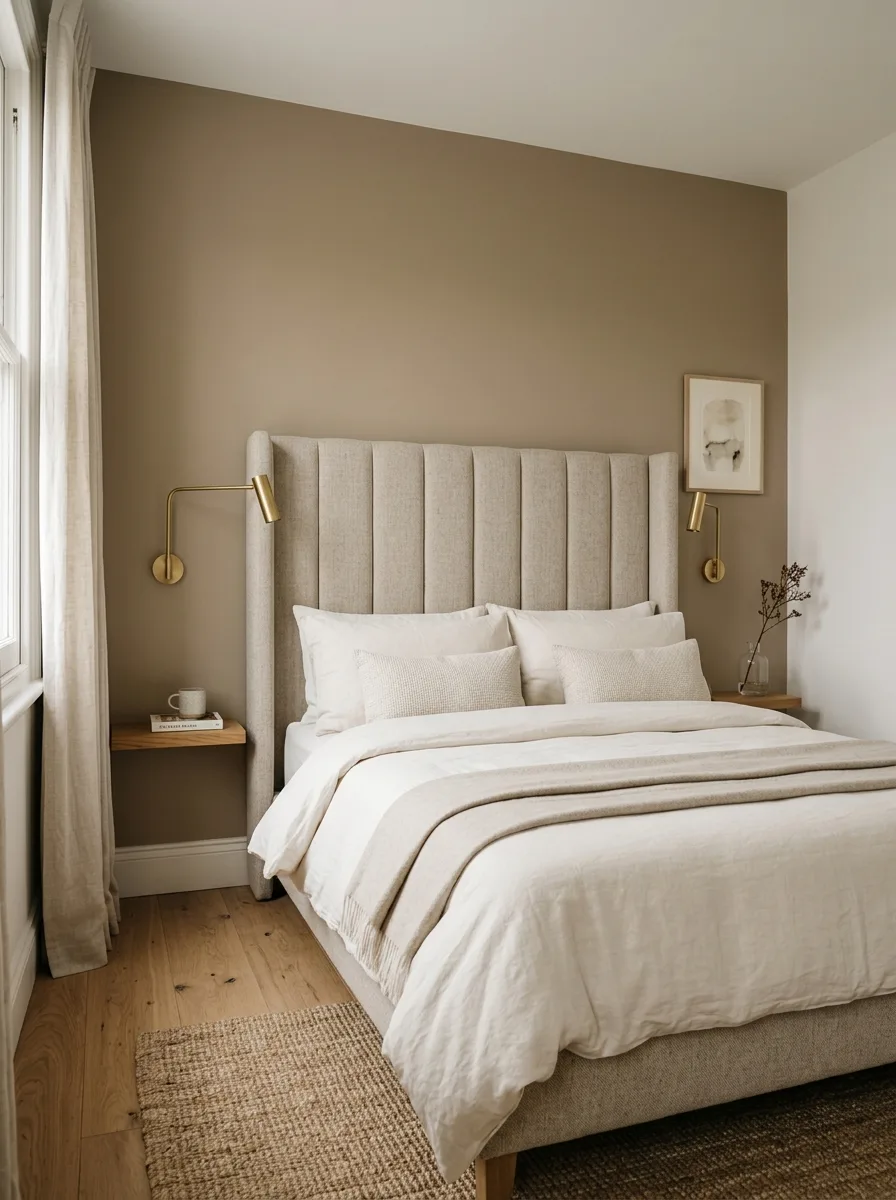
Design Tip: Hang artwork so its center is roughly 56 to 60 inches from the floor, or 8 to 10 inches above the headboard.
21. Leave Space for the Bedroom to Breathe
The most impactful small-bedroom design step is often subtraction.
Once the essential furniture is arranged, take a step back and look at what can be removed:
- Does the bedside table really need four decorative objects?
- Does the dresser need everything currently sitting on top?
- Could seasonal clothing be vacuum-sealed under the bed?
- Could an extra chair be moved to the living room?
A small bedroom becomes deeply restful when there is enough visual and physical breathing space to move effortlessly. The objective isn’t to make the room austere—it’s to make it easy to live in and wake up to.
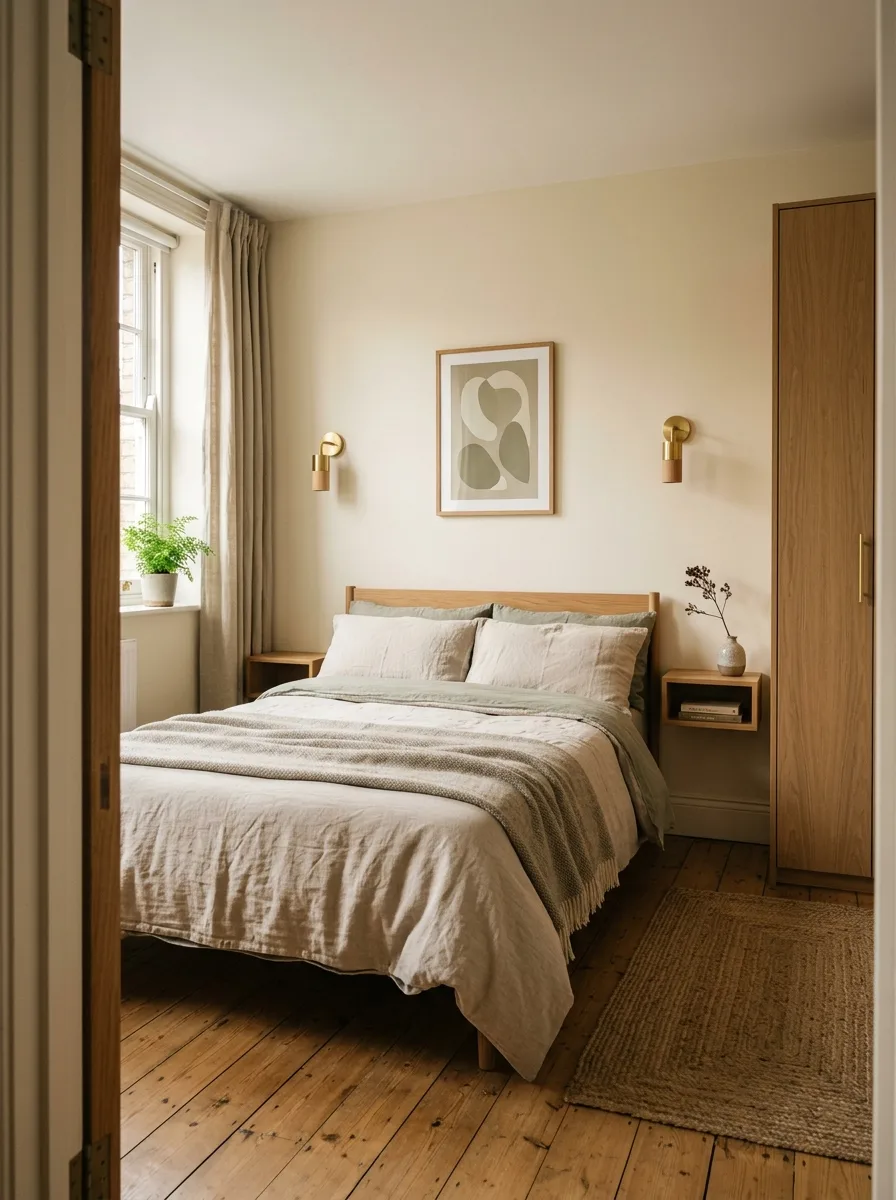
Design Tip: Negative space in a bedroom promotes better sleep quality by reducing subconscious cognitive stimulation.
How to Arrange a Small Bedroom
Follow this step-by-step layout sequence for the best results:
1. Start With the Bed
Determine where the bed can go without obstructing doorway swings, wardrobe doors, or natural window light.
2. Establish Circulation
Walk around the proposed layout. Ensure you can comfortably get in and out of bed, open closet doors fully, and exit the room without turning sideways.
3. Add Wardrobe Storage
Maximize the built-in closet first. Only introduce a dresser or armoire if your clothing storage genuinely requires it.
4. Add Bedside Surfaces
Choose the most compact option—a floating shelf or narrow pedestal—that accommodates your nighttime essentials.
5. Add Lighting
Prioritize functional reading sconces and warm ambient lighting before purely decorative fixtures.
6. Add Softness & Texture
Incorporate the rug, bedding, linen curtains, and cushions to make the room comfortable.
7. Add Decoration Last
Artwork, personal books, and greenery should finish the space rather than determine the furniture layout.
Small Bedroom Storage: What Should Actually Stay?
| Keep in the Bedroom | Consider Storing Elsewhere |
|---|---|
| Current-season wardrobe | Heavy off-season coats & sports gear |
| Everyday undergarments & sleepwear | Large travel luggage & suitcases |
| Bedding currently in rotation | Excess cleaning supplies & vacuums |
| Frequently worn shoes (2–3 pairs) | Formal or specialty occasion shoes |
| Nighttime essentials & personal books | Seasonal holiday decorations |
| Lidded laundry hamper | Unsorted paperwork & administrative files |
The less unrelated household storage your bedroom carries, the easier it becomes to maintain a calm, restorative environment.
Common Small Bedroom Mistakes
- Choosing the largest bed possible: An oversized bed frame can eliminate comfortable circulation and block closet access.
- Buying matching bedroom furniture sets: A matching suite of bed, dressers, and nightstands overwhelms a small room with heavy repetition.
- Using too many freestanding storage pieces: Optimize interior wardrobe shelving before adding separate chests.
- Ignoring the space beneath the bed: The cavity under the bed is prime storage for off-season linens and luggage.
- Filling every wall: Bedrooms require quiet negative space for the mind to rest.
- Adding a bench because it looks good: If it doesn’t serve an active daily function, the open floor space is more valuable.
- Using only overhead lighting: Harsh central fixtures destroy cozy evening atmosphere.
- Letting laundry become permanent decor: Keep a slim, dedicated hamper out of direct sightlines.
Final Thought
A small bedroom doesn’t need to feel like a scaled-down version of a large master suite. It can have its own calm, cozy rhythm.
A smaller bed leaves room for better storage. A narrow bedside shelf replaces a bulky nightstand. A wall-mounted light frees up tabletop space. A floor-length curtain emphasizes ceiling height. A simple, well-proportioned headboard becomes the room’s serene focal point.
The goal isn’t to disguise the size of the bedroom. It’s to make every square foot feel considered, intentional, and deeply comfortable.
Not because the room contains everything—but because everything in it truly belongs.
Editorial Guidelines: Quick Practical Rules
- Start with the bed: Position the bed first where it doesn't block doors, wardrobes, or natural window light.
- Keep bedside surfaces minimal: Use floating shelves or narrow pedestals to keep floor space visible beneath nightstands.
- Maximize vertical wardrobe space: Add a second hanging rod or upper modular bins to double closet capacity.
- Use under-bed storage: Store seasonal clothing, luggage, and extra linens in low-profile lidded bins under the bed.
- Layer texture over decor: Create cozy depth with linen duvets, quilted coverlets, and warm wood instead of extra accessories.
What Often Goes Wrong (And How to Fix It)
- Choosing the largest bed possible: An oversized frame can eliminate essential walking clearance and closet access.
- Buying matching bedroom furniture sets: A full heavy suite quickly overwhelms a compact bedroom.
- Using too many freestanding storage pieces: Optimize built-in wardrobes before adding bulky dressers.
- Ignoring the space beneath the bed: Leaving under-bed space empty while cluttering the room is a missed opportunity.
- Filling every wall: Bedrooms need quiet negative space to feel truly restful.
- Adding a bench because it looks good: If you don't actively sit on it, the floor space is more valuable.
- Using only overhead lighting: Harsh central ceiling lights flatten the room and disturb evening relaxation.
- Letting laundry become permanent decor: Keep a slim, dedicated hamper out of direct sightlines.
Frequently Asked Questions
How do you make a small bedroom look bigger?
Use appropriately scaled furniture, keep walking paths clear, make use of vertical storage, choose a cohesive color palette, use mirrors strategically, and avoid filling every surface.
What bed size is best for a small bedroom?
The right size depends on the room and the number of people using it. Choose the largest bed that still leaves comfortable circulation and enough room for necessary storage.
Where should I put storage in a small bedroom?
Start with the wardrobe, then consider under-bed storage, tall cabinets, wall-mounted shelves, and compact multi-function furniture before adding several separate storage pieces.
How do you decorate a small bedroom without making it feel cluttered?
Choose a few strong elements, keep the palette cohesive, use texture instead of excessive decoration, and leave some surfaces and walls intentionally quiet.
Are dark colors bad for small bedrooms?
Not necessarily. Darker colors can create a cozy atmosphere when used thoughtfully. The overall balance of light, furniture, and visual clutter matters more than simply choosing light colors.
Should a small bedroom have a bench at the end of the bed?
Only if the bench serves a useful purpose and enough clearance remains around it. In a very small room, the open floor may be more valuable.
The House Chapter Editorial
Interiors & Styling Editors • The House Chapter
Curated by our team of interior designers, home organizers, and editorial stylists dedicated to practical, beautiful living.
Rooms
A little inspiration for your next chapter at home.
Receive curated decorating dispatches, practical hallway storage blueprints, and quiet design moments delivered straight to your inbox.
No spam. No daily noise. Unsubscribe at any time with one click.
Related Chapters
21 Small Living Room Ideas That Make the Most of Limited Space
Make a compact living room feel comfortable and stylish with practical ideas for furniture, layouts, storage, lighting, color, and everyday living.
Small Kitchen Ideas for Making a Compact Space Work Harder
Make a compact kitchen feel more functional with practical small kitchen ideas for storage, layout, work surfaces, lighting, seating, and everyday organization.
21 Small Space Ideas That Make a Home Feel Bigger
Make a small home feel more spacious and functional with these practical small space ideas for furniture, storage, layout, lighting, and everyday living.
23 Entryway Storage Ideas That Keep Clutter Under Control
Discover practical entryway storage ideas for shoes, coats, bags, keys, and everyday clutter, including smart solutions for small entrances, apartments, and narrow hallways.