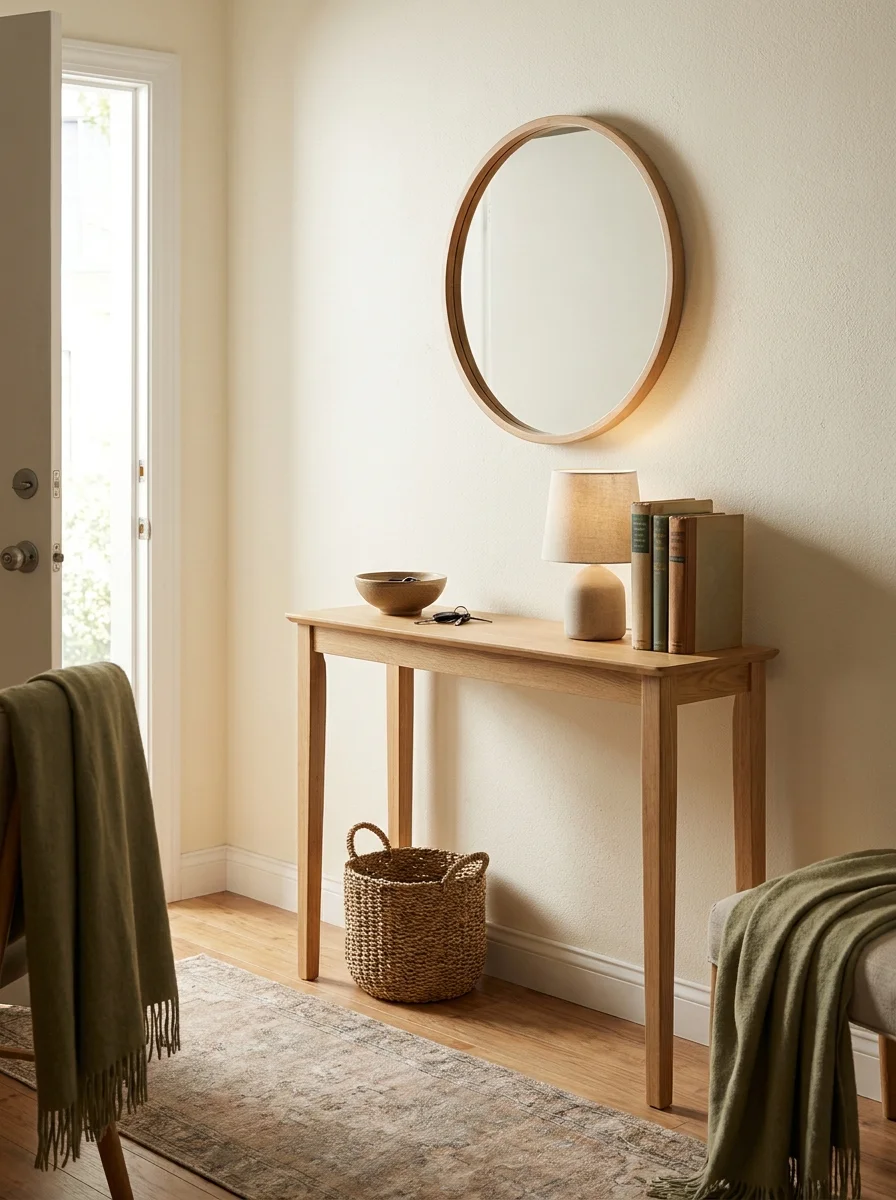
The entryway has a habit of collecting everything.
Shoes arrive by the door. Bags get dropped on the nearest surface. Coats end up on chairs. Keys disappear under mail. Umbrellas lean against walls, and somehow the small collection of things that seemed harmless individually becomes the first thing you see when you walk through the door.
The problem isn’t always a lack of storage. More often, it’s that the storage doesn’t match the way the household actually uses the entrance.
A beautiful console with no drawers won’t help much if everyone needs somewhere to drop keys and sunglasses. A shoe cabinet that holds six pairs isn’t particularly useful to a household that needs to store twenty. And an entryway closet can have plenty of capacity while still becoming a chaotic pile of coats, bags, and miscellaneous belongings.
Good entryway storage begins with a much simpler question: What actually needs to live here?
Once you know the answer, the storage becomes easier to design. A small entrance may need nothing more than hooks, a shoe cabinet, and a shelf. A family home may need a proper combination of seating, closed storage, coat storage, and individual drop zones. A narrow hallway may need to rely almost entirely on the walls.
The goal isn’t to create the most storage possible. It’s to create the right storage, in the right location, for the things that enter and leave your home every day.
Start With the Clutter, Not the Furniture
Before buying an entryway cabinet or console, spend a few days noticing what actually lands near the door. You may find that your entryway has a surprisingly predictable pattern:
- Perhaps the same three pairs of shoes are always there.
- Perhaps bags are the biggest everyday obstacle.
- Perhaps everyone scrambles for misplaced keys in the morning.
- Perhaps coats dominate during colder months, while school bags create most of the clutter the rest of the year.
Write down the categories rather than the individual objects:
- Shoes
- Coats
- Bags
- Keys
- Mail & paperwork
- Umbrellas
- Hats, gloves, and scarves
- Pet accessories (leashes, treats)
- Everyday pocket accessories
- Seasonal items
Now decide which of these genuinely needs to remain near the entrance. This small exercise prevents one of the most common storage mistakes: buying furniture first and trying to make your belongings fit afterward.
1. Give the Entryway One Dedicated Storage Anchor
Most successful entryways have one primary storage element that gives the area structure. It could be a console, cabinet, bench, wardrobe, or built-in unit.
The important thing is that it provides a clear place for the storage system to begin.
In a larger entrance, this might be a substantial cabinet with closed doors. In a smaller apartment, it could be a slim console with drawers.
The storage anchor doesn’t need to solve every problem. It simply needs to handle the largest category of clutter while smaller solutions support it. Think of it as the main piece of infrastructure in the entrance.
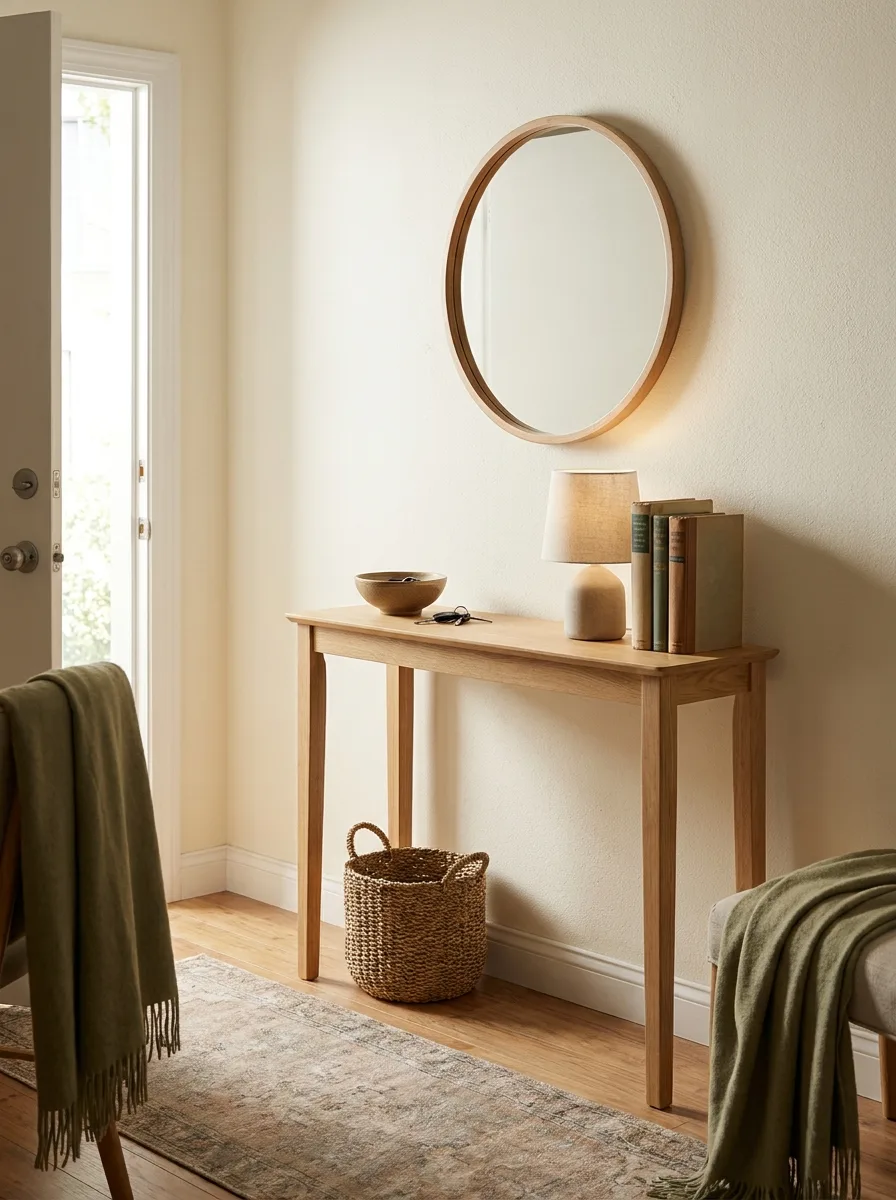
Design Tip: Anchor the piece visually with a mirror or single piece of artwork above it to establish a clear focal point.
2. Choose a Slim Console With Storage
A console is useful because it provides a surface without requiring the depth of a conventional cabinet.
For a narrow entrance, look for something around 10–14 inches deep, depending on the available circulation space.
Drawers are particularly valuable because they can hide the small objects that otherwise create visual clutter. Use the top for only the things that deserve to be visible: perhaps a lamp, small bowl, artwork, or one decorative object. Inside the drawers can go keys, sunglasses, spare chargers, dog leads, or other small essentials.
This creates a useful distinction between display space and storage space.
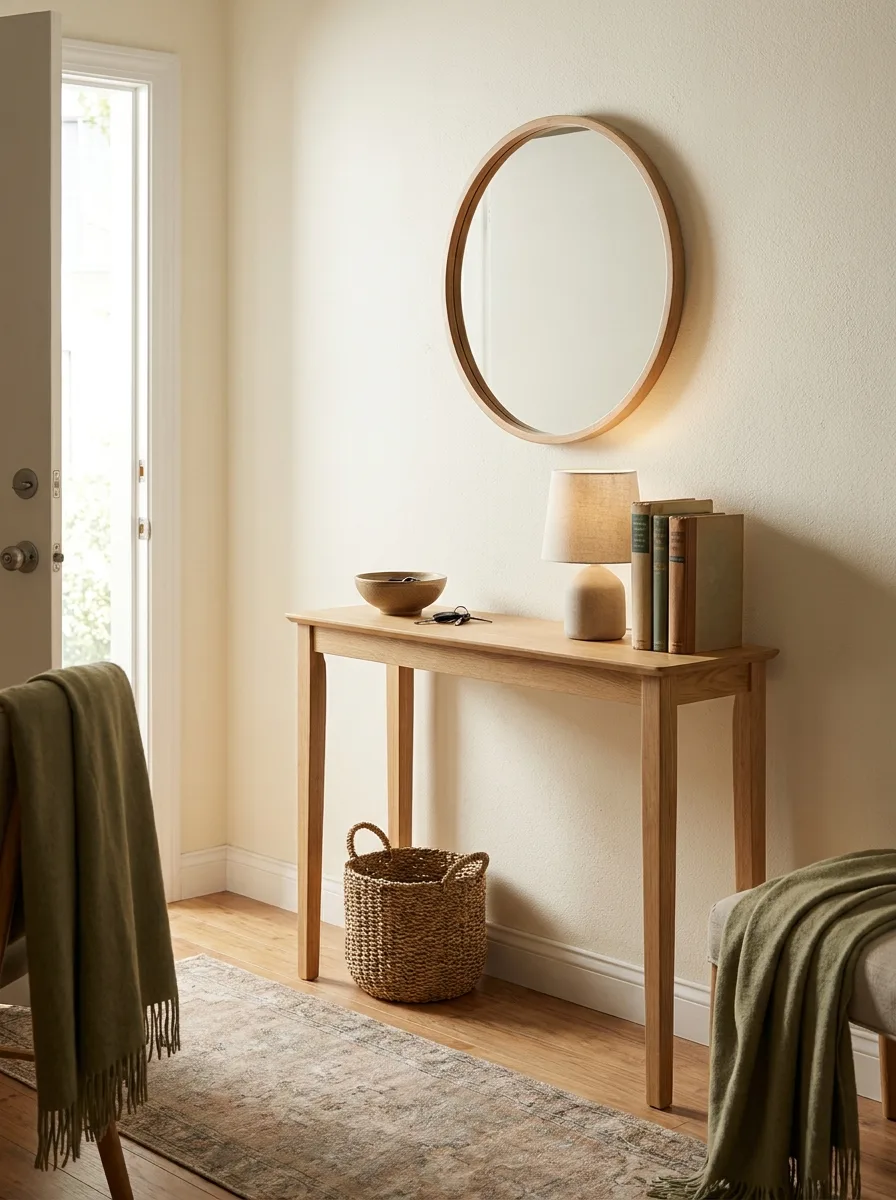
Design Tip: Use felt or timber drawer dividers inside console drawers to keep small everyday items organized.
3. Add a Storage Bench When Seating Is Useful
If you regularly put on or remove shoes near the door, a storage bench can solve two problems at once.
Choose a design with drawers, lift-up storage, or open compartments underneath.
For a small entrance, a bench around 40–48 inches wide can provide useful seating without dominating the wall.
But don’t add one simply because entryway benches look attractive. If nobody sits down to put on shoes, that floor area may be better used for a narrow shoe cabinet. Good storage is always connected to behavior.
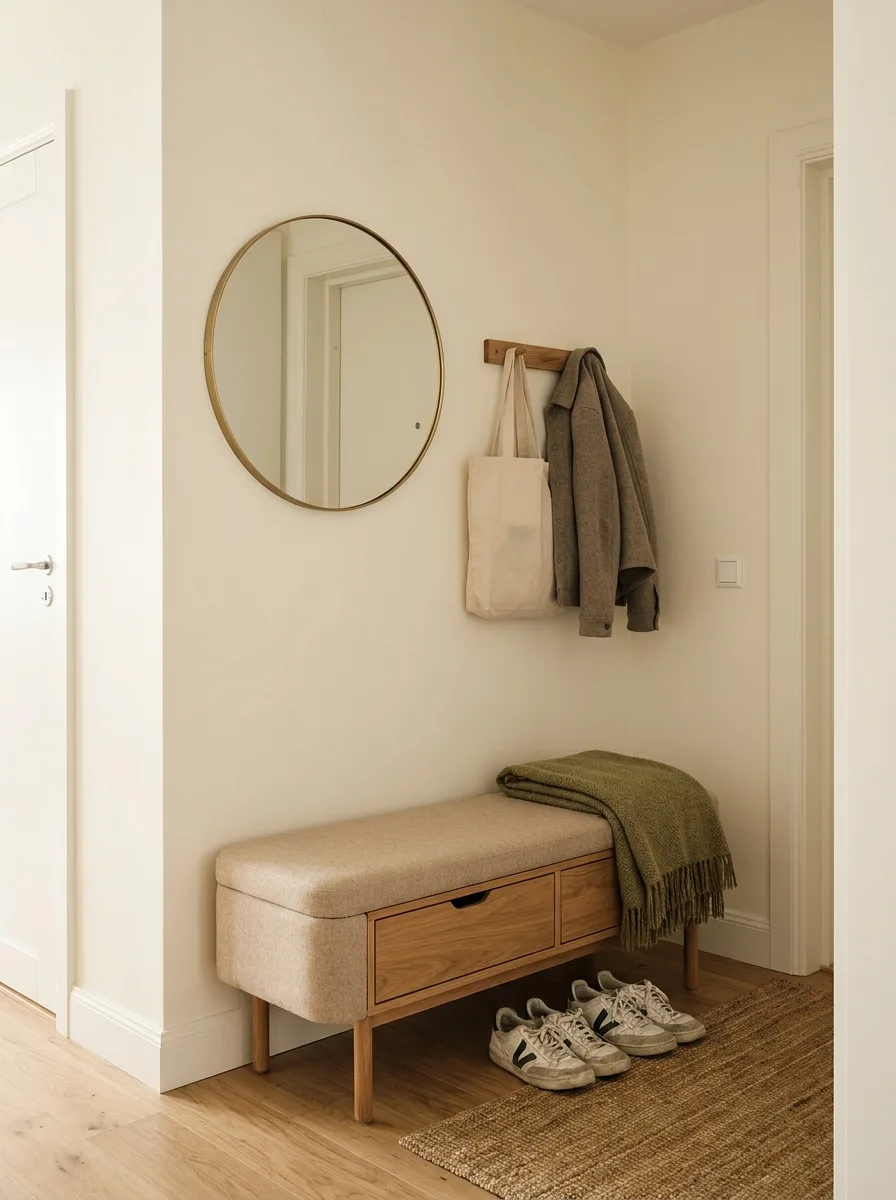
Design Tip: Top the bench with a durable, easy-to-clean cushion in performance linen or leather.
4. Turn an Empty Wall Into a Drop Zone
A blank wall doesn’t have to remain decorative-only.
A simple combination of hooks, a narrow shelf, one or two baskets, and a small tray can create a highly functional drop zone without using much floor space.
This is particularly effective in apartments where adding a cabinet isn’t realistic.
The trick is to give each category a defined location. Hooks can handle bags and coats. A shelf can handle smaller belongings. A basket can contain scarves or accessories. Once each object has a destination, the wall becomes an organizational system rather than just decoration.
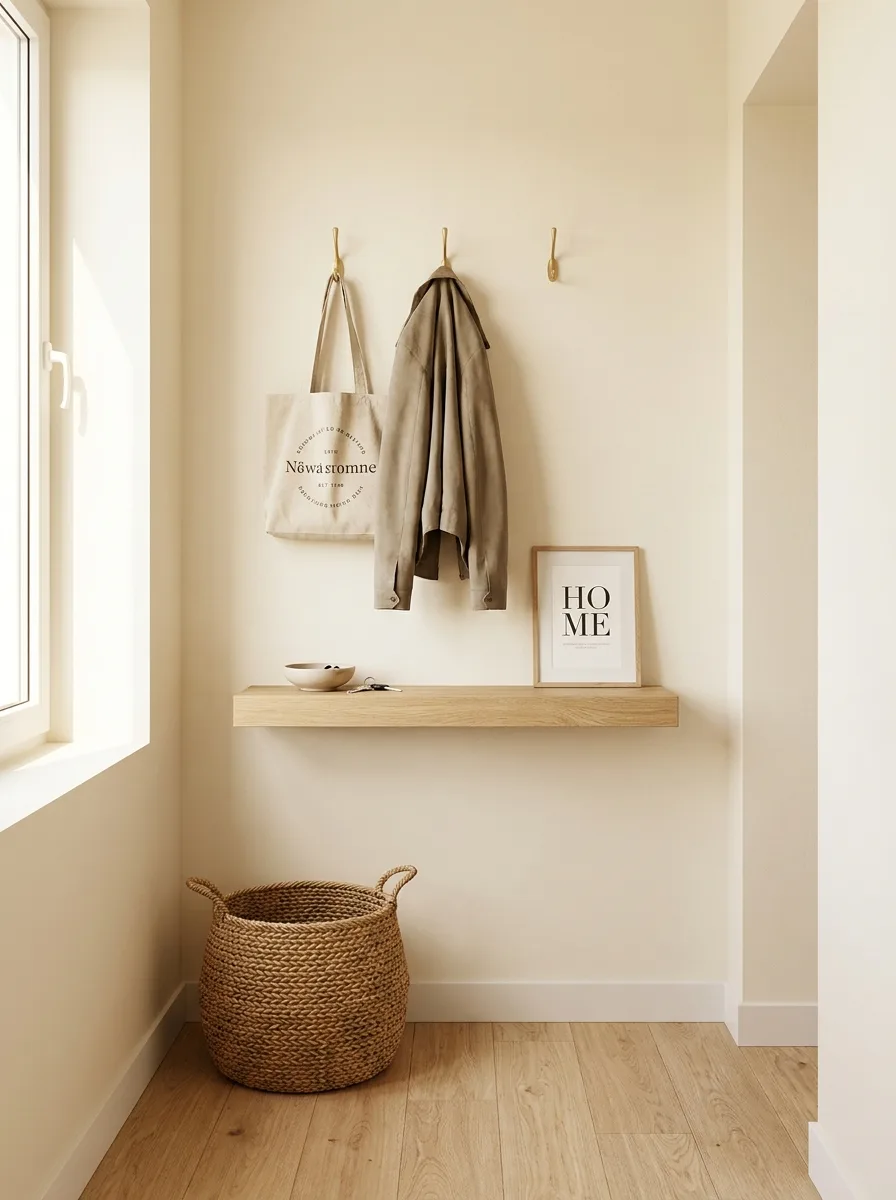
Design Tip: Mount hooks at two different heights—one for coats and one lower down for bags and children’s items.
5. Replace the Freestanding Coat Rack With Wall Hooks
Freestanding coat racks are convenient, but they can consume more floor space than expected and tip over easily when loaded.
Wall hooks are usually far more efficient in compact entrances. Install them in a clean horizontal row or staggered arrangement depending on the wall width.
For households with children, consider a lower row of hooks so everyday items can be put away without assistance. For adults, hooks should be positioned at a comfortable height that doesn’t require reaching excessively.
And don’t install more hooks simply because the wall can accommodate them. Too many hooks can encourage the entryway to become a permanent storage wall for every coat in the house.
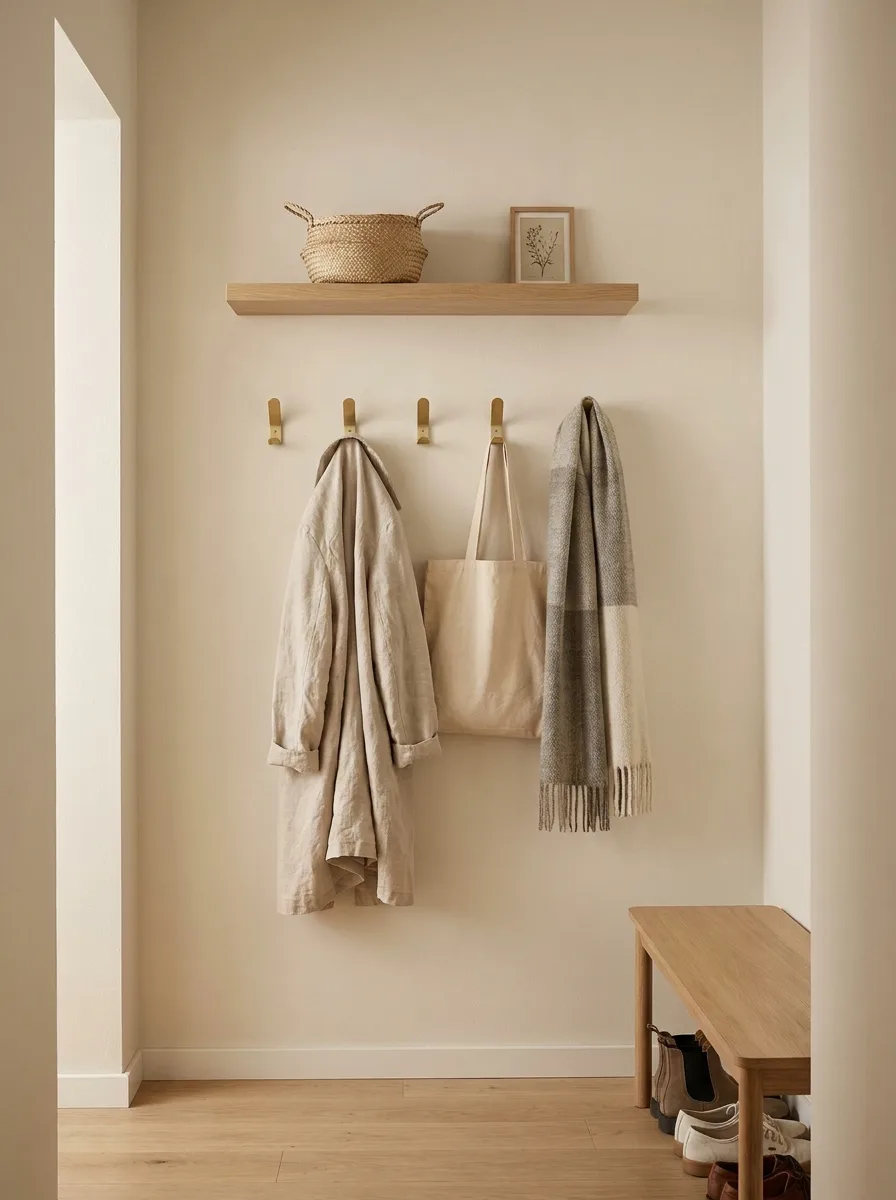
Design Tip: Keep only the coats currently in active rotation on the hooks. Store off-season outerwear elsewhere.
6. Give Shoes a Dedicated Home
Shoes should have a defined destination if you want an entryway to remain consistently tidy.
The right solution depends on how many pairs actually need to remain near the door. A household that rotates through three or four pairs might only need a small shelf, while a larger family may need a proper cabinet or several baskets.
The important distinction is between daily shoe storage and long-term shoe storage.
Your entryway shouldn’t necessarily hold every pair of shoes you own. Keep the frequently worn pairs accessible and move seasonal or occasional footwear elsewhere. This dramatically reduces the amount of storage required.
Design Tip: Add an absorbent boot tray during wet months to protect floors without disrupting shoe organization.
7. Use a Slim Shoe Cabinet in Tight Spaces
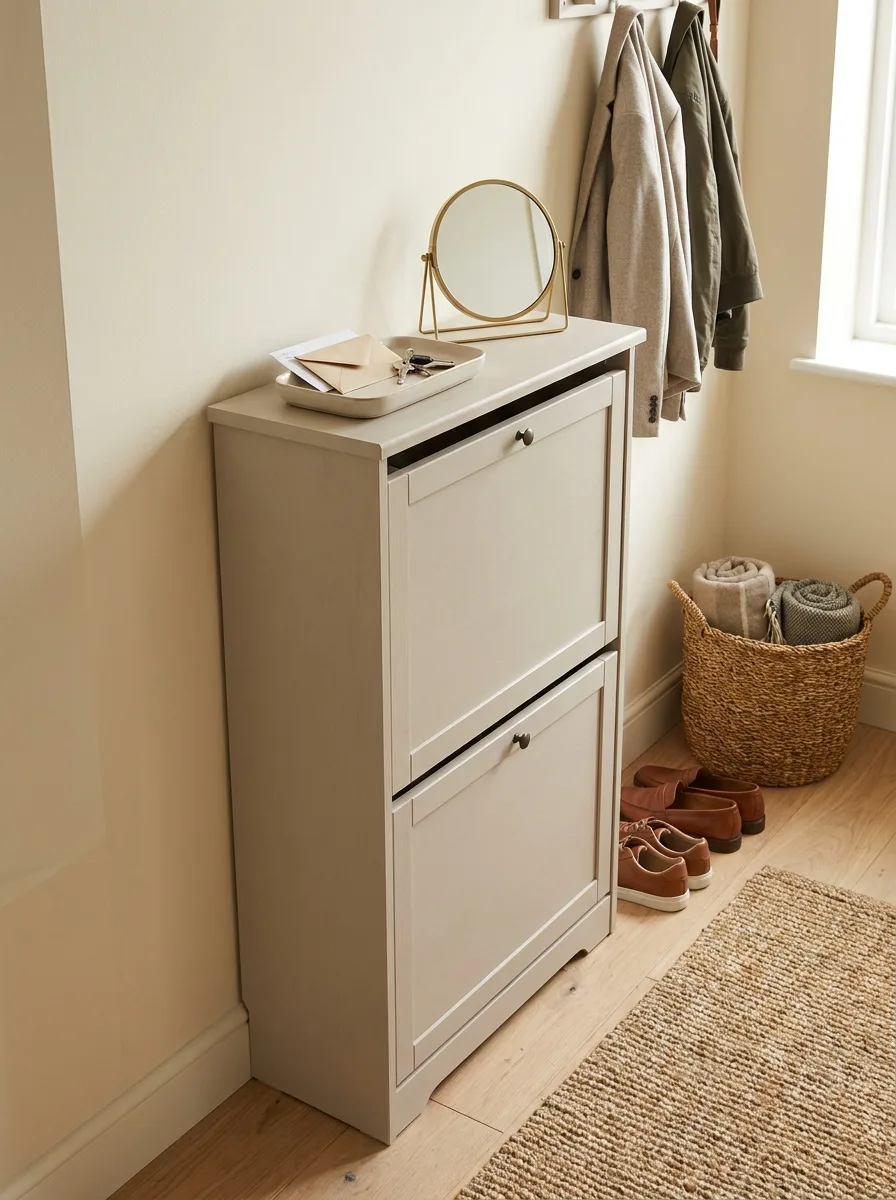
When floor depth is the main limitation, a shallow shoe cabinet can be more useful than an open rack.
Many slim designs store shoes vertically in fold-down compartments, allowing you to keep a reasonable number of pairs close to the entrance with a depth of just 7 to 9 inches.
Look for a cabinet that doesn’t interfere with the door swing or walking path.
And measure the actual usable depth rather than relying on the word “slim” in a product description. In a narrow hallway, even a few extra inches can matter.
Design Tip: Mount slim shoe cabinets directly to the wall for maximum stability and a floating, lightweight look.
8. Hide Smaller Items in Baskets
Not every storage problem deserves a drawer.
Baskets are particularly useful for irregular items that don’t stack neatly: hats, scarves, reusable tote bags, dog leashes, and sports gear.
The primary benefit is visual containment. Instead of seeing ten separate mismatched objects, your eye sees one cohesive, textured basket.
For an editorial appearance, choose baskets in similar materials or colors so the storage feels intentional rather than improvised.
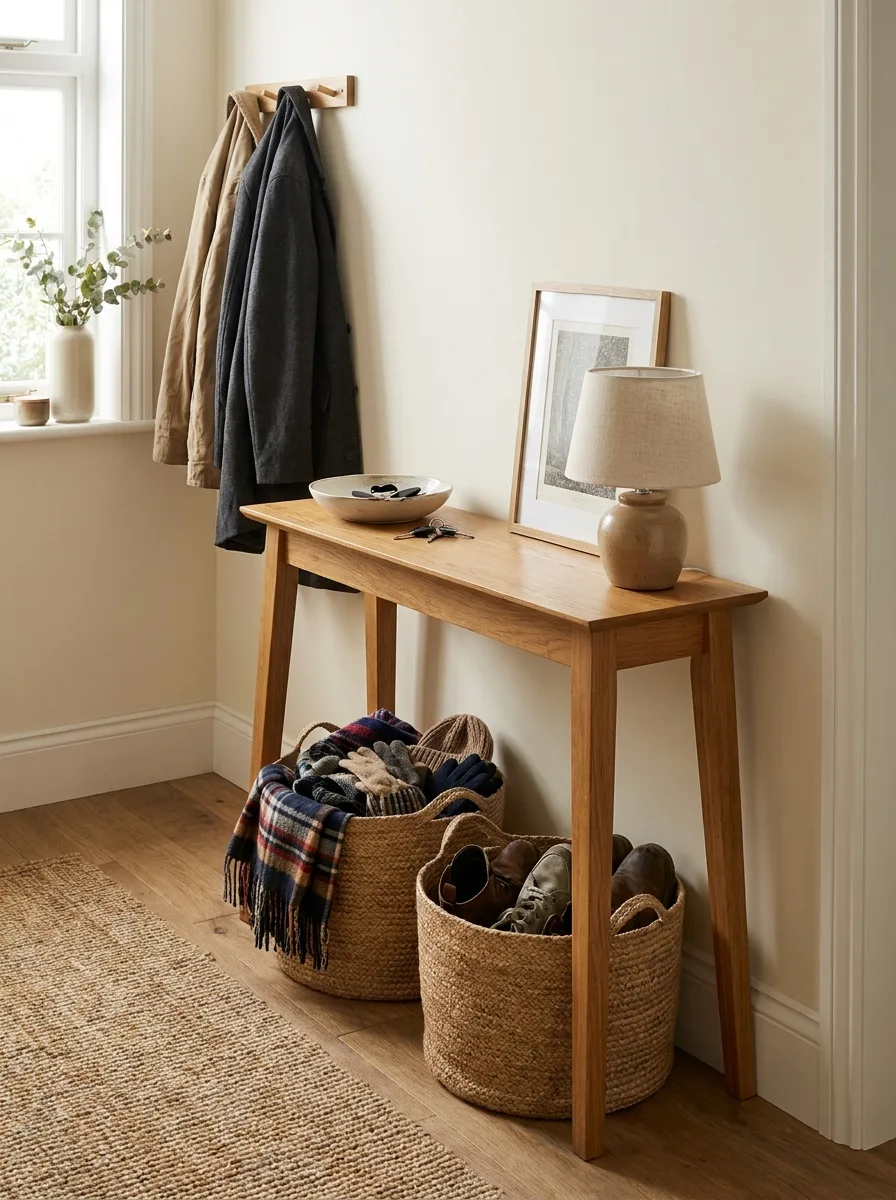
Design Tip: Choose structured baskets with lids if you want to keep contents completely hidden from view.
9. Create a Dedicated Key Station
Keys are tiny, but misplaced keys create disproportionate amounts of daily morning frustration.
Give them one permanent, non-negotiable location. That could be a shallow drawer, a small wall-mounted tray, a hook rail, or a ceramic bowl positioned near the entrance.
If several people use the entrance, the key station should be positioned where everyone can reach it naturally.
A small dedicated solution is usually better than expecting everyone to remember to place keys randomly on a decorative console surface.
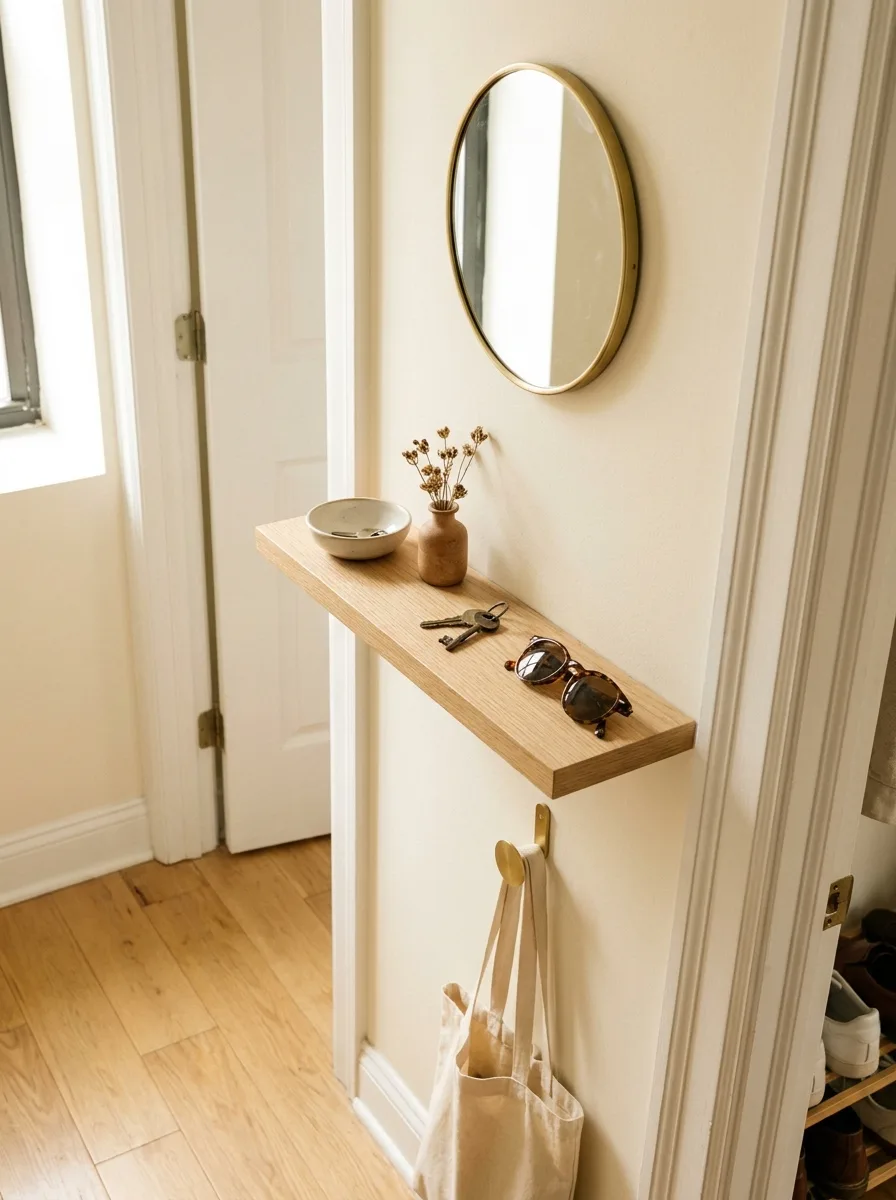
Design Tip: Combine your key dish with a small phone charging pad to create a comprehensive pocket-clearing zone.
10. Use the Space Under a Console
The area underneath an open console shouldn’t automatically become wasted space.
Depending on the furniture proportions, it can comfortably accommodate:
- One or two woven baskets
- A low shoe tray
- Folded reusable shopping bags
- A brass umbrella stand
- Small uniform storage boxes
The key is to avoid turning it into a visual dumping ground. Choose containers that fit neatly within the available width and leave enough clearance for the arrangement to remain visually open.
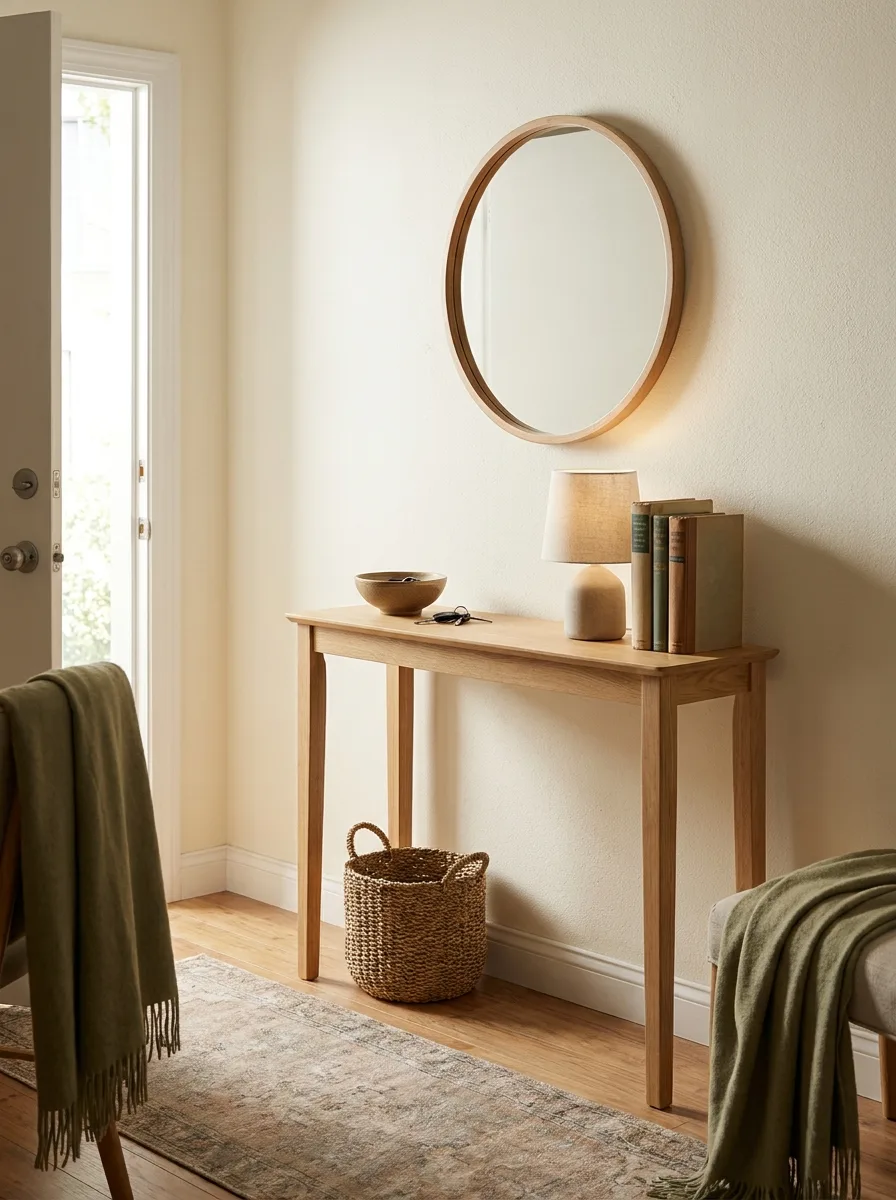
Design Tip: Leave 2 to 3 inches of breathing room above and beside baskets so the under-console area doesn’t look jammed.
11. Choose a Bench With Drawers for Hidden Storage
Open storage is convenient, but sometimes concealed storage is better.
A bench with built-in drawers can hide shoes, winter accessories, cleaning cloths, or other everyday items while maintaining a clean, uninterrupted visual line.
This is especially useful in open-plan homes where the entrance is visible directly from the living room.
Closed storage allows the entryway to function hard without forcing the rest of the home to constantly look at the clutter.
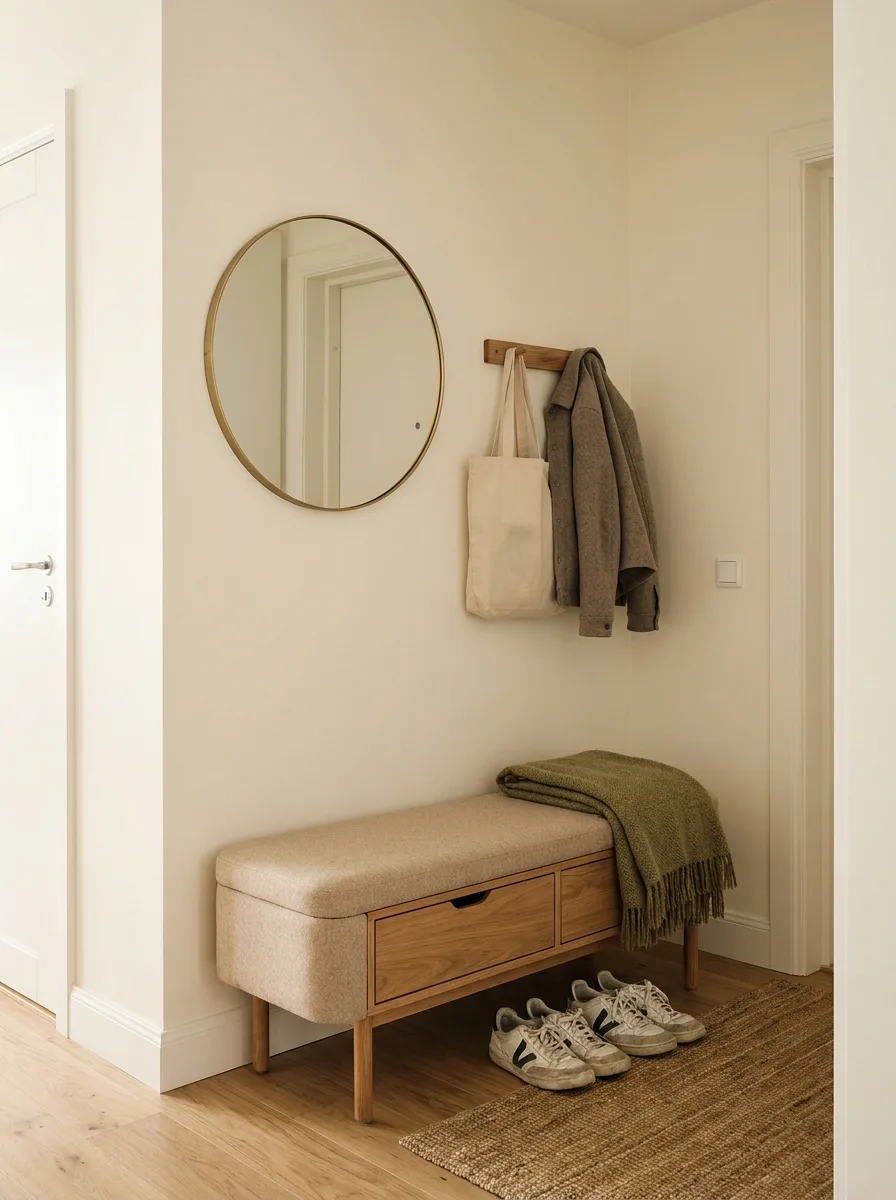
Design Tip: Full-extension drawer glides ensure you can easily reach shoes and gear tucked all the way in the back.
12. Use Vertical Storage in a Narrow Hallway
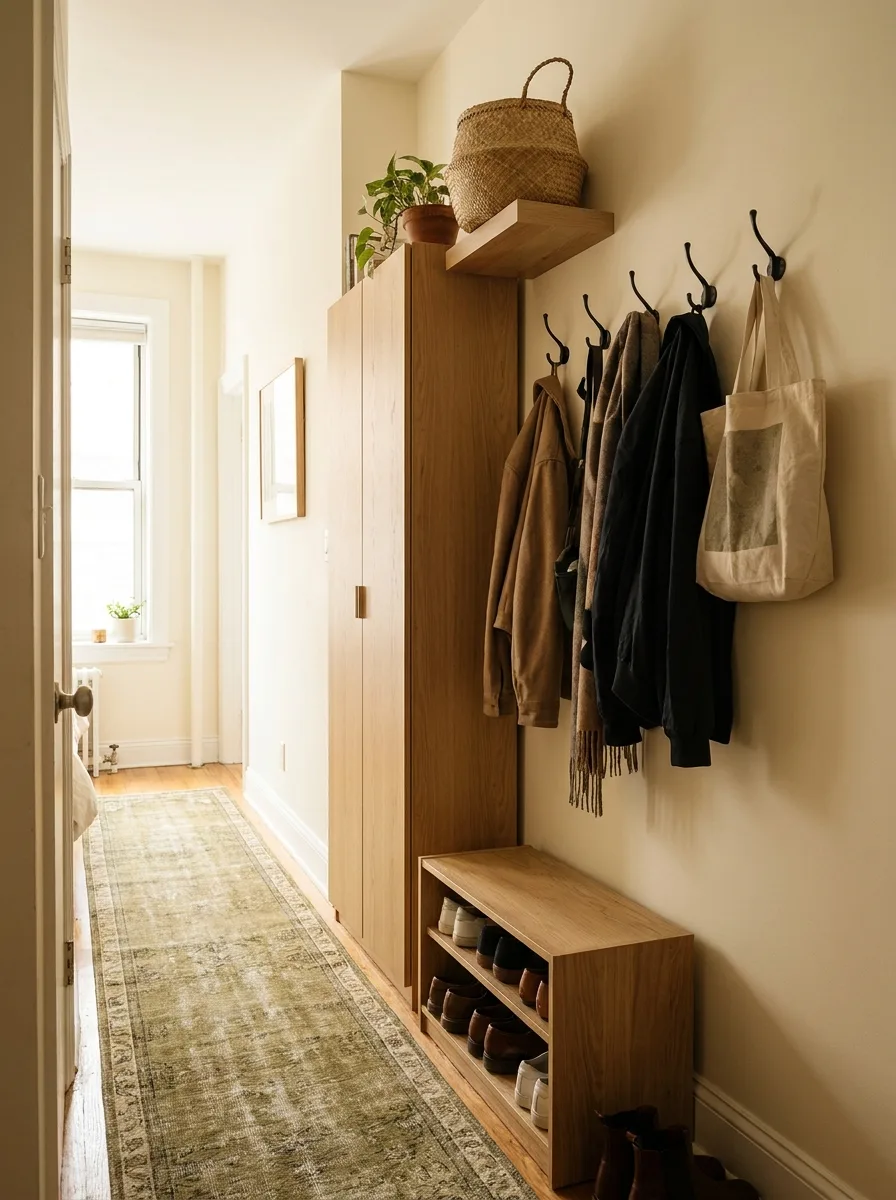
A narrow hallway often has substantial wall height even when floor width is scarce. Use that height to your advantage.
A tall, shallow cabinet can provide significant storage while keeping the main walkway completely unobstructed.
You can also combine hooks at the lower level with shelves or closed cabinets above. Keep frequently used belongings between waist and shoulder height, and reserve the uppermost sections for seasonal or occasional items.
This creates a natural functional hierarchy instead of forcing every item into the easiest-to-reach spot.
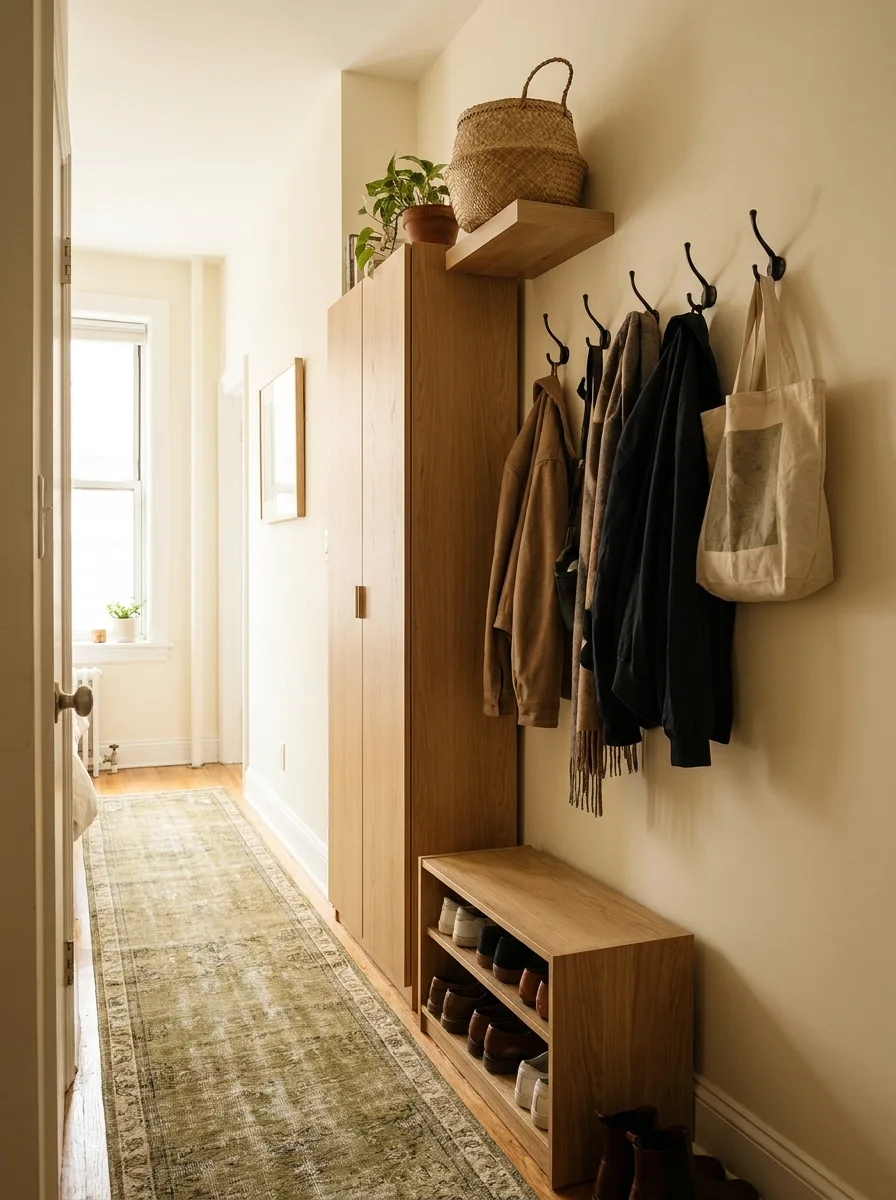
Design Tip: Paint tall vertical cabinets the same color as the surrounding wall to help them visually blend into the architecture.
13. Rework an Existing Entryway Closet
If your home already has an entry closet, don’t assume its original configuration is the best possible use of the space.
A basic builder-grade hanging rod often consumes the entire vertical height while leaving shoes, bags, and smaller items piled on the floor in chaos.
Consider dividing the closet into dedicated functional zones:
- Upper section: Seasonal storage boxes and rarely accessed gear.
- Middle section: Double-hung rods or a single rod with adjacent modular shelves.
- Lower section: Shoe rack or pull-out wire baskets.
- Door interior: Over-the-door hooks or slim pocket organizers.
The best closet is always organized around the categories you actually store rather than the configuration the builder installed.
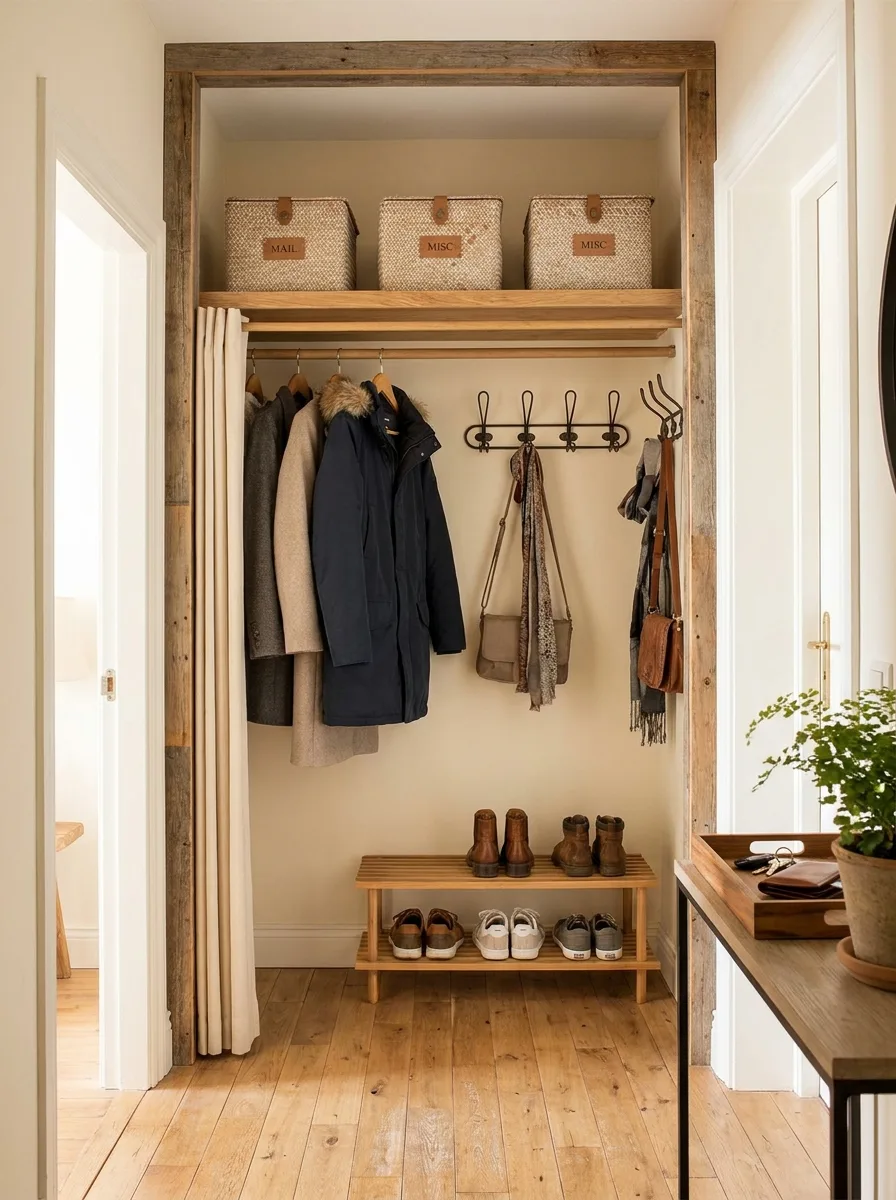
Design Tip: Add an interior battery-operated motion-sensor LED light strip to make finding belongings effortless.
14. Use the Space Above the Door
The area above a doorway is one of the most frequently ignored vertical storage opportunities in any home.
A shallow shelf installed above the door frame can provide useful storage for items that don’t need to be accessed daily: seasonal hats, extra tote bags, small storage boxes, or extra linens.
Because this area is high up, it should not become storage for heavy objects you need constantly.
Use lightweight, durable containers and ensure the shelf is anchored securely into wall studs. The purpose is to capture otherwise lost vertical space without hindering everyday convenience.
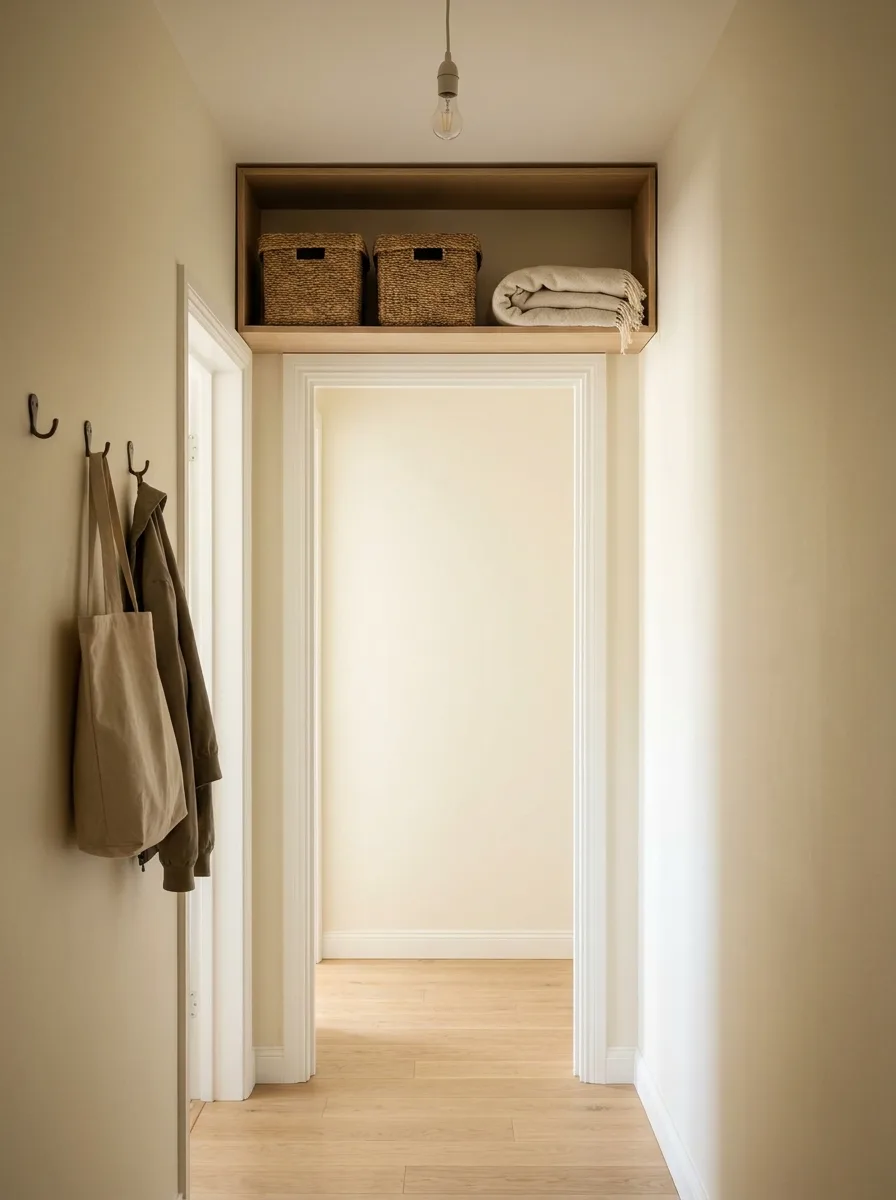
Design Tip: Choose lidded storage boxes in linen or fabric that match the wall color to keep the high shelf looking neat.
15. Create Hidden Storage Behind a Closet Door
Closet doors offer a valuable secondary storage surface that is hidden from view 95% of the time.
Depending on the door construction, the interior face can accommodate hooks, narrow wire racks, or hanging canvas organizers.
This is particularly useful for:
- Small handbags and clutches
- Scarves and gloves
- Compact umbrellas
- Dog walking leashes
- Reusable shopping bags
The advantage is that all these small items vanish the moment the door clicks shut. Just make sure the added storage depth doesn’t strike interior closet shelving when closed.
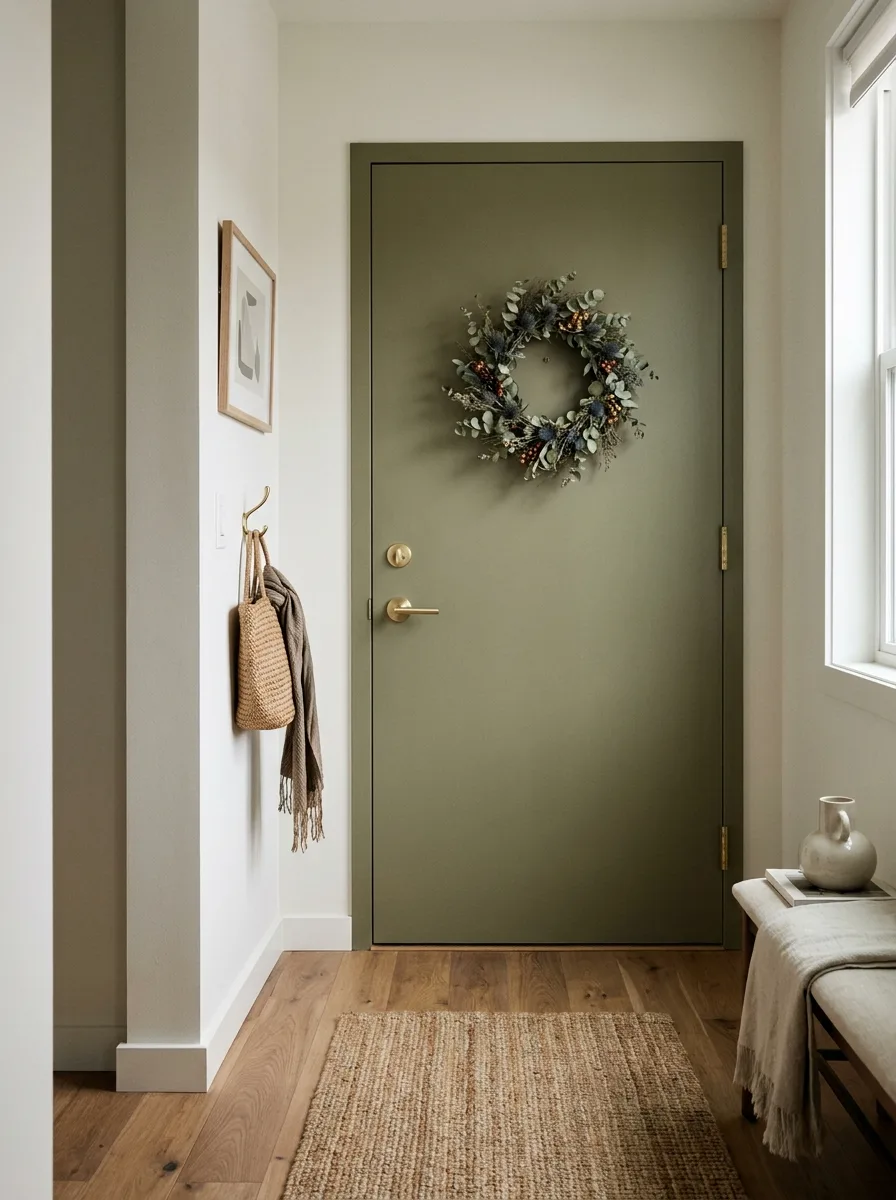
Design Tip: Screw organizers securely to solid doors rather than relying on over-the-door hooks that can scuff the door frame.
16. Install a Floating Shelf for Small Essentials
A floating shelf is useful when the entrance needs just a touch more storage surface rather than a full piece of furniture.
Keep it intentionally small. A shelf doesn’t need to hold everything in the house. It might simply provide a place for keys, sunglasses, one small basket, and a single decorative candle or framed print.
If you find you need more capacity later, add another purposeful storage layer rather than allowing the first shelf to become visually overloaded.
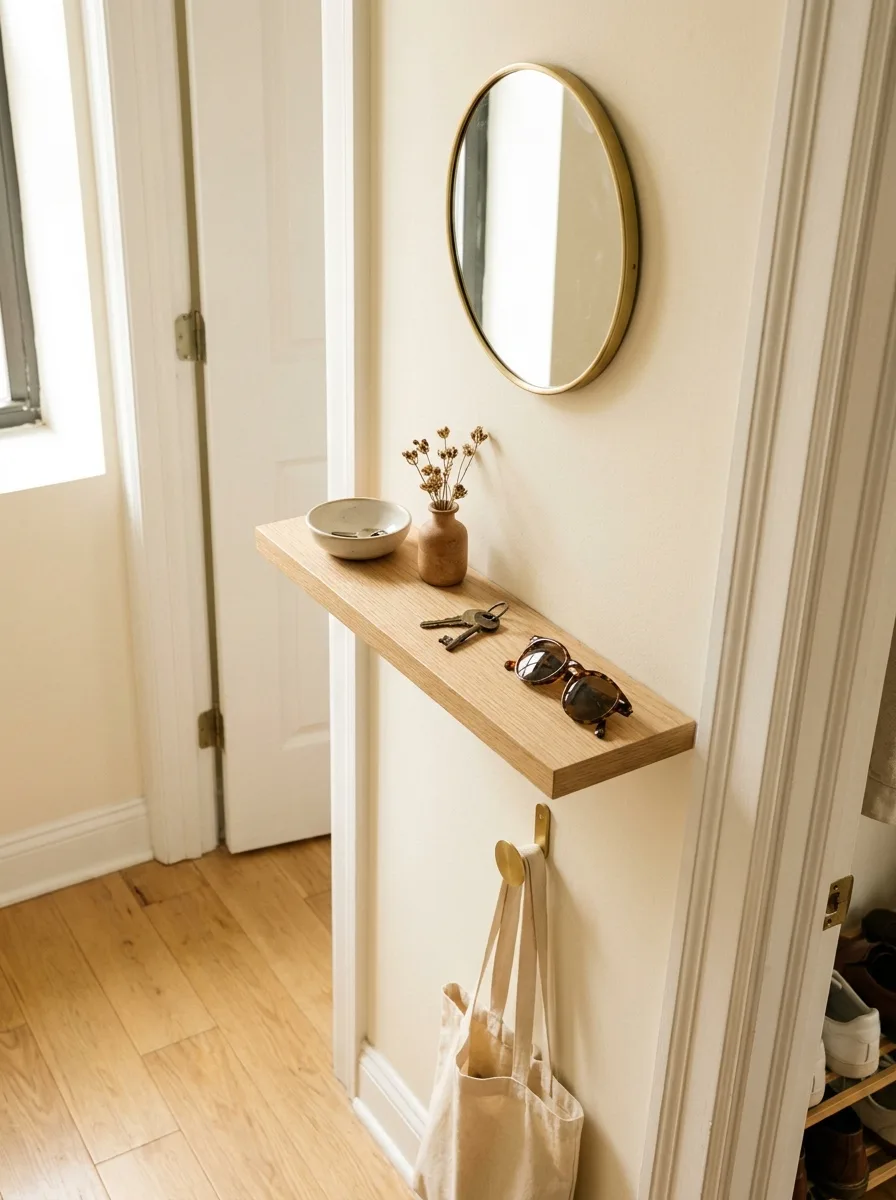
Design Tip: A floating shelf with a subtle lip prevents keys and round objects from accidentally rolling off.
17. Try a Peg Rail for Flexible Storage
A Shaker-style peg rail provides far more versatility than a fixed row of standard coat hooks.
You can hang coats, canvas shopping totes, dog leashes, hats, and even small hanging baskets from individual pegs.
It also introduces an architectural design detail to the wall rather than looking like an ad-hoc collection of hardware.
A painted peg rail matching the wall creates understated texture, while natural wood brings warmth. For renters, modular adhesive or low-impact peg rails offer similar functionality without wall damage.
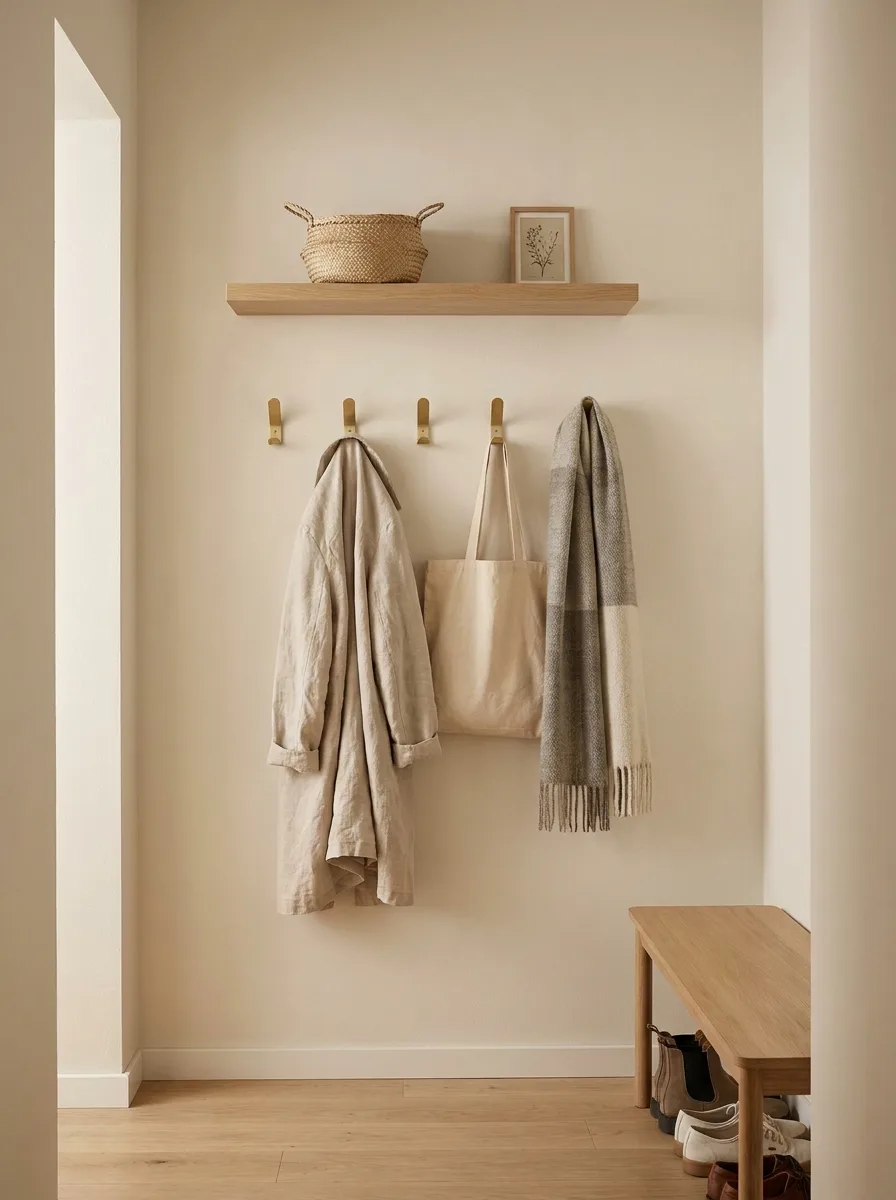
Design Tip: Run the peg rail across the entire wall length to visually elongate the entryway passage.
18. Let the Mirror Contribute to Storage
A mirror doesn’t have to be purely decorative.
Depending on the design, it can sit above a shallow cabinet, integrate with a built-in ledge, or feature small discreet pegs along its bottom frame.
In an especially compact entrance, combining reflective and practical functions is invaluable.
The mirror handles one of the entryway’s most natural activities—checking your appearance before stepping outside—while the furniture or ledge beneath it handles daily pocket contents.
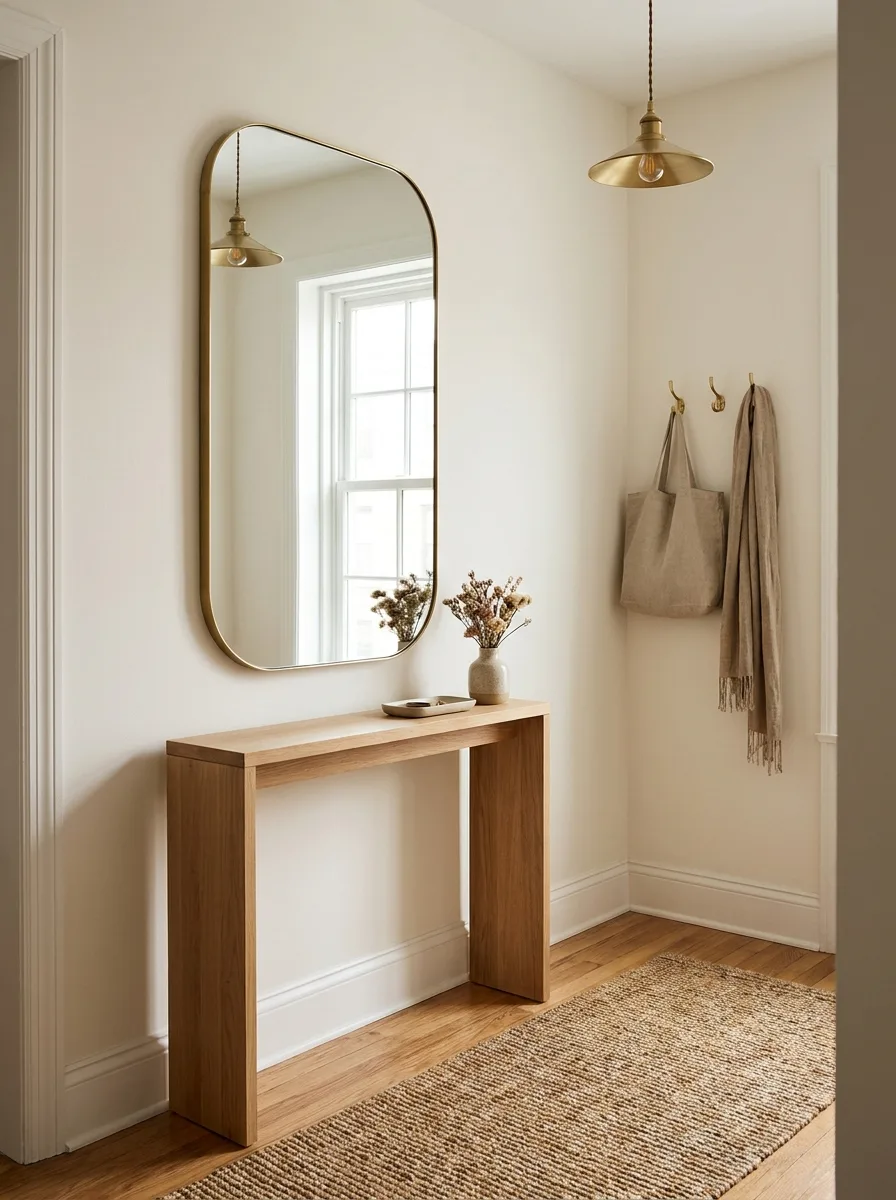
Design Tip: An arched mirror above a rectangular console softens linear hallway edges and bounces daylight into dimmer corners.
19. Add a Narrow Closed Cabinet
When visual clutter is your primary frustration, closed storage is consistently the most effective answer.
A tall, narrow cabinet can hold bags, shoes, winter accessories, umbrellas, and cleaning essentials without exposing a single item to view.
Look for a cabinet that is shallow enough for the passage but tall enough to take full advantage of vertical capacity.
If the entrance is particularly tight, door swing becomes crucial. Sliding doors or tambour fronts can be far more practical than standard hinged doors that open outward into the walking route.
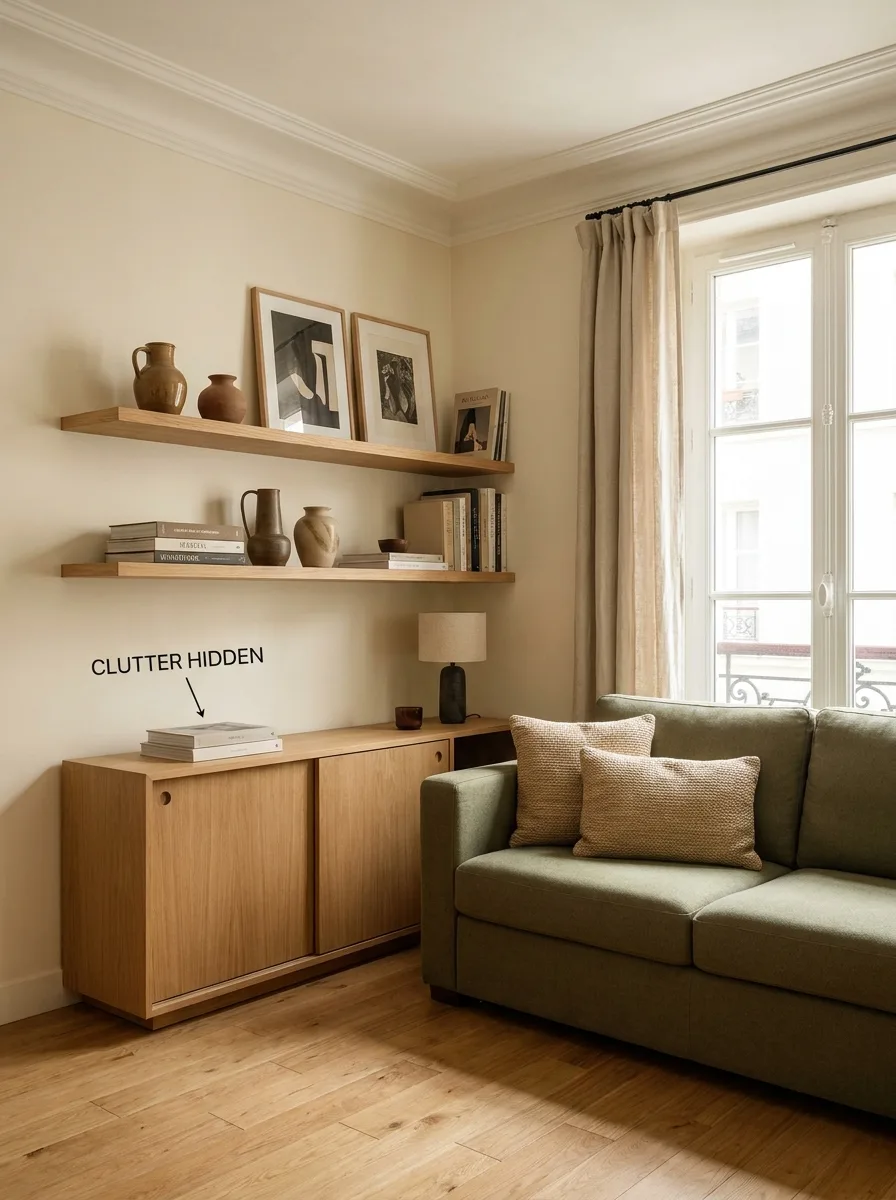
Design Tip: Use adjustable internal shelves so the cabinet can easily adapt as storage needs shift between seasons.
20. Create Individual Storage for a Family
Shared storage sounds efficient in theory until everyone in the household starts using it simultaneously.
If several people use the same entrance, consider giving each person a clearly defined area:
- One dedicated hook per family member
- One labeled basket per person
- Individual shoe compartments
- A shared high shelf with divided zones
The exact system matters less than clear ownership. When everyone knows precisely where their belongings belong, putting things away requires zero decision-making.
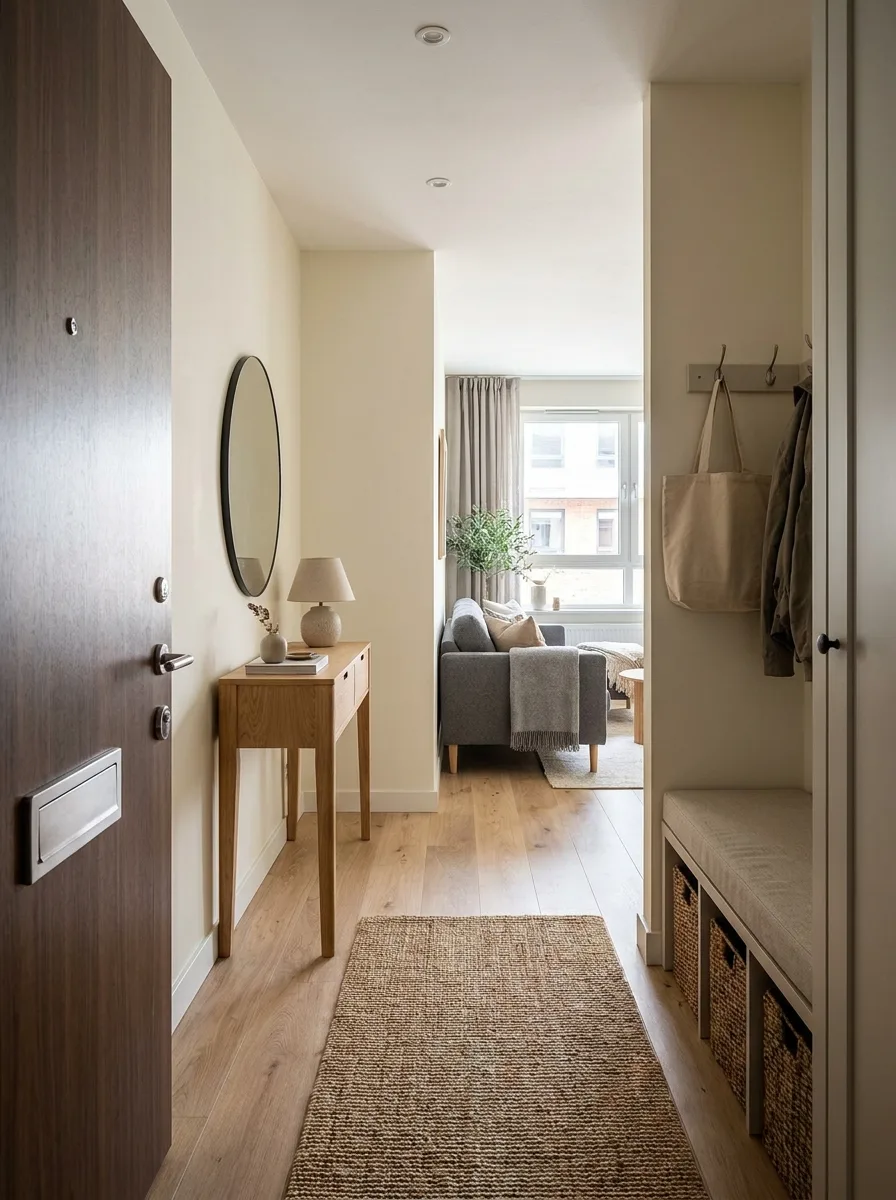
Design Tip: Assign lower hooks and baskets to children so they can independently unpack backpacks and hang coats.
21. Consider a Small Dresser
A compact chest of drawers can be surprisingly effective in an entrance with slightly more width.
Drawers provide enclosed storage for winter hats, gloves, dog accessories, spare keys, mail, and sunglasses.
It also provides a substantial tabletop for styling a table lamp, mirror, ceramic tray, or floral arrangement.
The critical factor is depth. A traditional bedroom dresser is often too deep (18 to 22 inches) for an entrance, so look specifically for narrow chests around 12 to 14 inches deep.
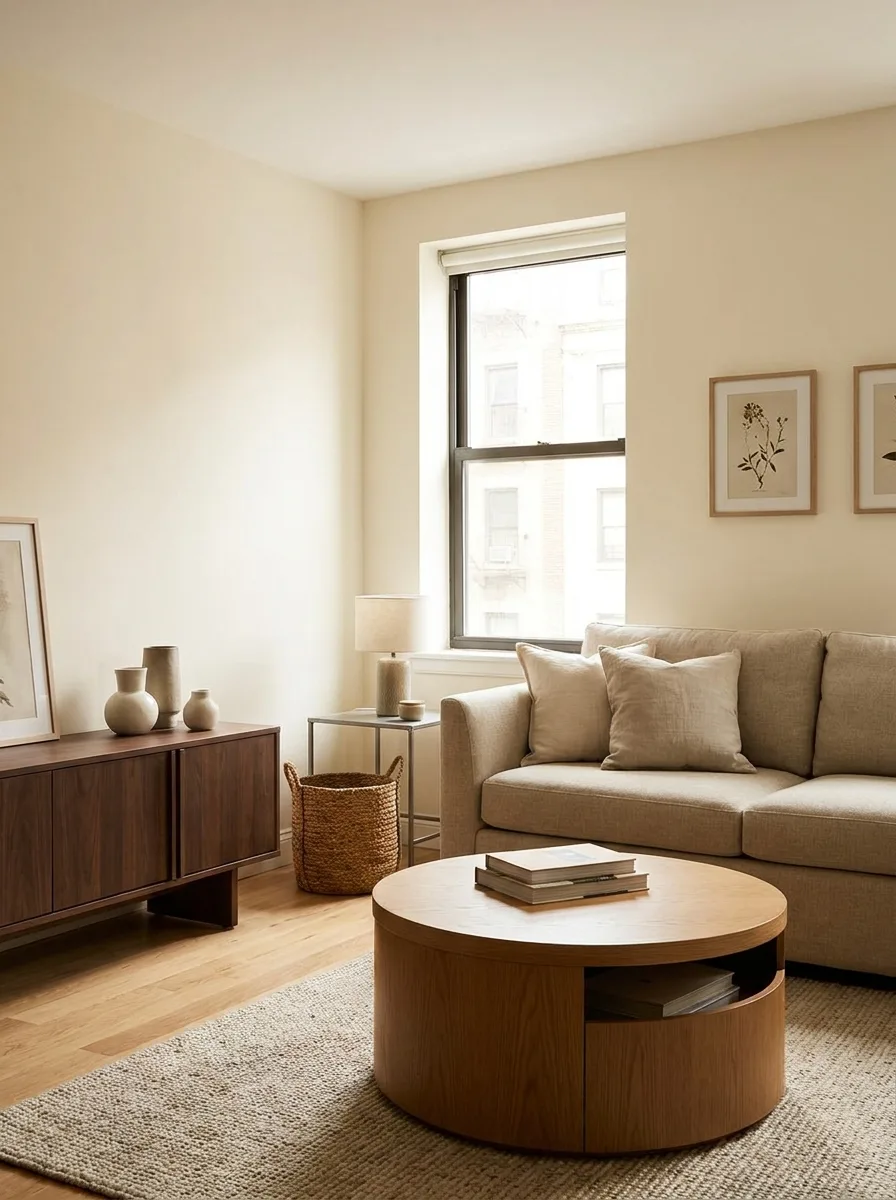
Design Tip: Dedicate the top drawer to everyday grab-and-go items, and lower drawers to seasonal accessories.
22. Combine Open and Closed Storage
The most functional entryways rarely rely on just one storage type.
Open storage is fantastic for items you use multiple times a day. Closed storage is essential for belongings that need to be accessible but don’t look attractive sitting in plain view.
For example:
- Open: Today’s coat, everyday work bag, daily slip-on shoes.
- Closed: Off-season accessories, extra shoes, incoming paperwork, spare shopping totes.
This balanced combination keeps the entrance effortless to use while preventing everyday belongings from cluttering your home’s visual landscape.
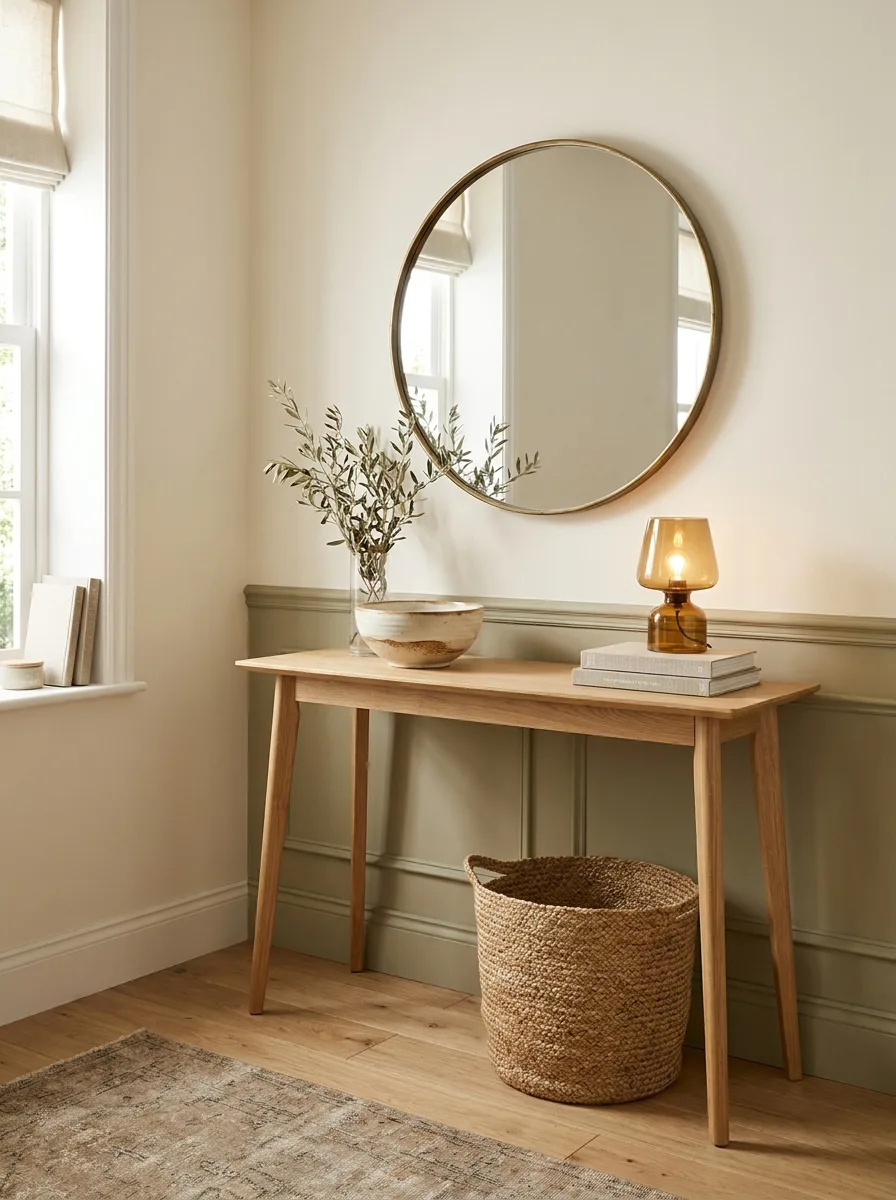
Design Tip: Keep an 80/20 rule: roughly 80% of items concealed in drawers/cabinets, and only 20% on open display.
23. Design Storage Around Your Routine
The single most important storage decision is not which furniture aesthetic you choose—it’s where you position each solution.
- If bags always land immediately beside the door, put a sturdy hook right there.
- If shoes pile up beneath the console, install dedicated shoe trays there.
- If keys disappear onto the kitchen island, establish an intuitive key dish closer to the front entrance.
- If incoming mail collects on the console, add a dedicated ceramic paperwork tray.
Storage works best when it is placed at the exact friction point where daily habits occur. You aren’t trying to force your household to behave like different people. You are designing the space so that the easiest natural behavior is also the organized one.
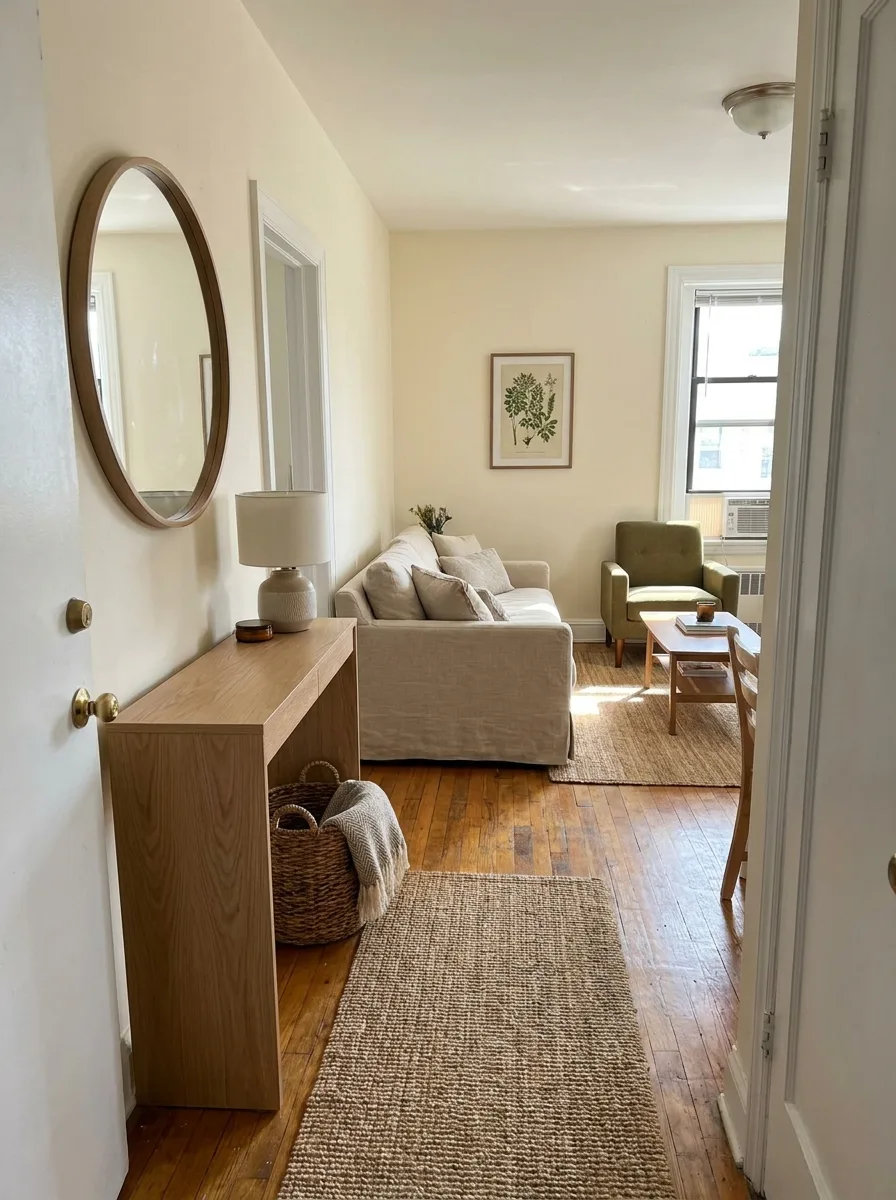
Design Tip: Test your entryway flow for one week. Wherever clutter consistently collects is where your storage needs to be.
How Much Entryway Storage Do You Actually Need?
This is where many home organization projects go wrong: people see an empty wall and assume they need to cover it completely with cabinetry.
Storage capacity should be determined by daily volume, not available wall area. Start by estimating what truly needs to stay near the door:
| Category | What Genuinely Needs to Stay by the Door? |
|---|---|
| Shoes | Everyday pairs only (2–3 per person) |
| Coats | Current-season jackets only |
| Bags | Daily work tote, backpack, or handbag |
| Keys | Daily sets |
| Accessories | Current-season hats, scarves, or umbrellas |
| Incoming items awaiting review | |
| Pet Gear | Daily walking leash and waste bags |
This realistic audit immediately reduces the amount of storage required. A small entrance doesn’t need an elaborate mudroom; it simply needs well-defined boundaries.
Open Storage vs. Closed Storage
| Storage Type | Best Used For | Key Advantages |
|---|---|---|
| Open Storage (Hooks, Shelves, Trays) | Daily coats, bags, frequently worn shoes, keys | Instant grab-and-go access, visually lighter footprint, budget-friendly |
| Closed Storage (Cabinets, Drawers, Lidded Baskets) | Paperwork, off-season accessories, extra shoes, miscellaneous clutter | Complete visual calm, hides irregular items, ideal when entryway is visible from living areas |
For most households, the most sustainable setup is a deliberate hybrid: open access for high-frequency daily items, and closed storage for everything else.
Common Entryway Storage Mistakes
- Buying the biggest storage unit that fits: More capacity isn’t always better; an oversized cabinet can make an entrance feel claustrophobic.
- Storing everything near the door: The entryway is not a storage facility; keep only what is actively used during arrivals and departures.
- Ignoring furniture depth: A console can look narrow in width but project too far into the hallway walking route.
- Mixing too many mismatched storage systems: Combining five conflicting bins, racks, and shelving styles creates visual chaos.
- Making everything open: Exposing every shoe, coat, and umbrella creates unavoidable visual friction.
- Making everything closed: If everyday belongings are behind complicated latches or multiple doors, people will simply leave them out.
- Forgetting the household size: A storage system designed for one person will collapse under the demands of a family of four.
- Ignoring seasonal changes: Build flexibility into the system so it effortlessly adapts from light summer sandals to heavy winter coats and boots.
Final Thought
Good entryway storage isn’t about hiding every single household possession. It’s about making everyday life easier.
When shoes have somewhere to go, bags have dedicated hooks, keys have an intuitive landing place, and seasonal belongings aren’t competing with the items you reach for every morning, the entire home starts to feel calmer.
That calm doesn’t come from having an enormous custom mudroom. It comes from understanding how your household actually moves through the door and designing simple, beautiful storage around those habits.
A beautiful entryway is lovely to come home to—and a well-organized one quietly makes the rest of the home feel effortless to live in.
Editorial Guidelines: Quick Practical Rules
- Design around behavior: Notice where keys, bags, and shoes naturally get dropped, and position storage at those exact points.
- Watch furniture depth: In narrow entryways, keep consoles and cabinets between 10 and 14 inches deep to preserve walking clearance.
- Separate daily from seasonal storage: Keep only current-season coats and everyday shoes by the door; store occasional items elsewhere.
- Combine open and closed storage: Use open hooks and shelves for grab-and-go essentials, and closed drawers or baskets for visually busy clutter.
- Establish a key station: Give keys and everyday pocket contents one permanent, dedicated landing tray or shallow drawer.
What Often Goes Wrong (And How to Fix It)
- Buying the biggest storage unit that fits: A massive cabinet can easily overwhelm an entrance and make circulation feel pinched.
- Storing everything near the door: The entrance isn't a warehouse; keep only items that genuinely benefit from entrance placement.
- Ignoring furniture depth: A unit can look narrow in width but extend too far into the hallway passage.
- Mixing too many mismatched storage systems: Five conflicting baskets, hooks, and cabinets create visual chaos.
- Making everything open: Exposing every everyday item creates persistent visual friction.
- Making everything closed: If high-frequency items are difficult to access, family members will leave them out.
- Forgetting the household size: A system designed for one person will collapse when four people share it.
- Ignoring seasonal changes: Build flexibility into your system so it easily absorbs heavy winter coats and summer accessories.
Frequently Asked Questions
What is the best storage for a small entryway?
The best solution depends on what needs to be stored, but wall hooks, slim shoe cabinets, floating shelves, narrow consoles, baskets, and compact storage benches are particularly useful in small entrances.
How do you store shoes in a small entryway?
Use a slim shoe cabinet, shallow shelving, baskets beneath a bench, or a dedicated section of an entryway closet. Keep only regularly worn shoes near the entrance.
How can I add storage to a narrow hallway?
Prioritize shallow or wall-mounted storage. Hooks, floating shelves, peg rails, and narrow vertical cabinets can add capacity without significantly reducing walking space.
Should entryway storage be open or closed?
A combination is often most practical. Keep frequently used items accessible and use closed storage for less attractive or less frequently used belongings.
How do I organize an entryway for a family?
Give each person a defined storage area through individual hooks, baskets, drawers, or shoe sections. Shared storage can still work for items everyone uses.
How deep should an entryway console be?
For tight entrances, a console around 10–14 inches deep can often provide useful surface and storage space while remaining relatively unobtrusive. Always measure the actual clearance available in your particular hallway.
How do I stop my entryway from becoming cluttered?
Give every recurring category a specific home, keep only regularly used items near the entrance, and periodically remove belongings that no longer need to live there.
The House Chapter Editorial
Interiors & Styling Editors • The House Chapter
Curated by our team of interior designers, home organizers, and editorial stylists dedicated to practical, beautiful living.
Entryways & Hallways
A little inspiration for your next chapter at home.
Receive curated decorating dispatches, practical hallway storage blueprints, and quiet design moments delivered straight to your inbox.
No spam. No daily noise. Unsubscribe at any time with one click.
Related Chapters
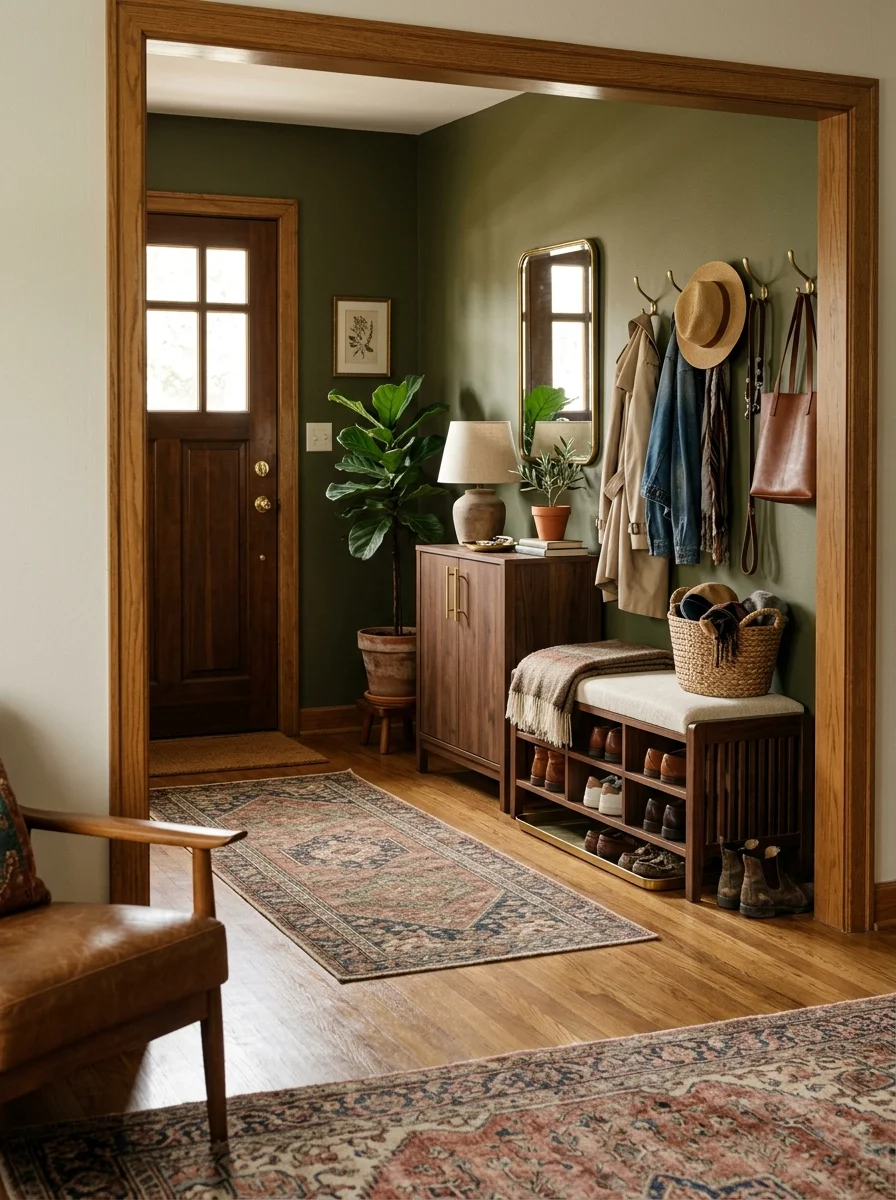
Entryway Shoe Storage Ideas That Actually Work
Discover practical entryway shoe storage ideas for small foyers, apartments, narrow hallways, and busy family homes without making the entrance feel cluttered.
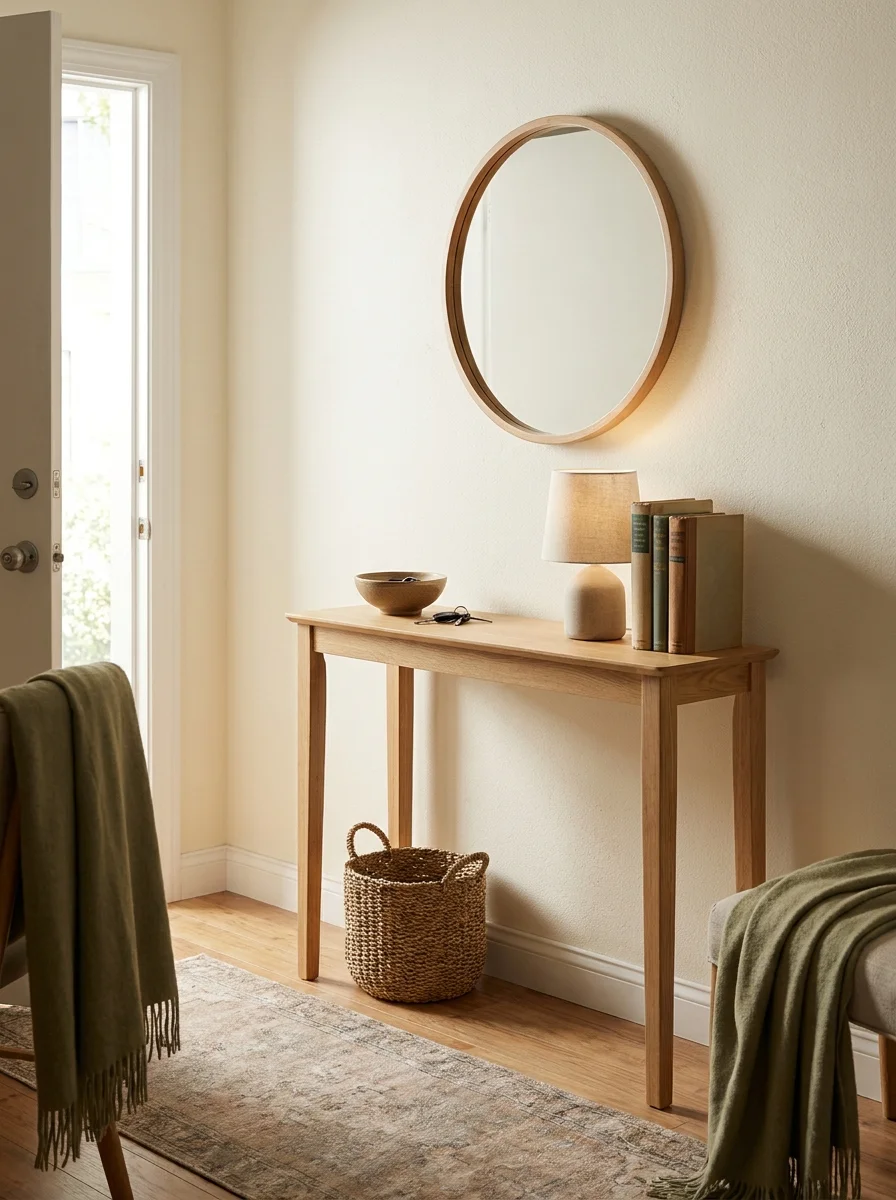
21 Small Entryway Ideas That Make Every Inch Work
Make the most of a small entrance with these practical small entryway ideas for storage, furniture, mirrors, lighting, and stylish everyday organization.
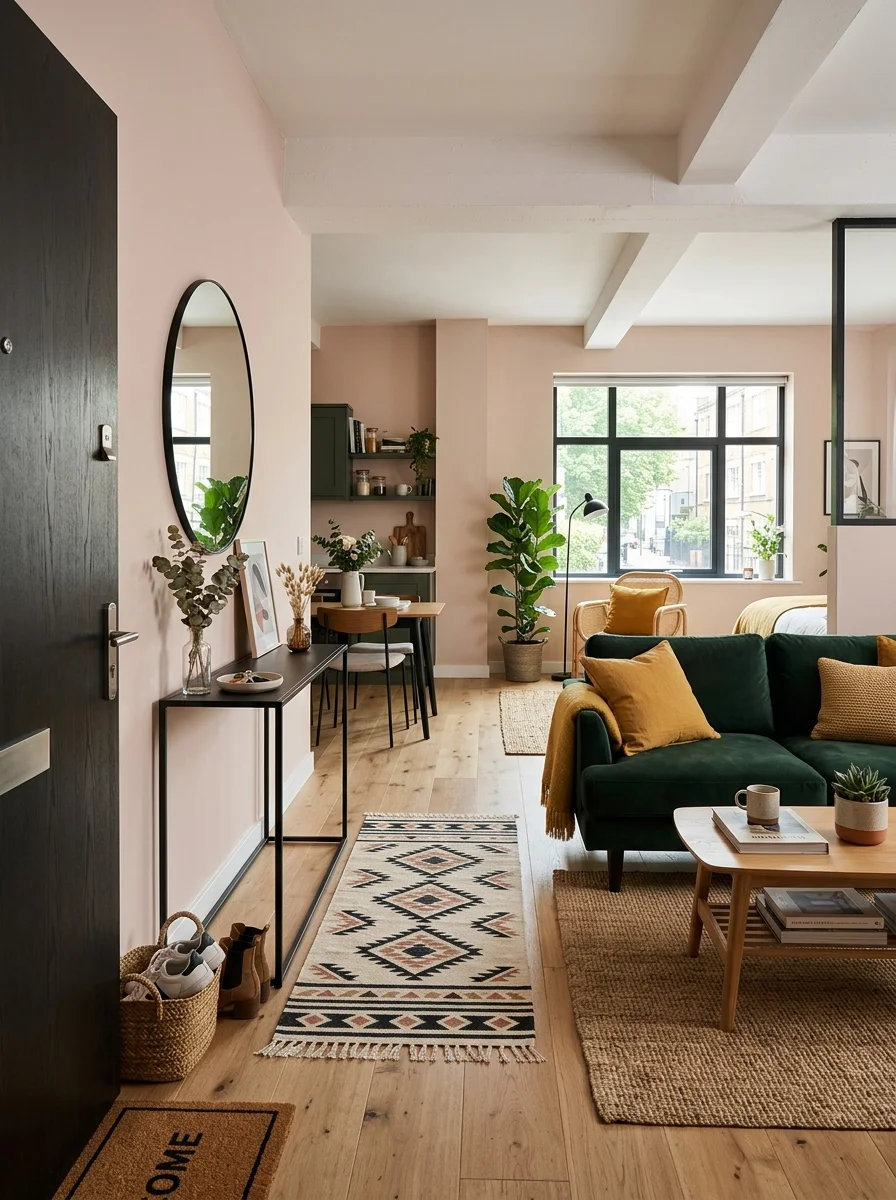
Apartment Entryway Ideas for a More Welcoming Entrance
Make an apartment entrance feel welcoming with practical entryway ideas for storage, furniture, lighting, mirrors, narrow spaces, and renter-friendly decorating.
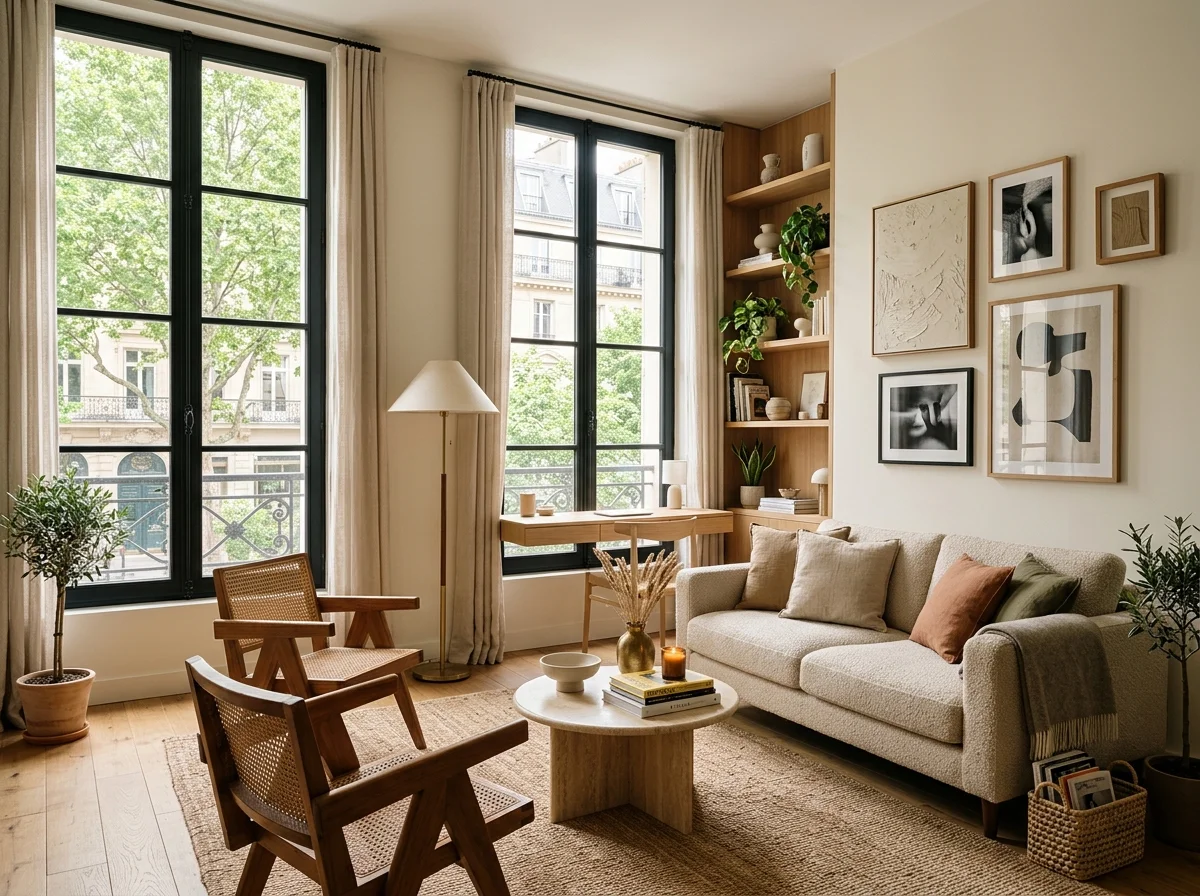
21 Small Space Ideas That Make a Home Feel Bigger
Make a small home feel more spacious and functional with these practical small space ideas for furniture, storage, layout, lighting, and everyday living.