Apartment organization is rarely about finding one miraculous storage product.
It is usually about making dozens of small decisions that work together.
Where do your keys go when you come home? Where do shoes actually belong? What happens to laundry between wearing it and washing it? Where do cleaning supplies live? What happens when kitchen cabinets run out of room? And perhaps most importantly, what happens to the things that don’t have an obvious home?
In an apartment, these questions matter because there is usually less room to absorb organizational mistakes. A large house can sometimes hide an inefficient storage system behind an extra closet or spare room. An apartment usually can’t.
That makes good organization less about adding containers and more about creating a home for things at the exact point where you use them.
A successful apartment can still feel relaxed, personal, and beautifully decorated. It doesn’t need labeled bins covering every shelf or a perfectly empty countertop. The goal is simpler:
Make the home easier to use without making it feel like a storage system.
The Most Useful Apartment Organization Principle: Organize by Routine
Before buying organizers, watch what happens during an ordinary day.
The things you use in the morning should be easy to access in the morning. The things you use when leaving the apartment should be near the entrance. Cleaning supplies should be close to the areas they clean. Cooking equipment should be stored according to how often you use it.
This sounds obvious, but many homes are organized according to available cabinets rather than actual routines.
A good organization system reduces the number of decisions you have to make. When something has an obvious home, putting it away becomes almost automatic.
1. Create a Landing Zone Near the Front Door
The entrance is usually where organizational problems begin.
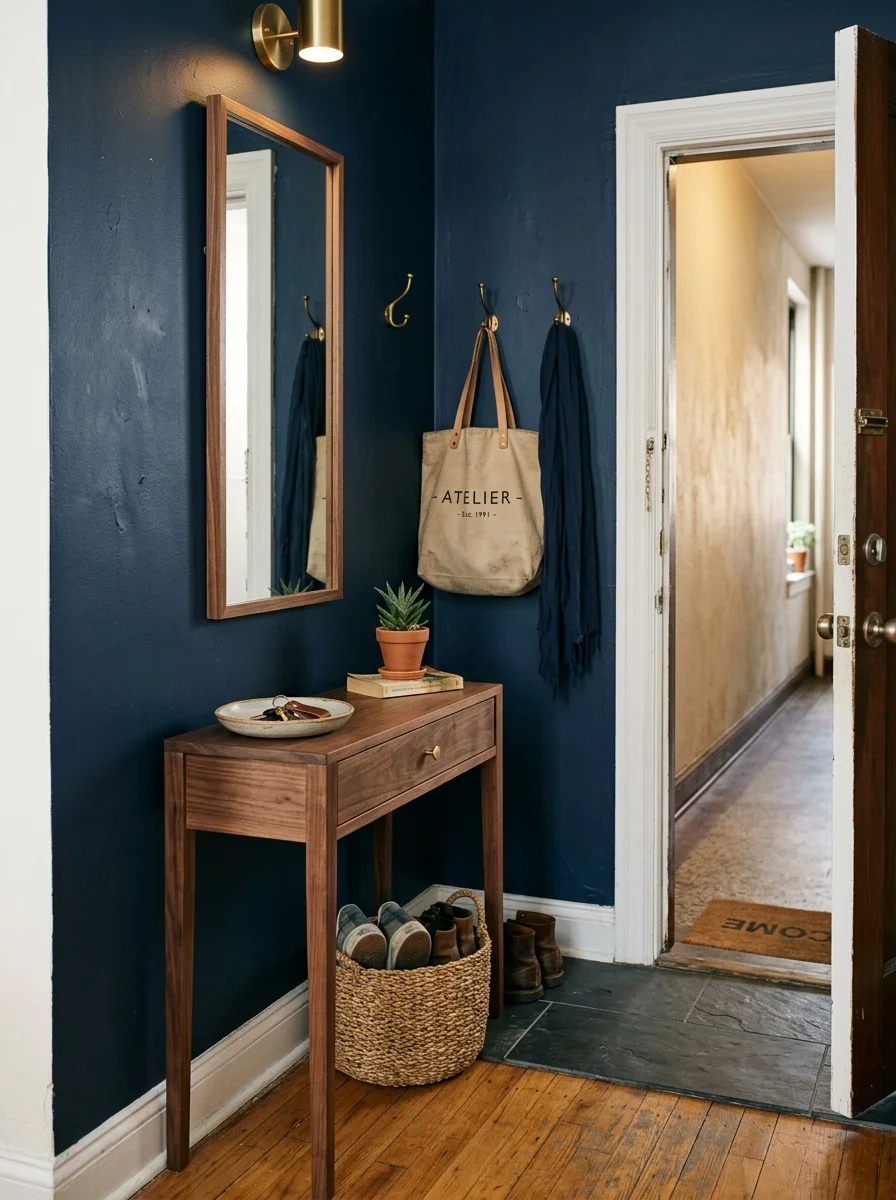
Instead of allowing keys, bags, shoes, mail, and coats to spread into the apartment, give them a defined landing zone. It doesn’t need to be a large foyer. A small wall shelf with hooks may be enough. If you have more space, add a narrow console, shoe cabinet, or storage bench.
The important part is that the landing zone sits close to the door. You want to make the organized behavior the easiest behavior.
What belongs here? Keep it limited to things associated with coming and going:
- Everyday shoes
- Current-season coat
- Daily bag
- Keys and sunglasses
- Umbrella and small accessories
Anything else should have another home.
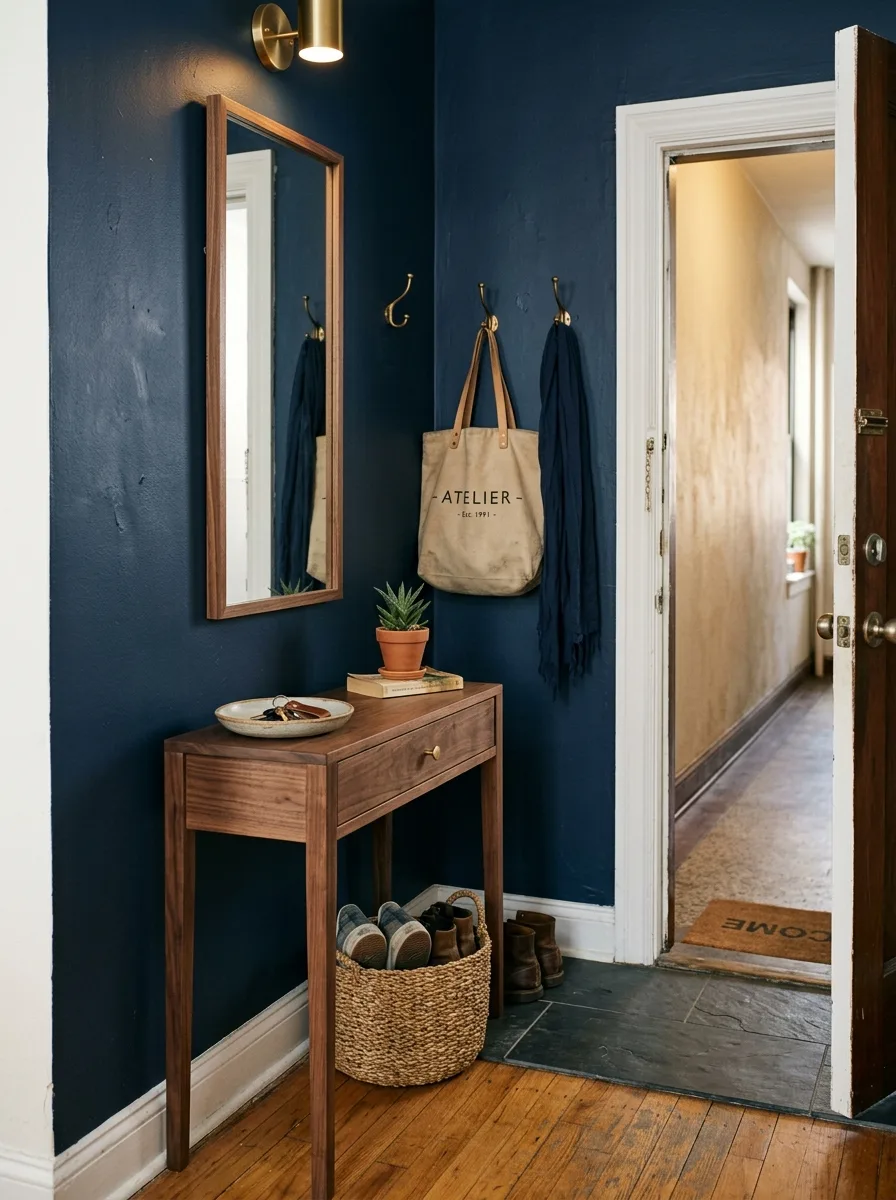
Design Tip: Position your drop zone within arm’s reach of the door so unburdening your hands is instantaneous.
2. Stop Using the Kitchen Counter as Storage
Kitchen counters are particularly vulnerable to becoming permanent storage.
Coffee equipment, mail, appliances, groceries, chargers, containers, and random household objects can slowly take over.
Start by deciding what genuinely deserves to stay on the counter. If you use a coffee machine every morning, leaving it out makes sense. If you use a blender twice a month, it probably doesn’t need permanent counter space.
The difference can be surprisingly noticeable.
A useful test: For every object on the counter, ask: Would I use this today? If the answer is no, look for a better location.
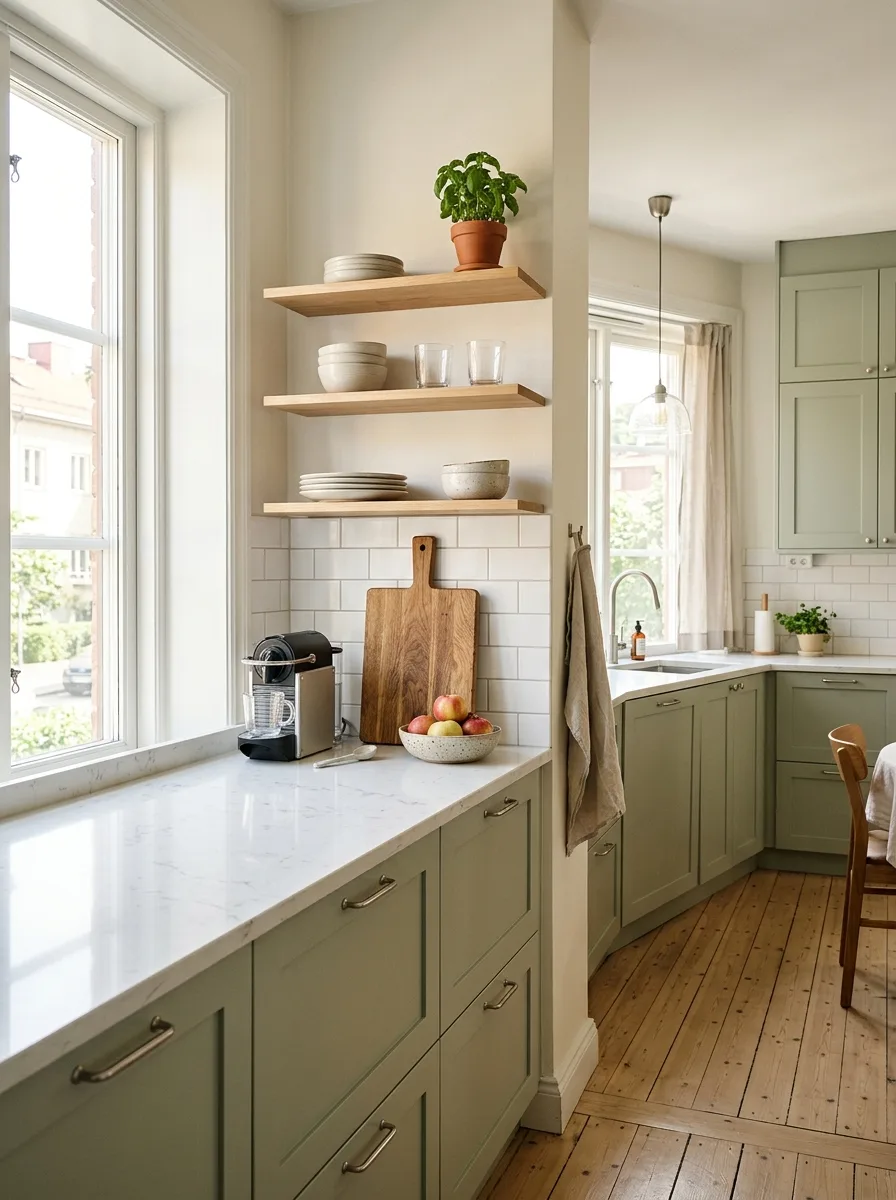
Design Principle: Clear countertop space is active cooking workspace, not passive holding territory.
3. Give Small Kitchen Appliances a Dedicated Zone
Small appliances become difficult in apartments because they are individually manageable but collectively bulky.
Instead of scattering them throughout different cabinets, group them according to frequency of use. Daily appliances should be easiest to access. Occasional appliances can move to higher or less convenient storage.
For example:
- Daily: Coffee machine, toaster.
- Weekly: Blender, food processor.
- Occasional: Waffle maker, specialty baking equipment.
This turns the kitchen into a hierarchy rather than a collection of equally accessible objects.
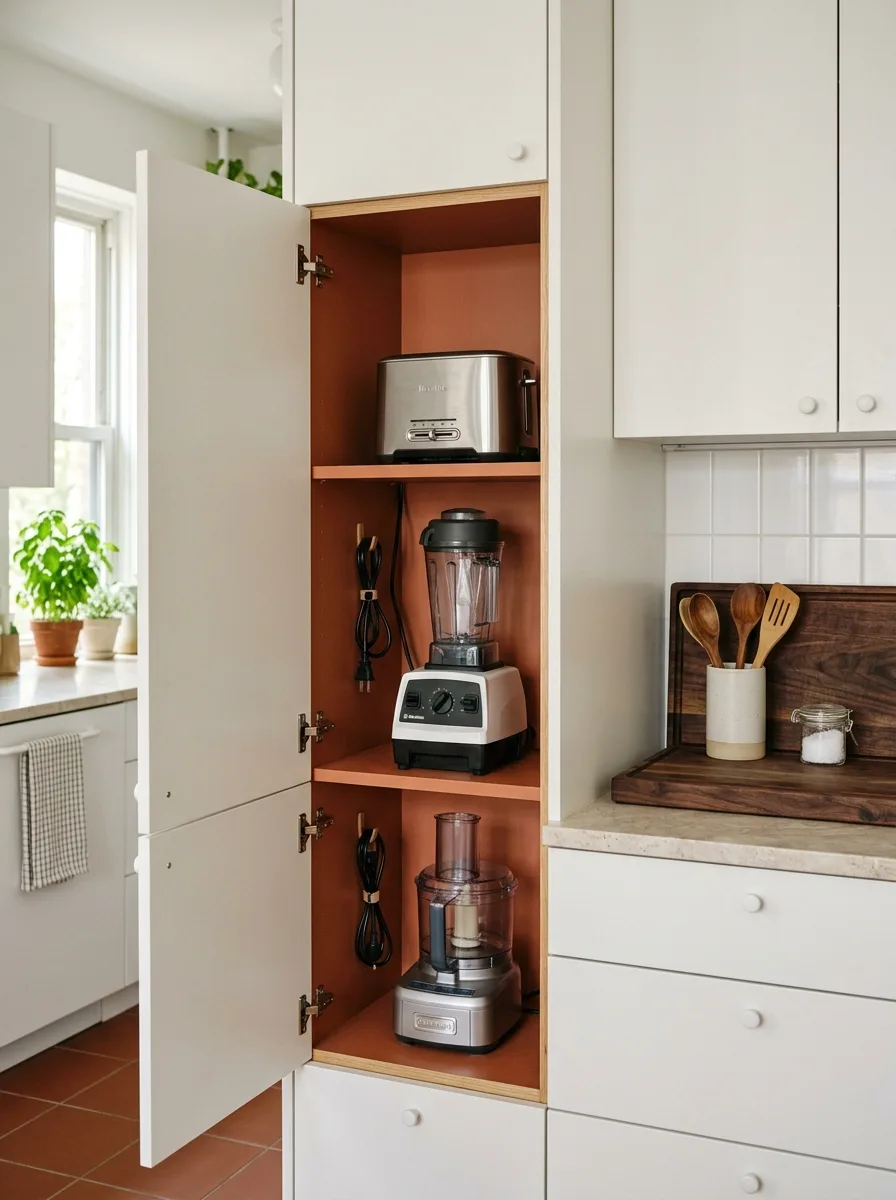
Design Tip: Reserve prime waist-height shelving for appliances you touch several times a week.
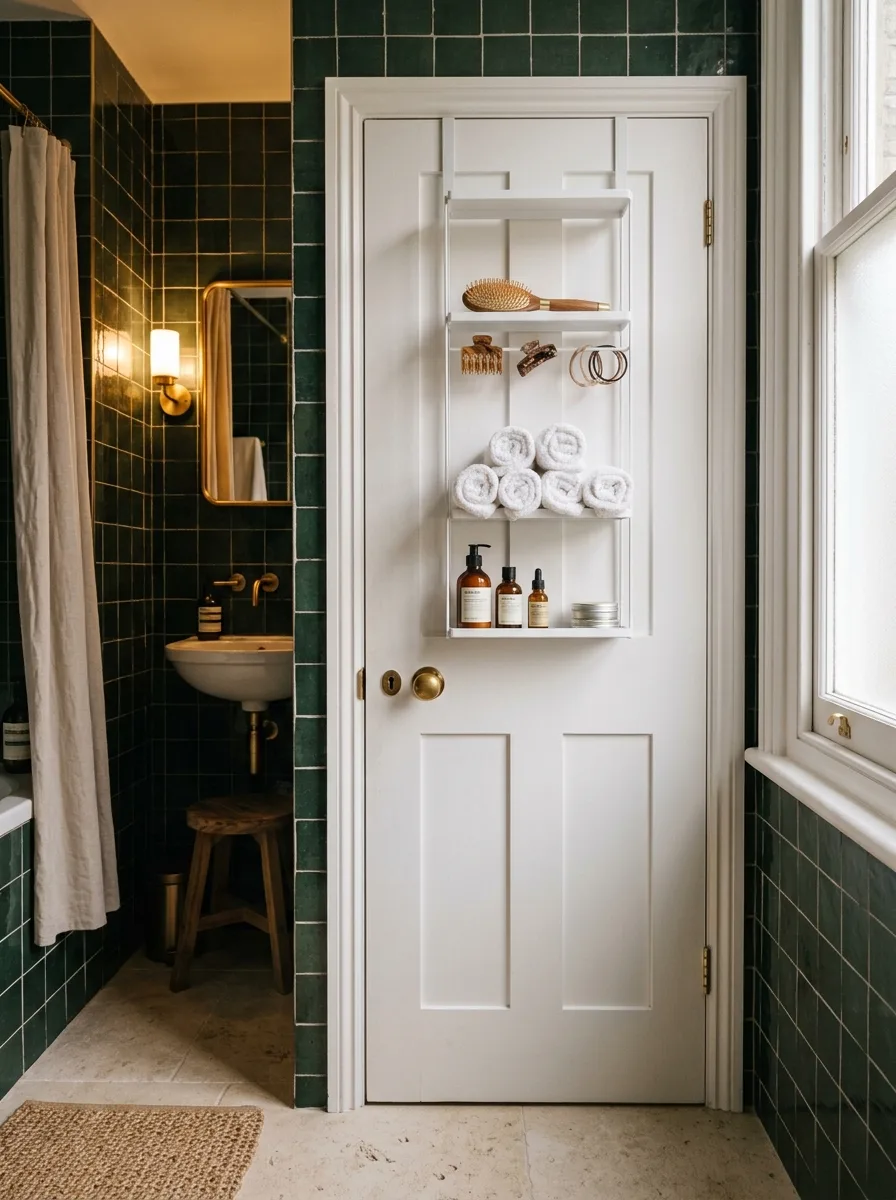
4. Use the Inside of Cabinet Doors
The inside of a cabinet door is valuable hidden storage.
Depending on the cabinet and what it contains, it can hold:
- Measuring spoons
- Cleaning cloths and scrub brushes
- Pot lids
- Foil, parchment paper, and plastic wraps
- Hair styling tools and small bathroom supplies
The advantage is that these items disappear completely when the door closes. Just avoid adding organizers that prevent the cabinet from latching shut or interfere with plumbing, hinges, or existing shelves.
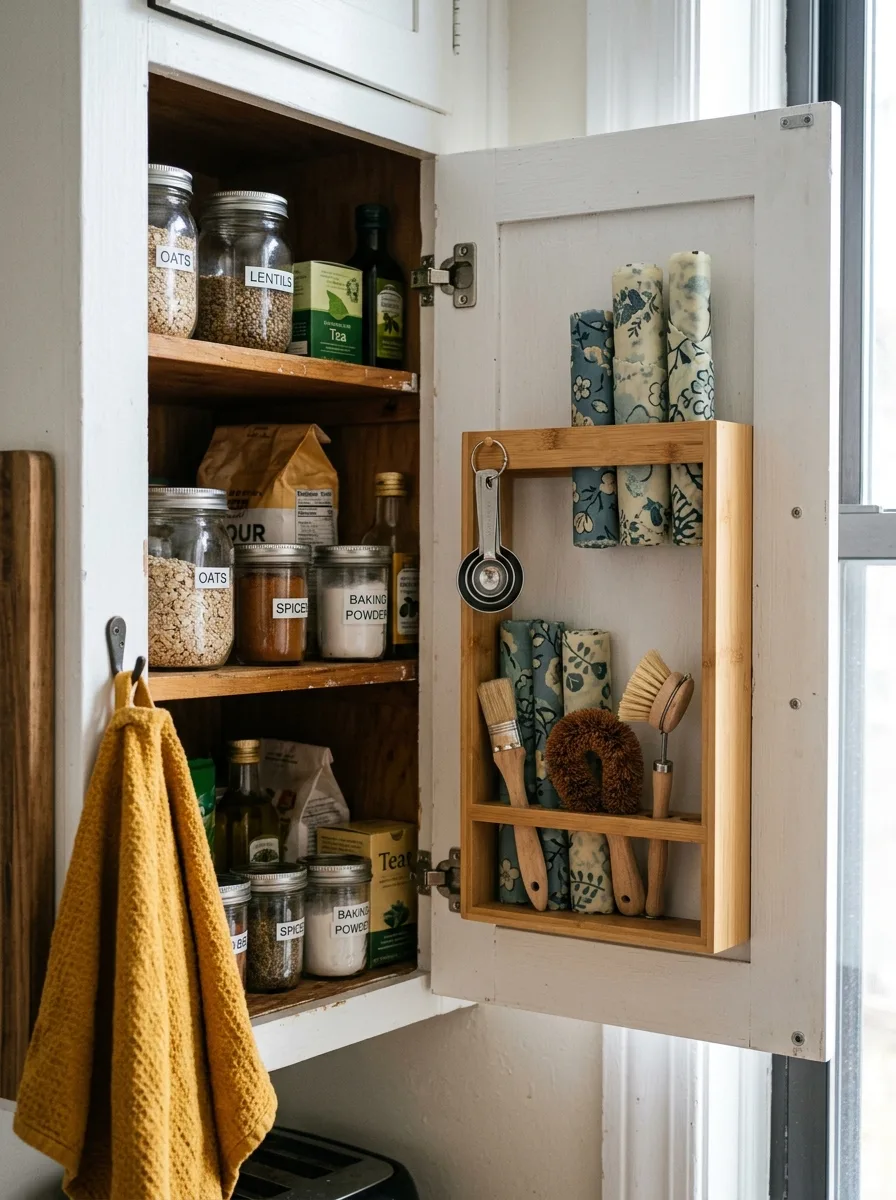
Design Tip: Measure the clearance between the closed door and internal shelves before mounting adhesive racks.
5. Create a Real Home for Cleaning Supplies
Cleaning products often end up scattered throughout an apartment: a bottle under the kitchen sink, another in the bathroom, extra cloths in a random cupboard, and vacuum accessories somewhere else.
Instead, create one primary cleaning zone.
A small apartment may use the space beneath the kitchen sink, a utility cabinet, a laundry cupboard, or a tall narrow storage unit.
Keep the products you use most often at the front. Less frequently used supplies can move toward the back or higher shelves.
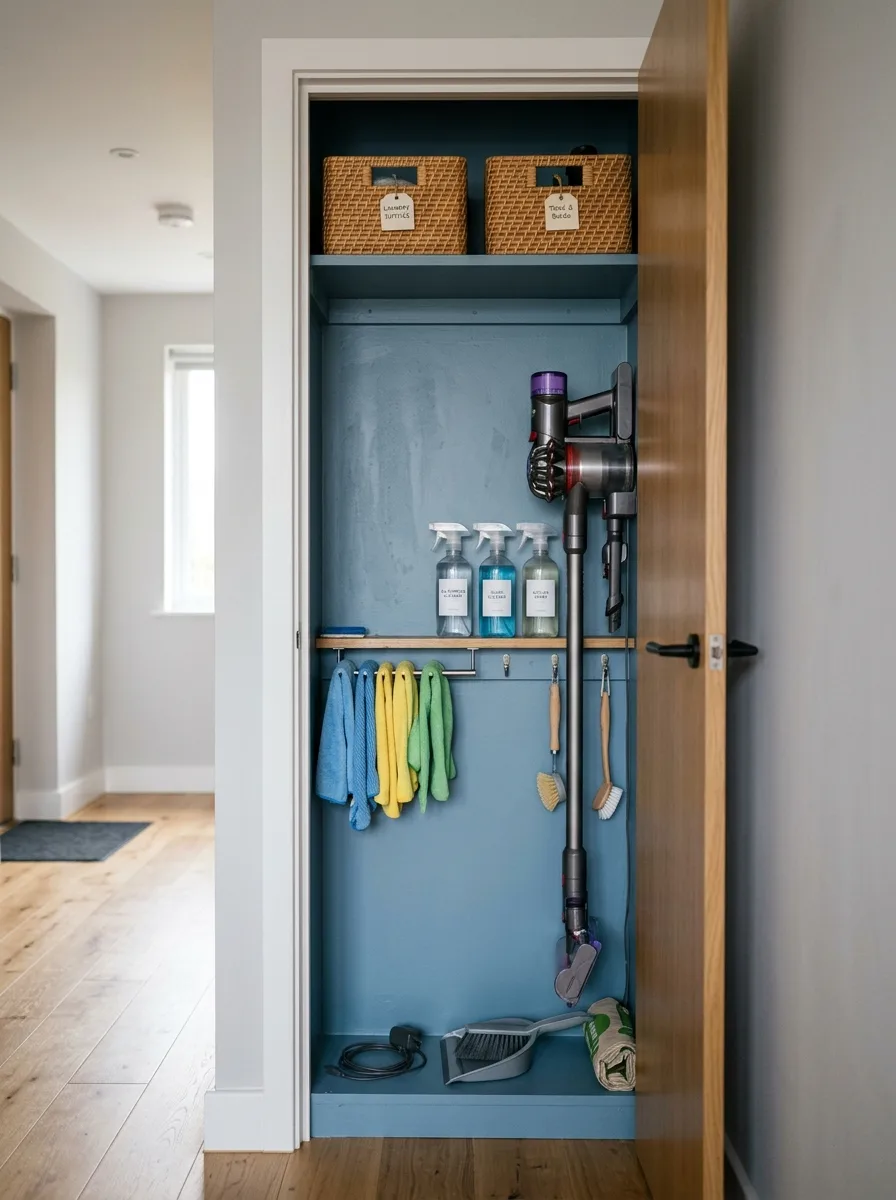
Design Tip: Keep all bathroom-specific cleaners in a portable caddy so you can lift everything out in one motion.
6. Organize the Wardrobe by Frequency, Not Just Category
Closets are often organized strictly by clothing type, but frequency can be equally useful.
Current-season clothing should be easiest to reach. Occasional pieces can move higher. Special-event clothing can occupy less accessible areas.
This means the wardrobe works around your actual life rather than giving equal space to everything you own. If you have limited hanging space, folding knitwear and denim can also free up room for pieces that genuinely benefit from hanging.
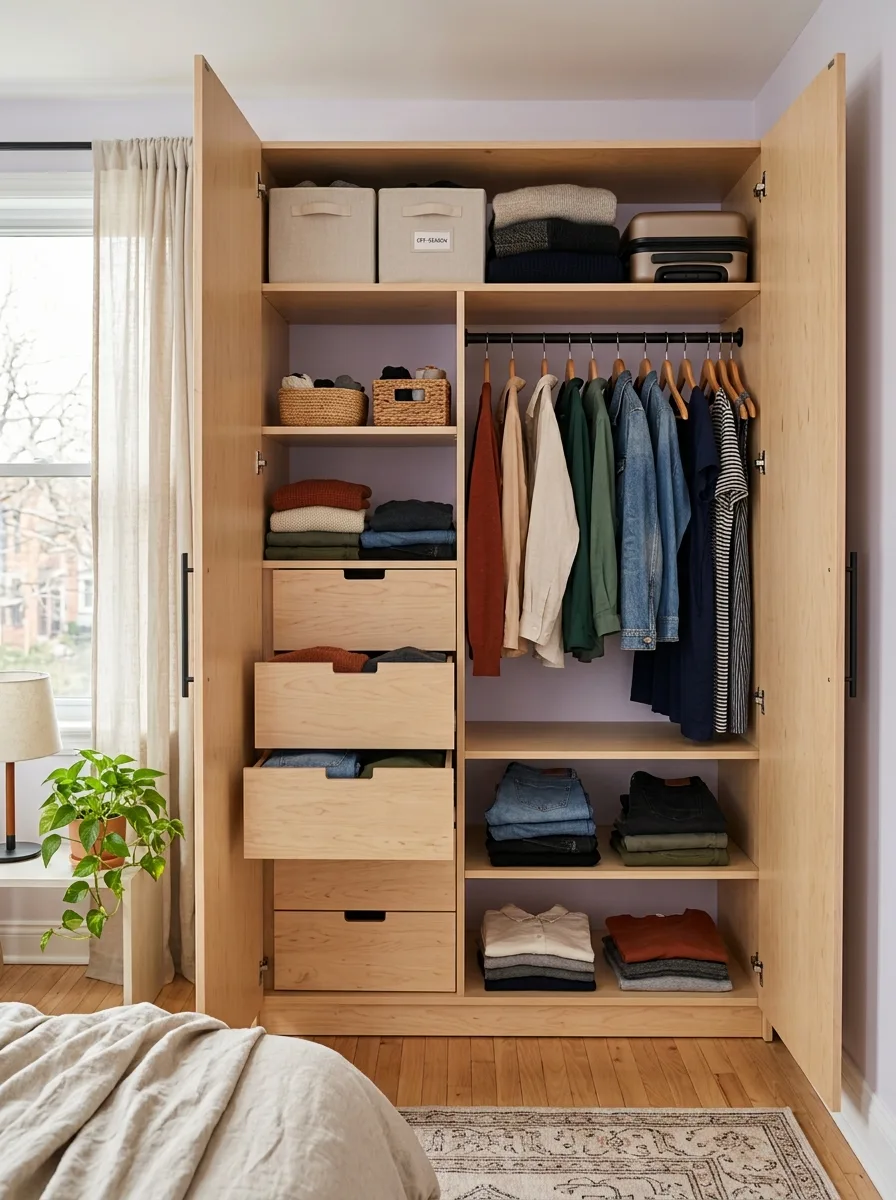
Design Principle: If an item hasn’t been worn in the past two months of the current season, it shouldn’t hold prime hanger space.
7. Give Laundry a Defined Path
Laundry becomes easier when there is a predictable sequence:
Wear → hamper → washing → drying → folding → wardrobe
Problems usually happen when one of these stages doesn’t have a dedicated home.
A slim hamper near the bedroom can prevent clothes from collecting on the floor. A small basket can hold clean laundry waiting to be folded. A designated shelf can hold folded items temporarily.
The system doesn’t have to be elaborate. It just needs to prevent laundry from becoming a permanent feature of the apartment.
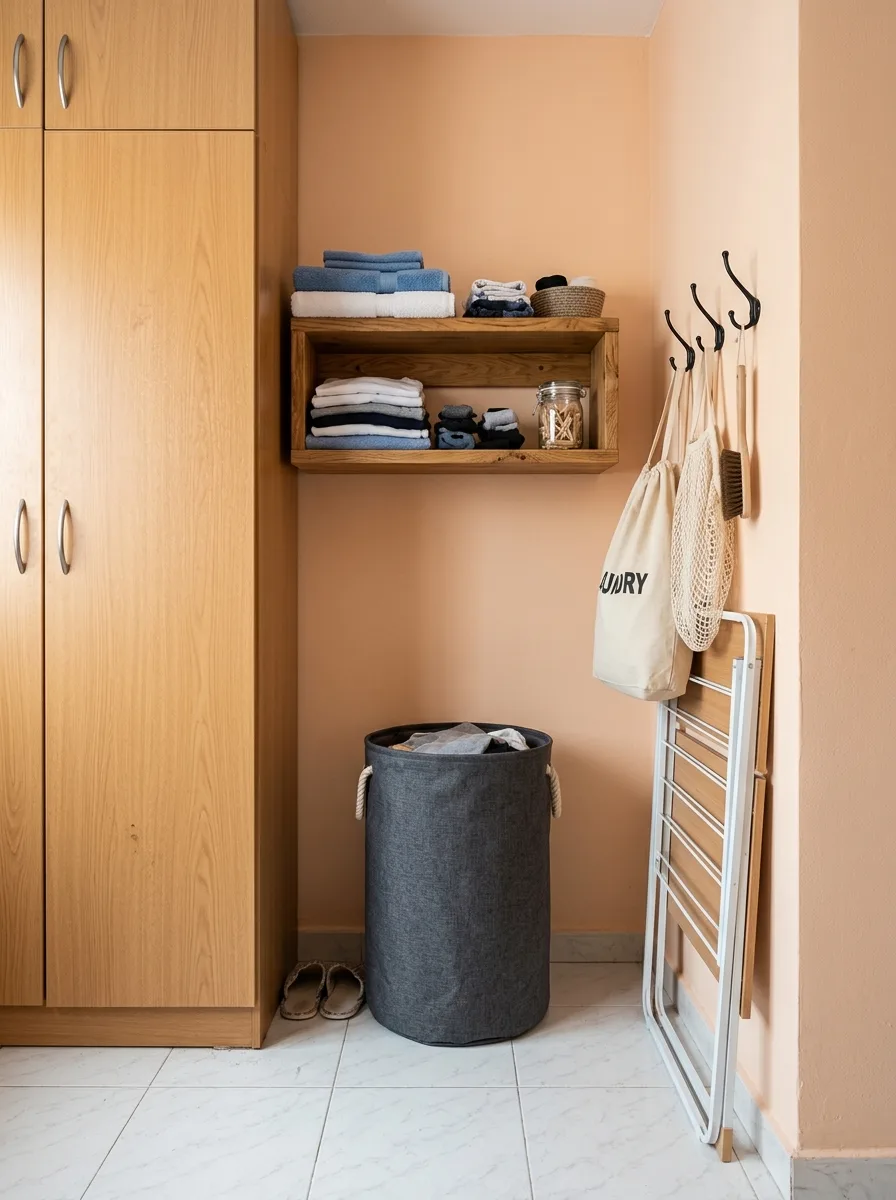
Design Tip: Choose a narrow hamper with a lid that fits discreetly into a wardrobe alcove or bathroom corner.
8. Use the Space Under the Bed for Seasonal Storage
The area under the bed is ideal for things you don’t need every day. Use it for:
- Heavy winter bedding and spare duvets
- Off-season wardrobe rotations
- Extra bath towels
- Travel luggage and weekend bags
- Occasional formal shoes
Choose containers that can slide out smoothly on wheels or glides. Avoid putting heavy objects into containers that you’ll need to move frequently. And don’t use under-bed storage as an excuse to keep things you no longer need. Hidden clutter is still clutter.
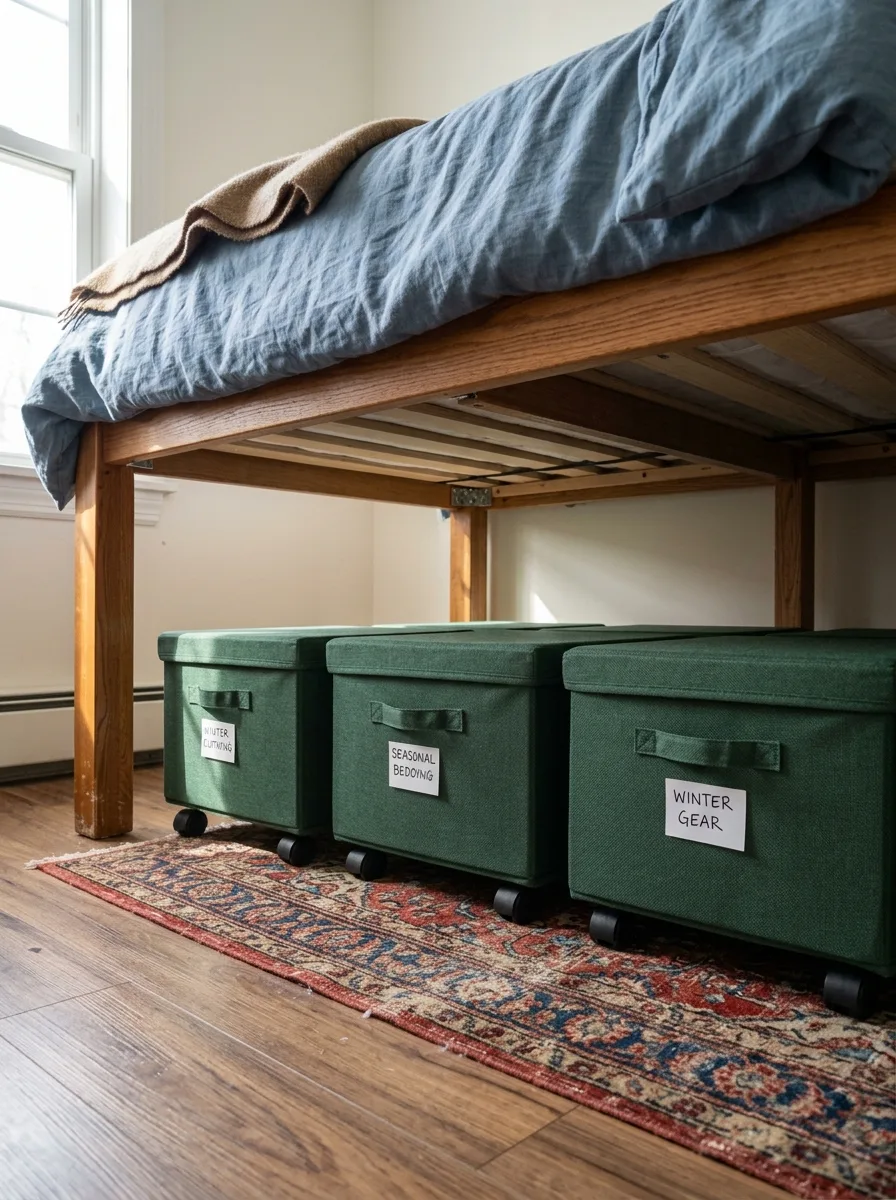
Design Tip: Use fabric storage cases with transparent label pockets to keep dust out and make contents instantly identifiable.
9. Make the Bathroom Counter a Functional Surface
A bathroom counter should support your morning and evening routines rather than store your entire collection of products.
Keep only the items you use daily within easy reach. Move backup products into a drawer or mirrored cabinet. Group similar products together rather than scattering them across the counter.
A small ceramic or marble tray can also help visually contain everyday items without requiring individual plastic organizers for every single product.
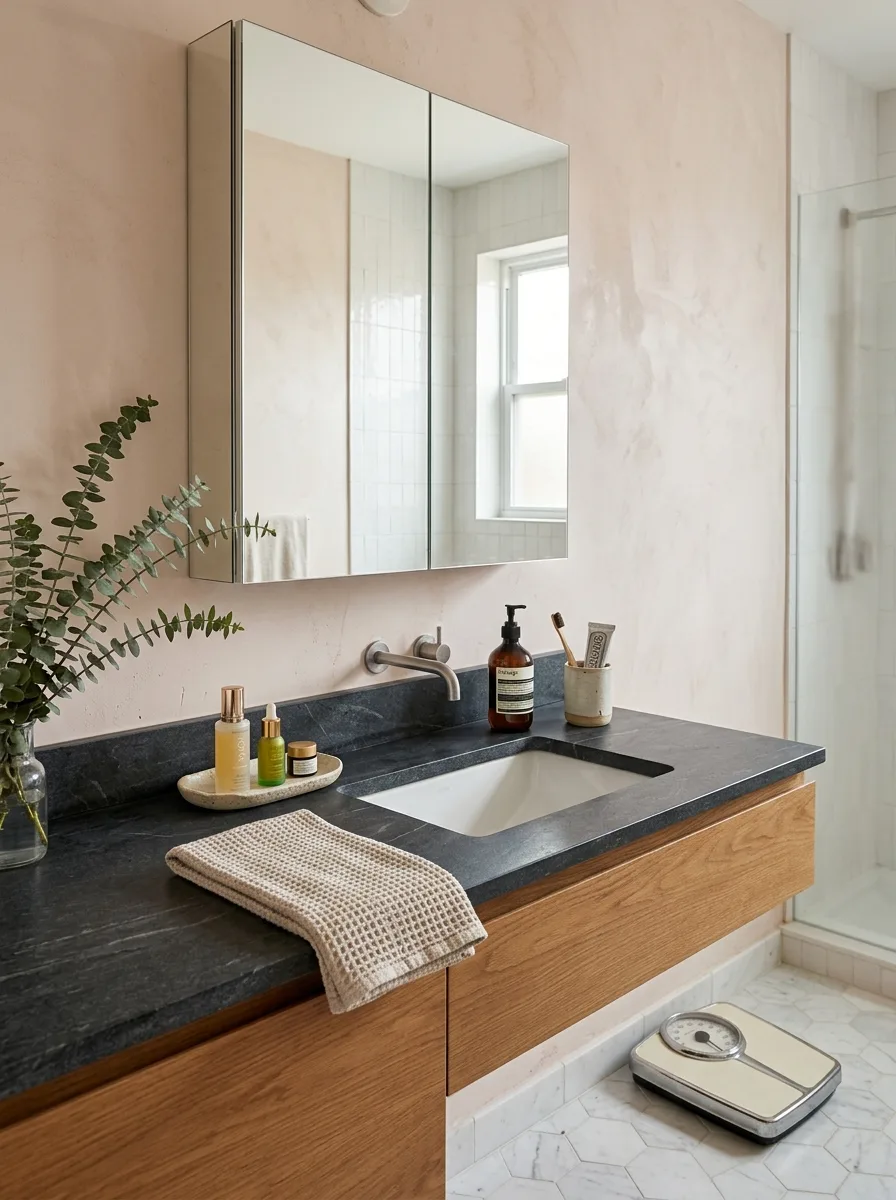
Design Tip: Contain daily skincare in a shallow tray—it provides a visual boundary that prevents bottles from creeping outward.
10. Create Zones Inside the Bathroom
Instead of organizing the bathroom as one large category, divide it into distinct functional zones:
- Daily Care: Toothbrush, skincare, everyday medications, and grooming items.
- Shower: Shampoo, conditioner, body wash, and face cleanser.
- Backup: Extra toiletries, unopened soap, and replacement paper products.
- Cleaning: Bathroom-specific sprays, microfiber cloths, and brushes.
This prevents every product from competing for the same drawer or cabinet shelf.
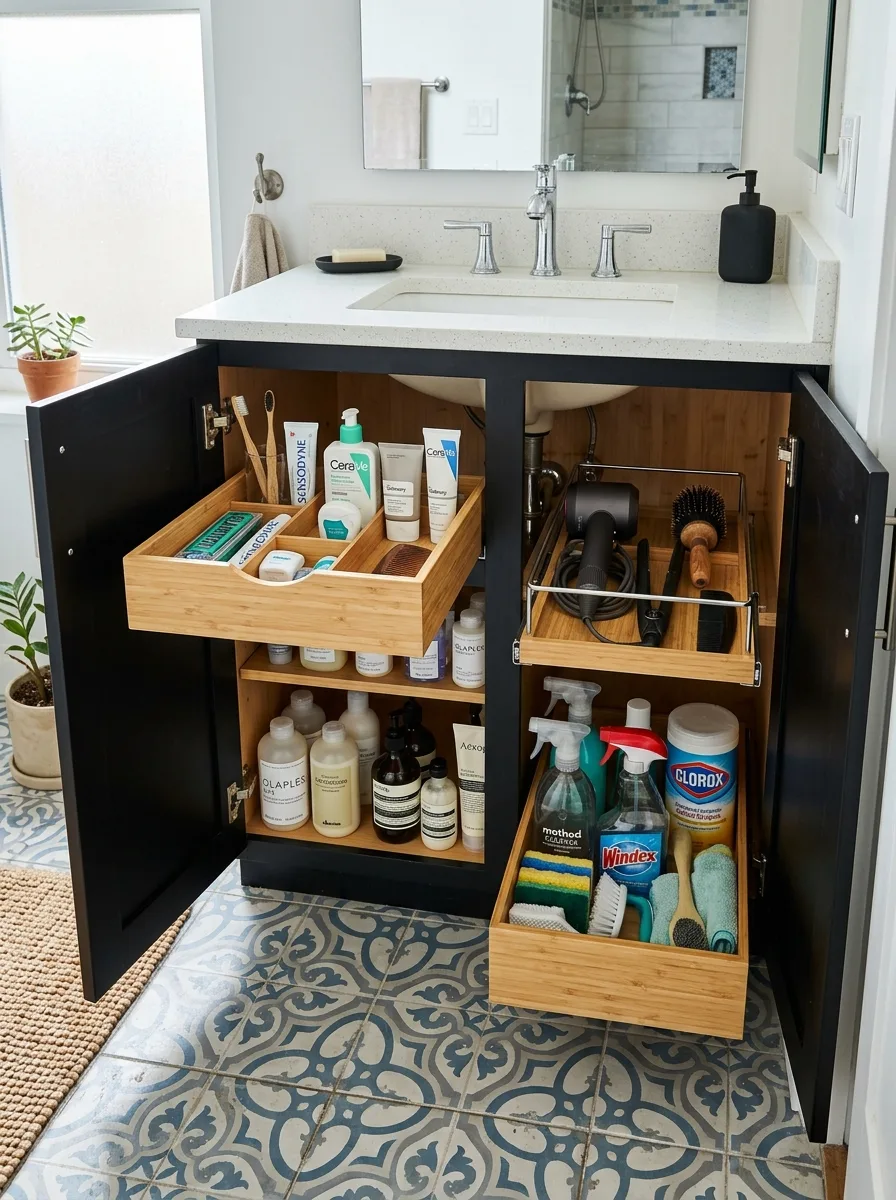
Design Principle: Keep backup toiletries in a separate higher bin so you never confuse extra inventory with active supplies.
11. Give Paperwork One Temporary Home
Mail becomes clutter when there is no decision point.
Instead of allowing paperwork to move from the entrance to the kitchen counter to the dining table, create one temporary paper station. It could be:
- A shallow leather or wooden tray
- A slim wall-mounted file pocket
- One designated desk drawer
- A small woven basket
The important word is temporary. This isn’t where paperwork should live forever. It is simply where incoming items wait until they are reviewed, filed, or recycled.
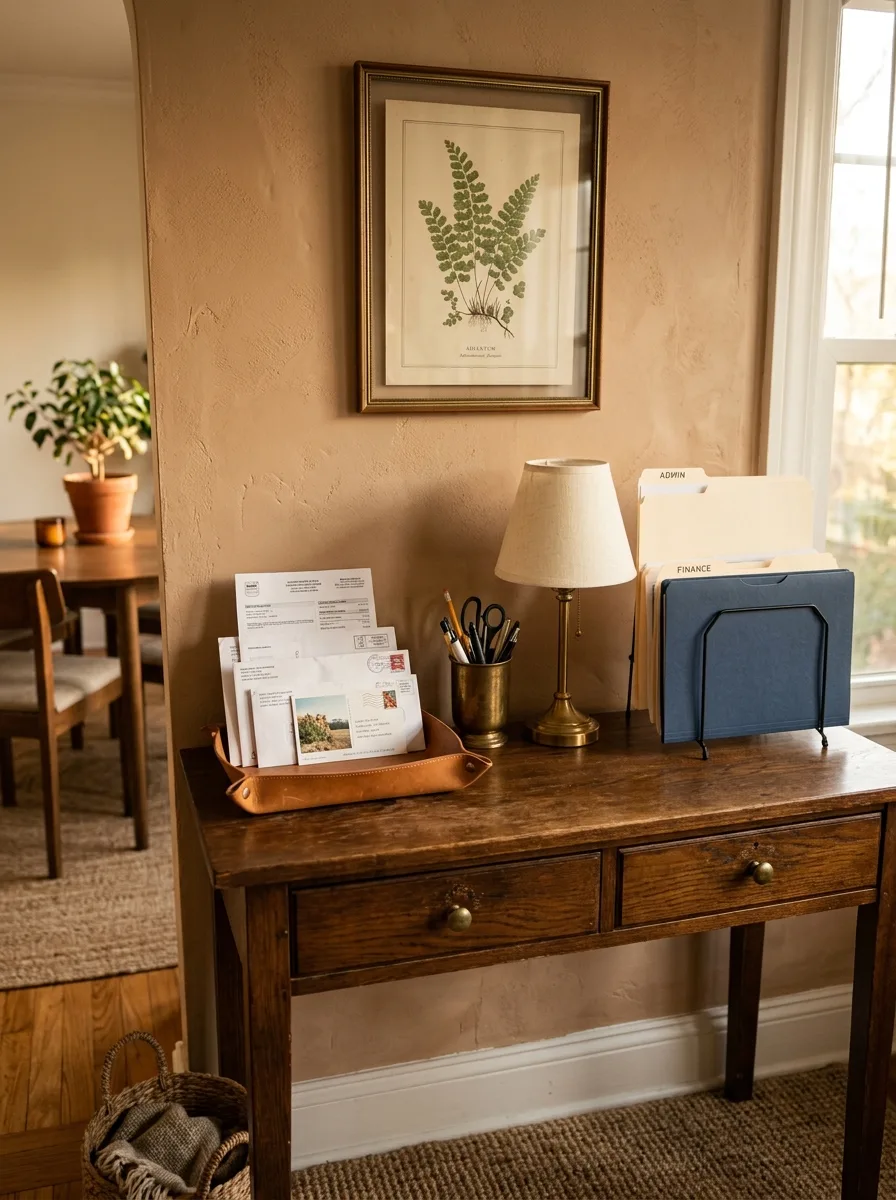
Design Tip: Sort mail directly over the recycling bin upon entering. Only papers requiring action should enter your tray.
12. Turn Awkward Corners Into Useful Zones
Apartment layouts often contain corners that are too small for conventional furniture. Don’t immediately dismiss them.
A narrow corner can become:
- A compact laptop desk
- A botanical plant zone
- A cozy reading chair with a slim floor lamp
- Tailored vertical shelving
- A dedicated charging station
- A small pantry cabinet or coffee station
The trick is choosing a function that matches the architectural dimensions. An awkward corner doesn’t need a large piece of furniture to become deeply useful.
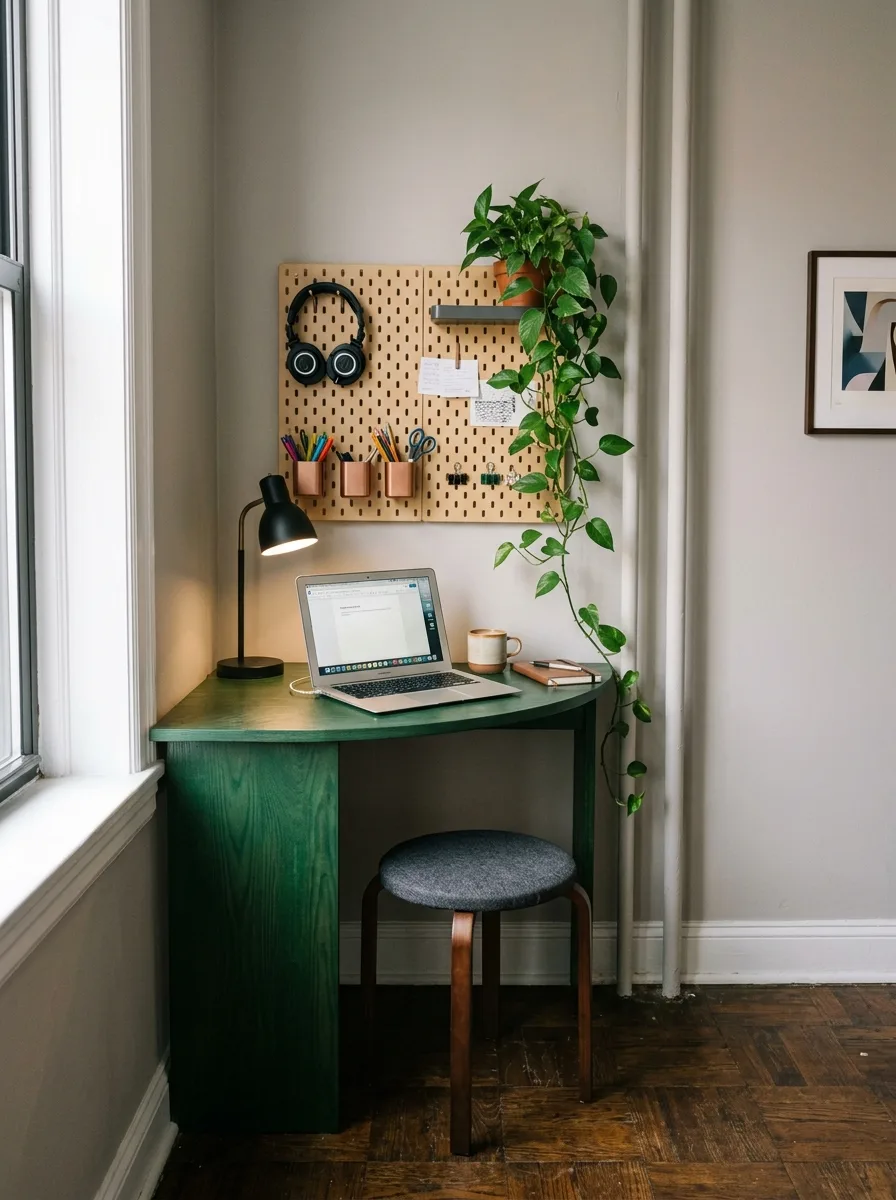
Design Tip: Floating corner shelves maximize vertical wall space without consuming precious floor footprint.
13. Create a Dedicated Charging Station
Chargers have a habit of appearing everywhere: bedrooms, sofas, kitchen counters, desks, and bedside tables can all become cluttered charging zones.
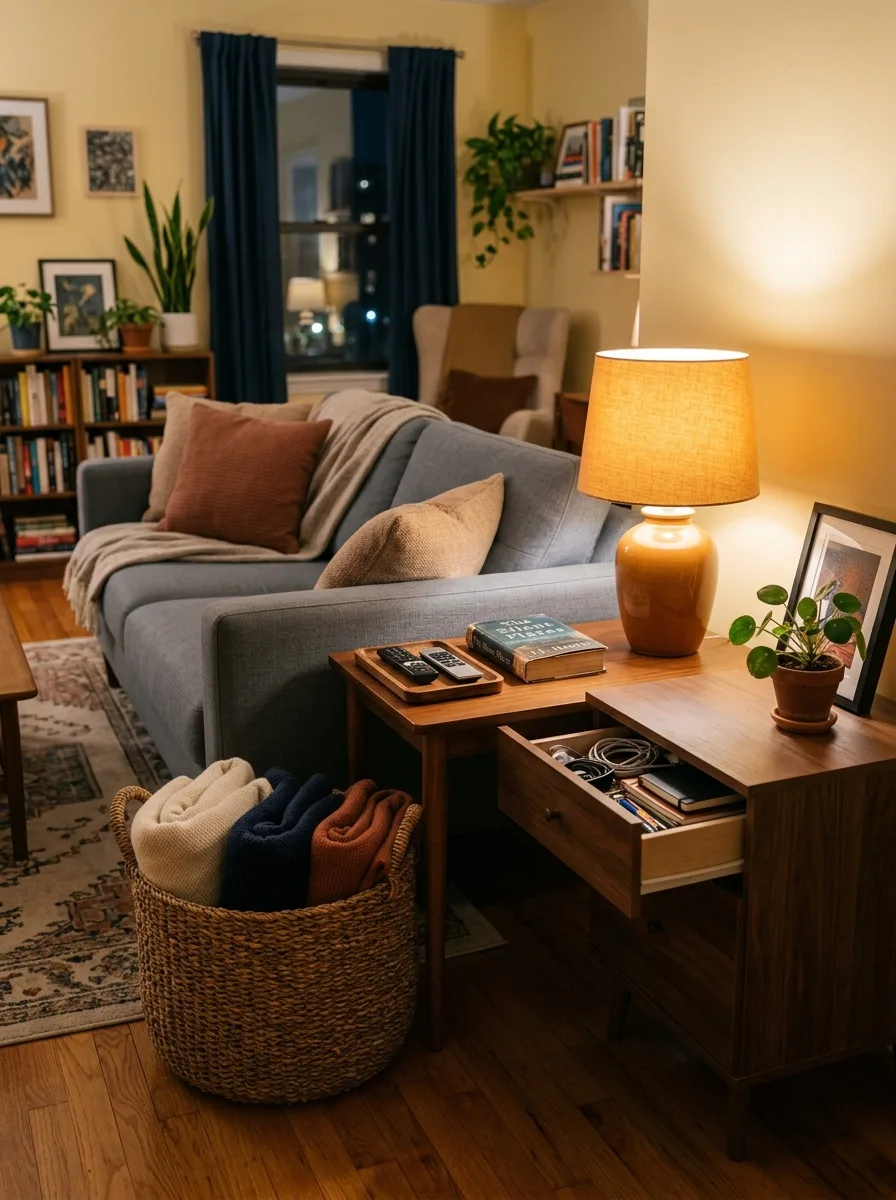
Create one primary charging station for devices that aren’t actively being used. A drawer with an integrated power strip works particularly well because cables disappear completely when the drawer closes.
If you work from home, keep work devices separate from the household charging station so cords and cables don’t become tangled.
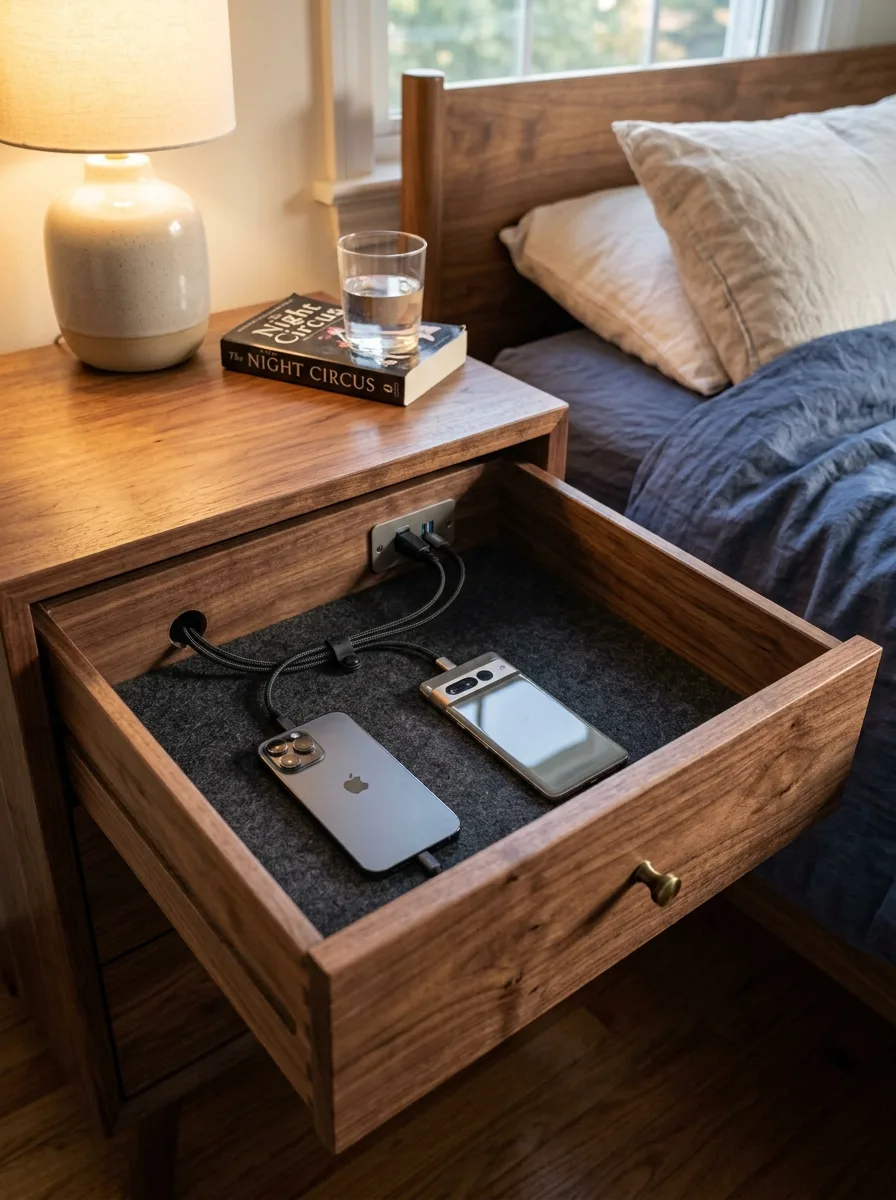
Design Tip: Use cable ties and adhesive cord clips to route power strips inside a drawer or behind a credenza.
14. Use Vertical Space in the Living Room
Living rooms often have unused wall height even when floor space is strictly limited.
Tall shelving can store books, baskets, games, and decorative objects without requiring a wide, deep cabinet. A narrow vertical cabinet can also hold items that don’t need to be displayed.
But don’t fill the entire wall simply because you can. Leave some breathing space around shelves. Good vertical organization should make the room more functional without turning it into an oppressive wall of storage.
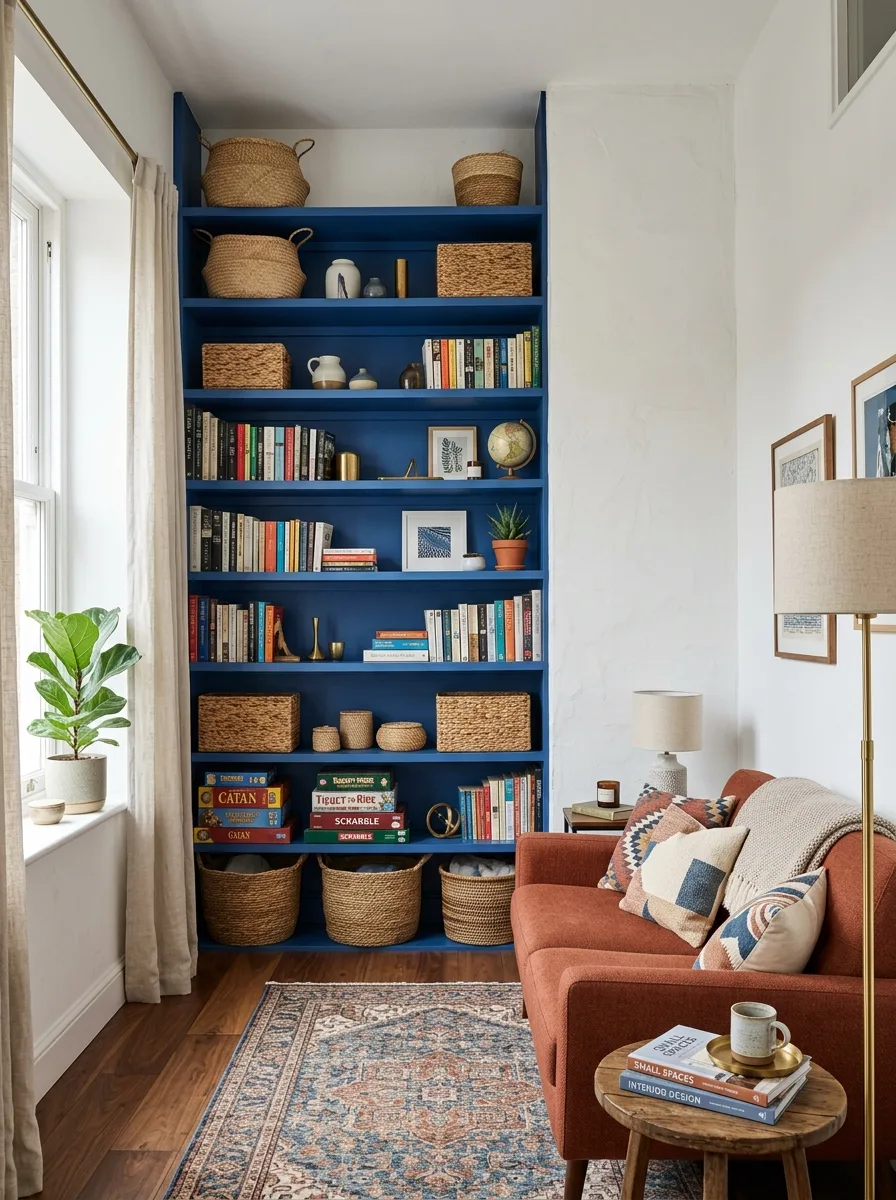
Design Principle: Keep heavier books and closed storage bins on lower shelves, leaving upper shelves visually light with art and plants.
15. Make the Sofa Area Easier to Maintain
The living room tends to accumulate small objects because it is where people spend the most waking leisure time.
Use one or two simple containment systems:
- A sturdy basket beside the couch can hold extra throw blankets and pillows.
- A coffee table with a shallow drawer can hold remotes and coasters.
- A small side table can provide a landing spot for evening books and drinks.
The objective isn’t to organize every single object individually. It’s to create enough containment that everyday items can be gathered and cleared away in thirty seconds.
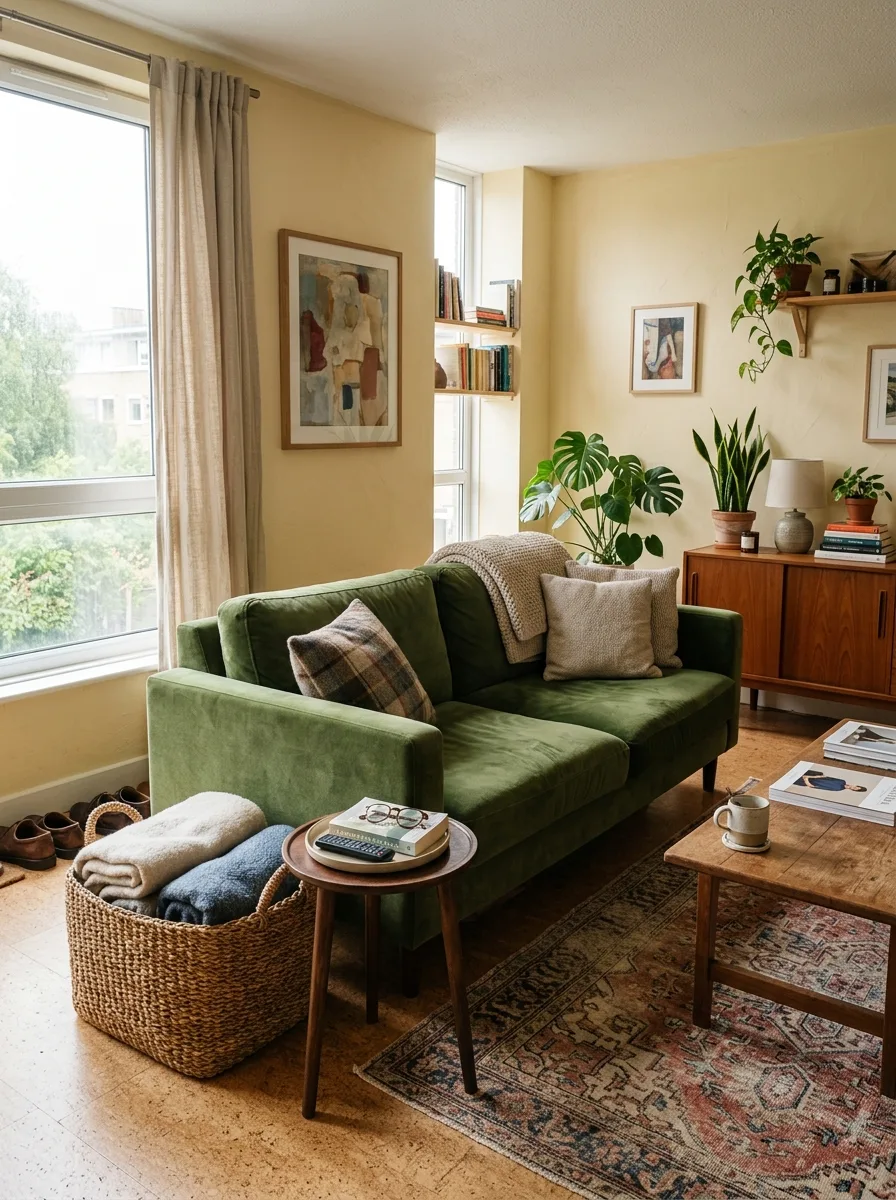
Design Tip: A handsome lidded basket next to the sofa hides blankets completely while adding natural organic texture.
16. Give Children’s or Hobby Items a Defined Boundary
If you have hobbies, craft supplies, toys, exercise equipment, or special collections, give them a defined zone.
The problem isn’t necessarily the number of objects—it is when they spread unchecked into every room.
A closed cabinet, a modular basket system, a storage bench, or a dedicated cupboard shelf creates an unmistakable boundary. When the activity is finished, everything returns to that zone. This allows the apartment to support your passions without allowing them to permanently take over the living space.
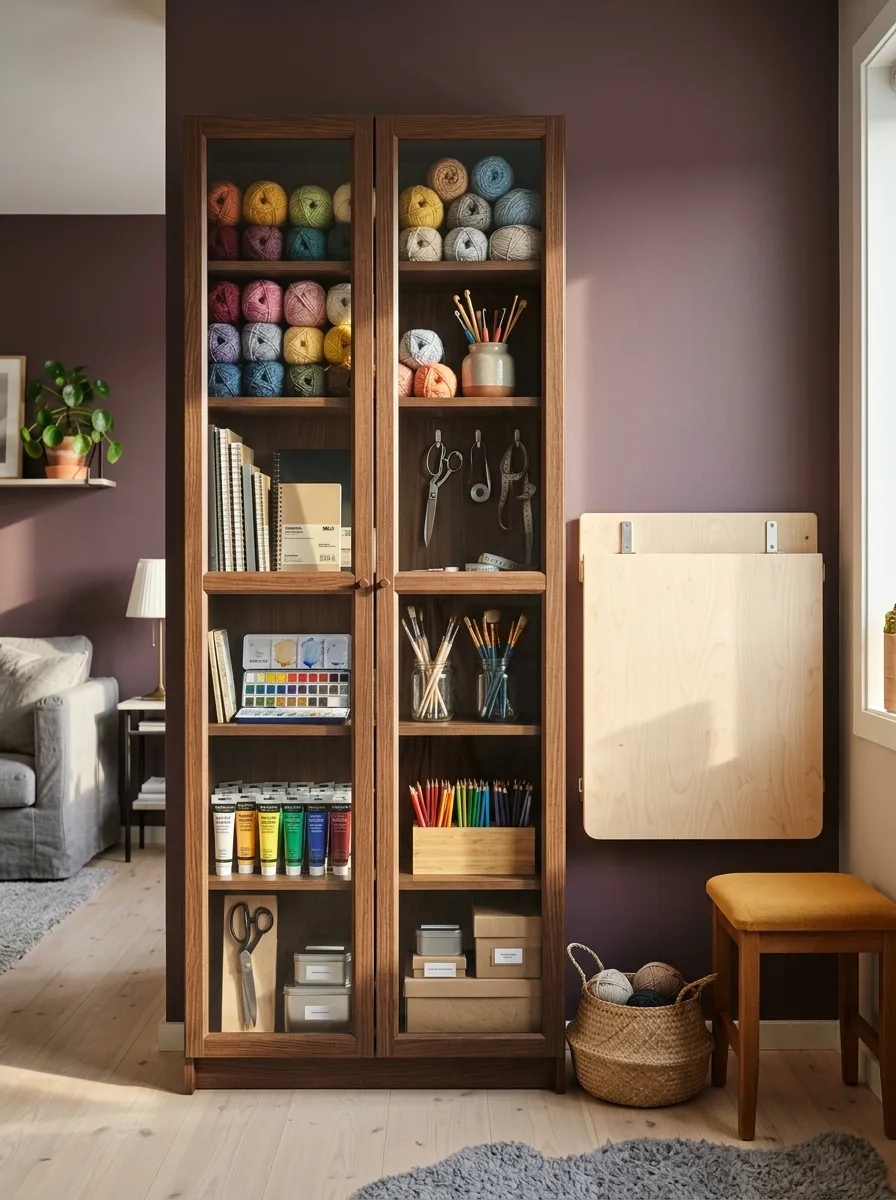
Design Tip: Use opaque storage boxes with simple labels so hobby materials stay tidy without creating visual noise.
17. Use Furniture That Hides Storage
Not every storage solution needs to look like utilitarian storage.
- A storage bed can contain an entire season’s worth of bulky belongings.
- An entryway bench can hide shoes and umbrellas under a comfortable seat.
- A tailored ottoman can store extra throws, board games, or magazines.
- A coffee table with lower shelving can keep art books off the top surface.
This is particularly useful in apartments because the furniture you already need can perform an additional organizational role. The result is fewer standalone pieces and a calmer room.
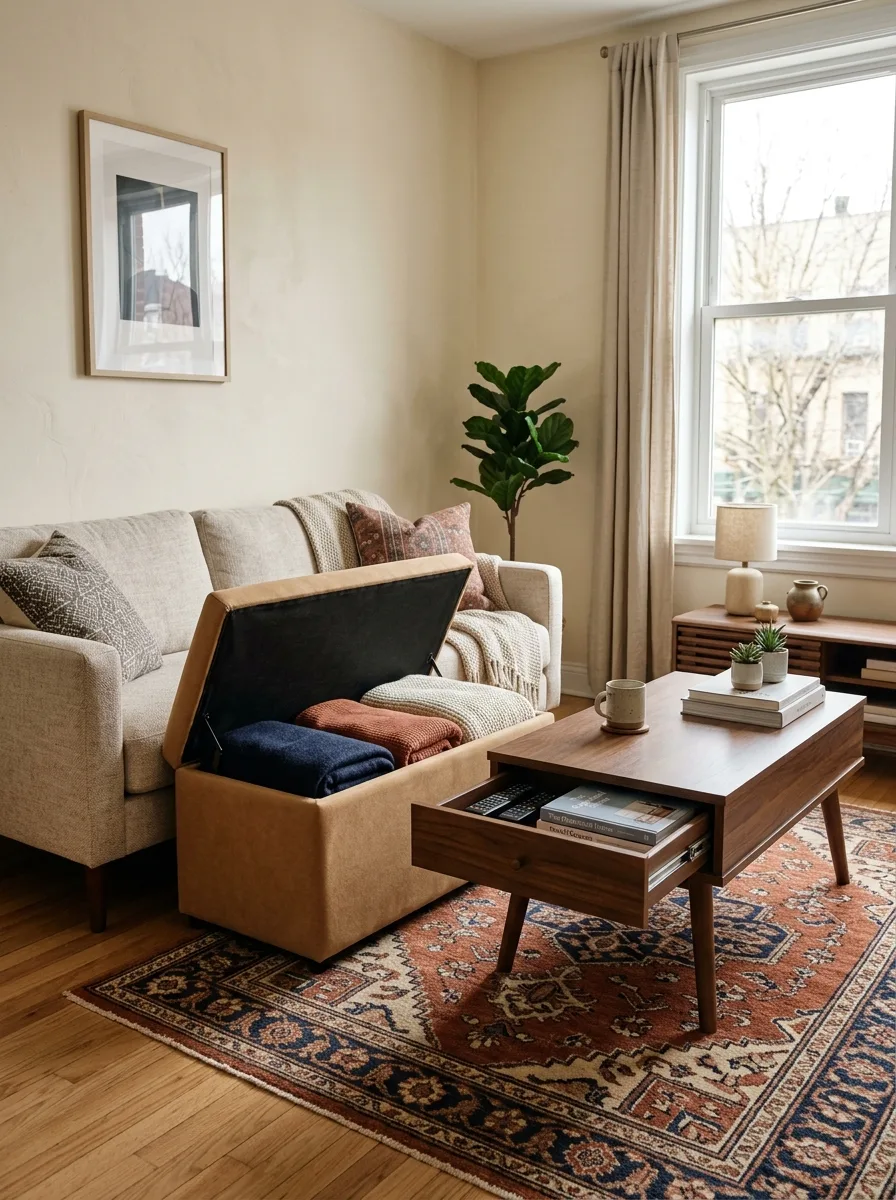
Design Principle: Dual-purpose furniture eliminates the need for extra freestanding plastic bins or auxiliary dressers.
18. Create a Small Pantry System
If your kitchen doesn’t have a dedicated walk-in pantry, create distinct culinary categories inside existing cabinets:
- Breakfast: Coffee, tea, oatmeal, honey, and morning spreads.
- Cooking Staples: Cooking oils, vinegars, dried herbs, and spices.
- Baking: Flours, sugars, extracts, and baking essentials.
- Snacks: Packaged crackers, nuts, and everyday pantry snacks.
Use stackable containers or turntable organizers only where they genuinely improve physical access. You don’t need to decant every single grocery item into matching glass jars to have an organized, functional pantry.
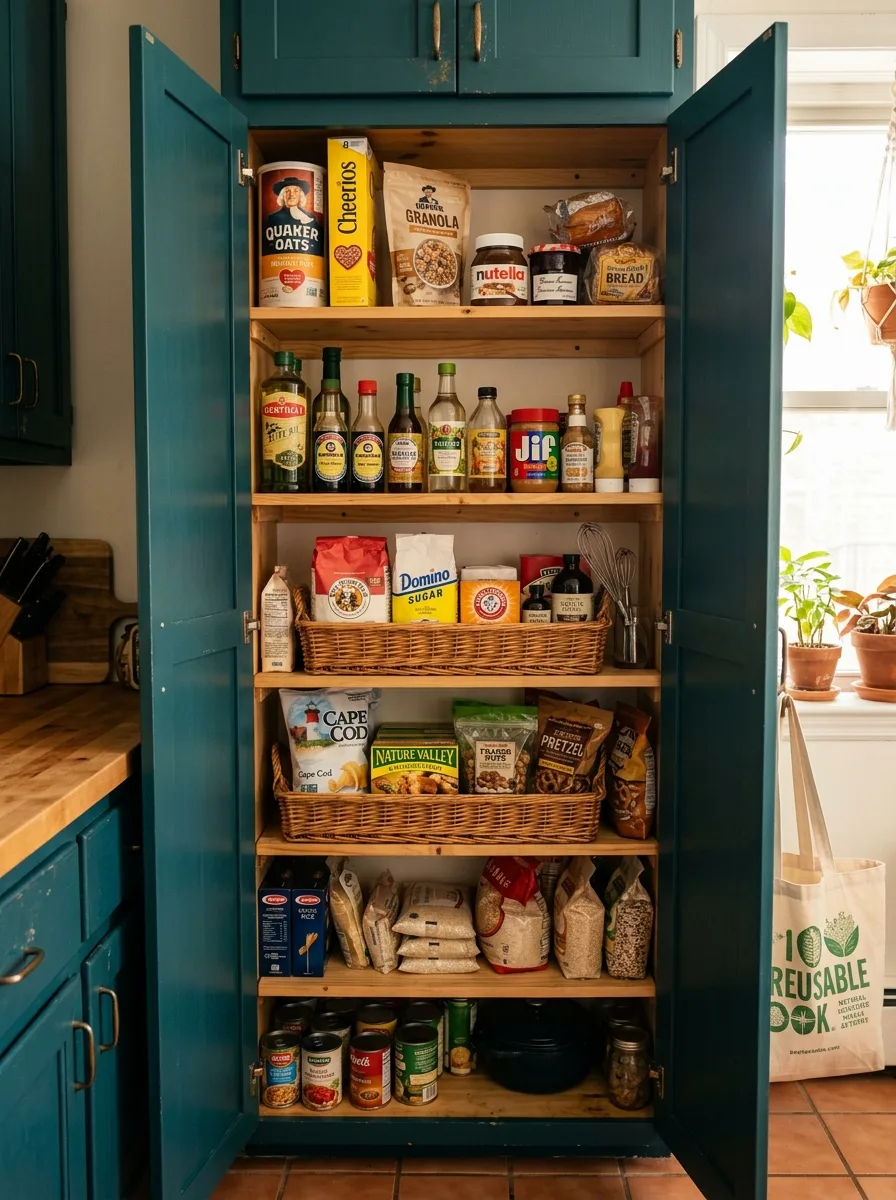
Design Tip: Place a two-tier lazy Susan in deep corner cabinets to bring small bottles and spice jars instantly into view.
A Better Way to Organize a Small Apartment
Instead of trying to overhaul an entire apartment in one exhausting weekend, work through your space in the order clutter naturally enters your life:
- Start at the entrance: Control the flow of belongings coming into the apartment.
- Move to the kitchen: Reduce countertop and cabinet pressure where daily prep occurs.
- Organize the bedroom: Improve clothing and laundry circulation for restful mornings.
- Address the bathroom: Contain everyday grooming products and separate backups.
- Finish with the living areas: Establish containment systems for the items that migrate most frequently.
This sequence works because it follows the natural flow of belongings through your home.
The Difference Between Storage and Organization
These two concepts are closely related, but they are not the same thing.
Storage gives you somewhere to put something.
Organization gives that something a logical place.
You can have an enormous walk-in closet and still have a poorly organized home. Conversely, you can have relatively little built-in storage and maintain a remarkably functional apartment when every category has a clear, accessible destination.
That distinction is crucial: if a cabinet is constantly overflowing, the solution may not be buying a bigger cabinet. It might be keeping fewer duplicate items, creating clearer categories, or relocating items to where they are actually used.
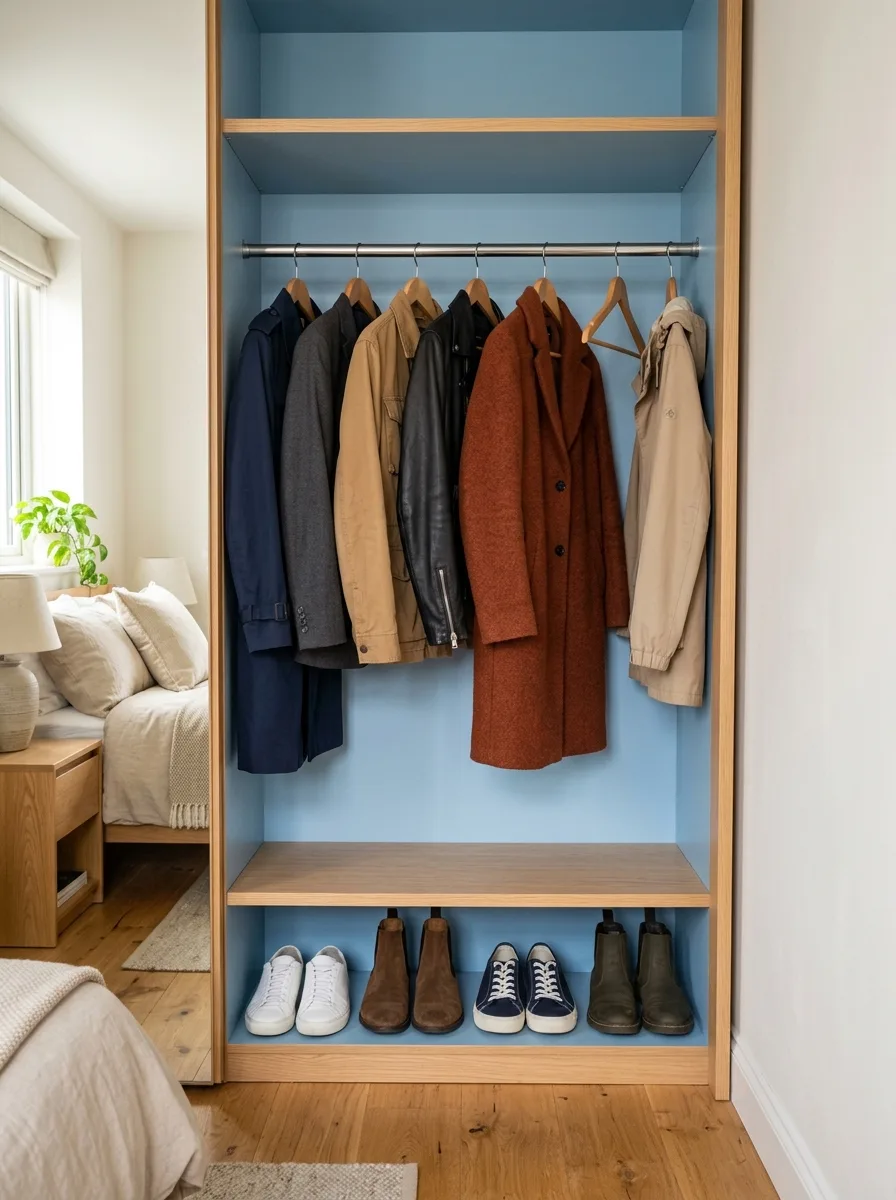
How to Organize Without Making Your Apartment Look Like a Storage Room
The most attractive apartment organization tends to disappear quietly into the interior design.
- Use furniture as storage whenever possible: Opt for credenzas, chests, and storage beds.
- Choose baskets that complement the room’s materials: Woven seagrass, matte metal, or felt baskets feel like intentional decor.
- Keep labels discreet: Place labels on the back or underside of bins rather than front-and-center.
- Use closed doors for visually messy categories: Keep cords, paperwork, and plastic bottles behind doors.
- Leave some shelves partially empty: Negative space makes a room feel spacious and serene.
- Avoid rigid perfectionism: A home should still look like a home, not an industrial warehouse.
The goal is visual calm and daily ease, not showroom perfection.
Common Apartment Organization Mistakes
- Buying organizers before decluttering: You may simply end up organizing things you don’t actually need or want.
- Using every available wall: Empty wall space allows an apartment to visually breathe and feel larger.
- Creating too many micro-categories: If an organizational system is overly complicated, nobody will maintain it.
- Storing things far from where they’re used: Storage must support your natural routines; inconvenient storage breeds surface clutter.
- Keeping backups mixed with everyday items: Separate active daily toiletries and foods from backup stock.
- Overusing open shelving: Visible storage requires constant visual curation; closed storage provides effortless peace of mind.
- Ignoring apartment-specific limitations: Door swings, baseboard heaters, narrow corridors, and rental rules must guide your furniture choices.
A Simple Weekly Apartment Reset
You don’t need a full-day cleaning ritual to keep your apartment in order. A focused 15-minute weekly reset prevents small amounts of clutter from snowballing:
- Entrance: Return rogue shoes, tote bags, coats, and mail to their designated hooks and cabinets.
- Kitchen: Clear countertop drift, wipe down surfaces, and return pantry items to their zones.
- Living Room: Fold blankets into the basket, collect remotes, and return migrated mugs or books.
- Bedroom: Hang clean clothes, empty the laundry hamper, and clear bedside tables.
- Bathroom: Wipe the vanity surface and return grooming products to their trays and drawers.
The objective is not unattainable perfection—it is simply resetting the baseline so your apartment remains a welcoming sanctuary.
Final Thought
An organized apartment doesn’t have to look aggressively organized.
It can still have books on a coffee table, a soft blanket draped across the sofa, artwork on the walls, plants in sunlit corners, and the occasional letter waiting to be addressed.
What matters is that clutter has an intuitive place to go.
The best organization systems don’t demand constant vigilance. They quietly support the rhythm of your life:
- A hook catches the bag you would otherwise drop on the floor.
- A drawer catches the chargers that would otherwise cover the desk.
- A basket catches the blankets that would otherwise pile on the sofa.
- A shelf catches the essentials that would otherwise migrate from room to room.
That is what good apartment organization accomplishes: not a sterile showroom, but a home that is effortlessly comfortable to live in.
Editorial Guidelines: Quick Practical Rules
- Organize by routine: Place items exactly where you use them during your daily schedule rather than where cabinets happen to be empty.
- Clear the counters: Keep only daily essentials like your coffee maker out; store weekly appliances in lower or upper cabinets.
- Use door backs: Add hooks, racks, or slim organizers inside kitchen, bathroom, and closet doors for hidden capacity.
- Establish a single paper drop: Prevent mail piles by creating one shallow tray or wall slot as an incoming decision point.
- Choose furniture with hidden depth: Storage beds, benches, and ottomans absorb bulky belongings without adding visual clutter.
What Often Goes Wrong (And How to Fix It)
- Buying organizers before decluttering: Organizing items you don't actually need simply wastes space and money.
- Overusing open shelving: Too much visible storage demands high visual maintenance and makes a compact space feel chaotic.
- Storing items far from where they are used: Convenience dictates habit; items stored inconveniently end up abandoned on surfaces.
- Creating overly complicated categories: If a system requires too many micro-decisions, nobody in the home will maintain it.
- Ignoring door swings and clearances: Always verify that cabinet and room doors have full swing clearance before adding organizers.
Frequently Asked Questions
How do I organize a small apartment with little storage?
Start by organizing according to daily routines, then use vertical space, hidden storage, furniture with built-in storage, and overlooked areas such as under beds and behind doors.
How can I make my apartment look less cluttered?
Reduce visible categories, use closed storage for visually messy items, keep everyday surfaces relatively clear, and give frequently misplaced belongings a permanent home.
What should I organize first in an apartment?
Start with the entrance, because it controls what enters and leaves the home. Then move to the kitchen, bedroom, bathroom, and living areas.
How do I organize an apartment without buying lots of containers?
Use the storage you already have more effectively. Edit belongings first, group related items, use furniture as storage, and create zones based on how you use each room.
Where should I store things in a small apartment?
As close as practical to where they're used. Everyday items should be easy to reach, while seasonal and occasional belongings can occupy higher, deeper, or less convenient storage.
How do I keep an organized apartment organized?
Make the system easy to maintain. Every frequently used category should have an obvious home, and returning an item should require as little effort as possible.
The House Chapter Editorial
Interiors & Styling Editors • The House Chapter
Curated by our team of interior designers, home organizers, and editorial stylists dedicated to practical, beautiful living.
Organization & Storage
A little inspiration for your next chapter at home.
Receive curated decorating dispatches, practical hallway storage blueprints, and quiet design moments delivered straight to your inbox.
No spam. No daily noise. Unsubscribe at any time with one click.
Related Chapters
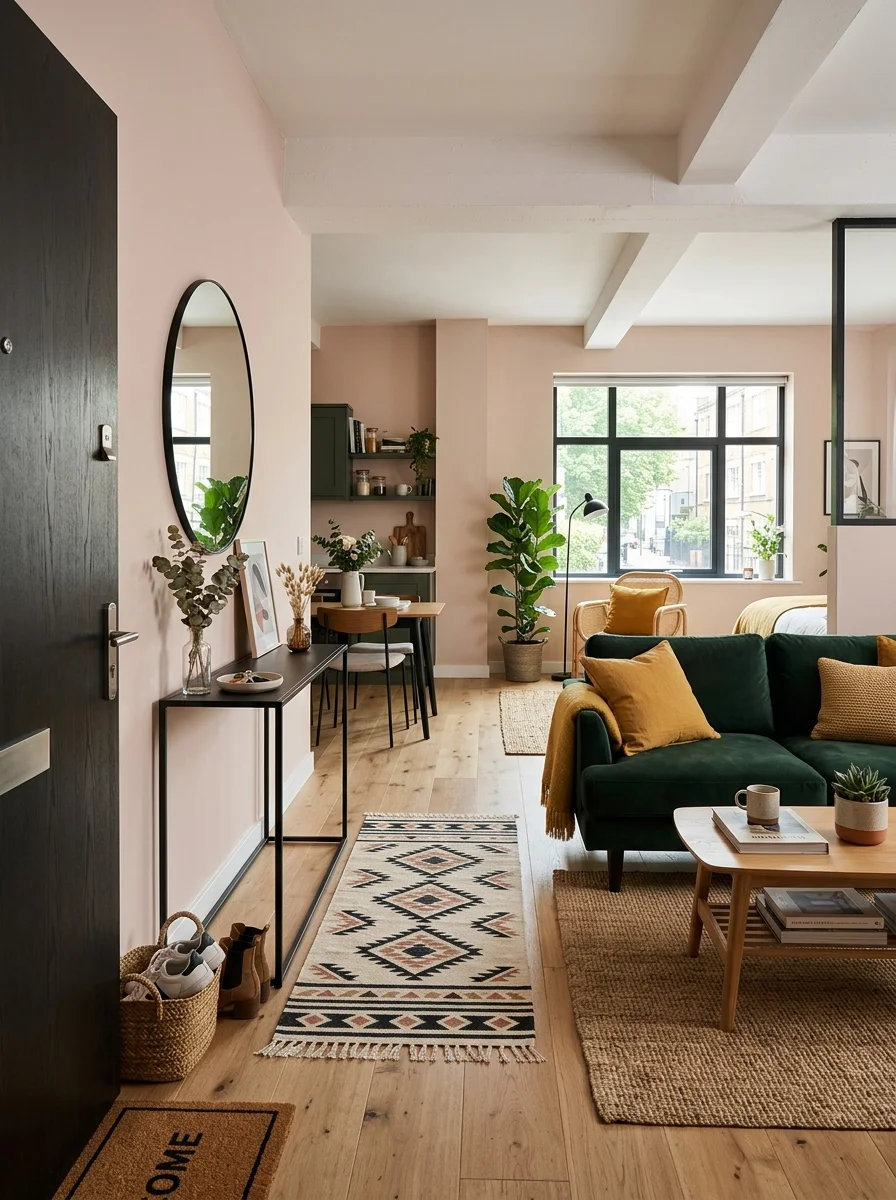
Apartment Entryway Ideas for a More Welcoming Entrance
Make an apartment entrance feel welcoming with practical entryway ideas for storage, furniture, lighting, mirrors, narrow spaces, and renter-friendly decorating.
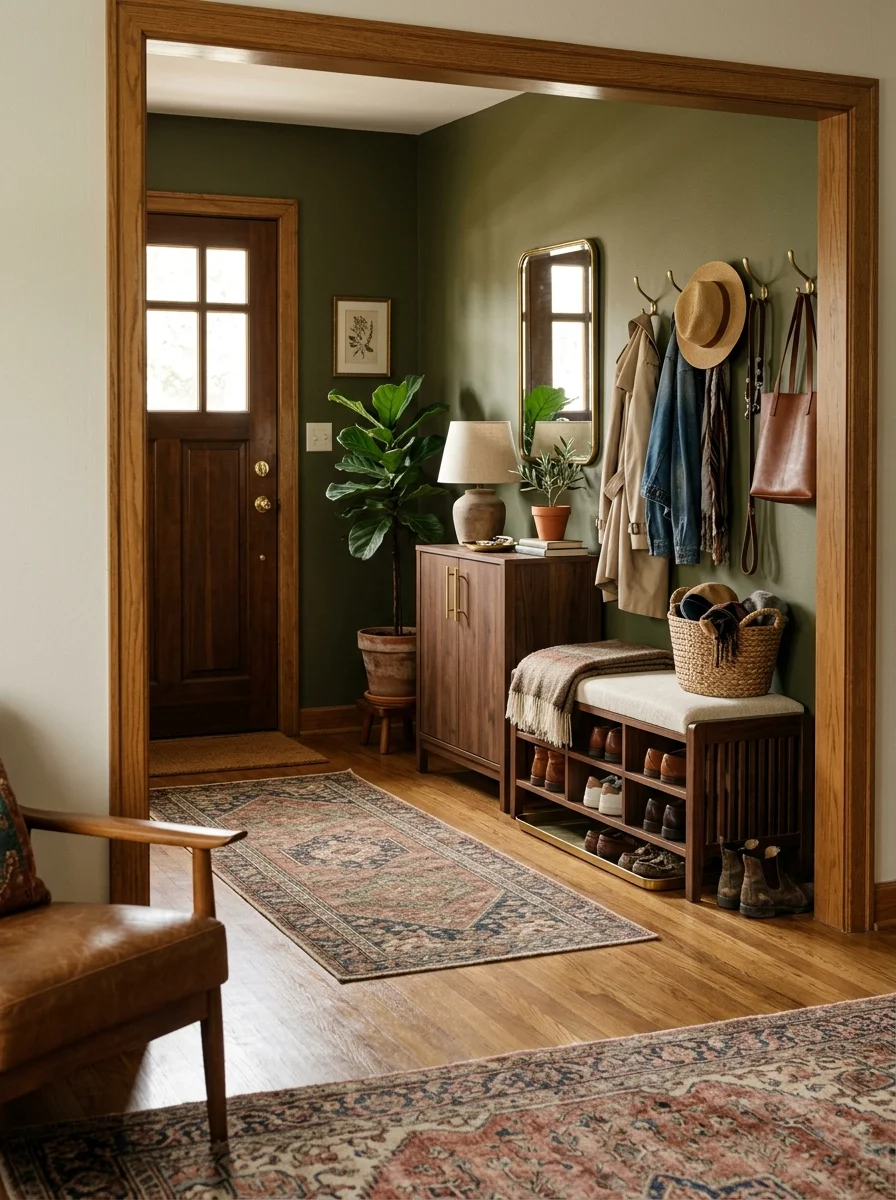
Entryway Shoe Storage Ideas That Actually Work
Discover practical entryway shoe storage ideas for small foyers, apartments, narrow hallways, and busy family homes without making the entrance feel cluttered.
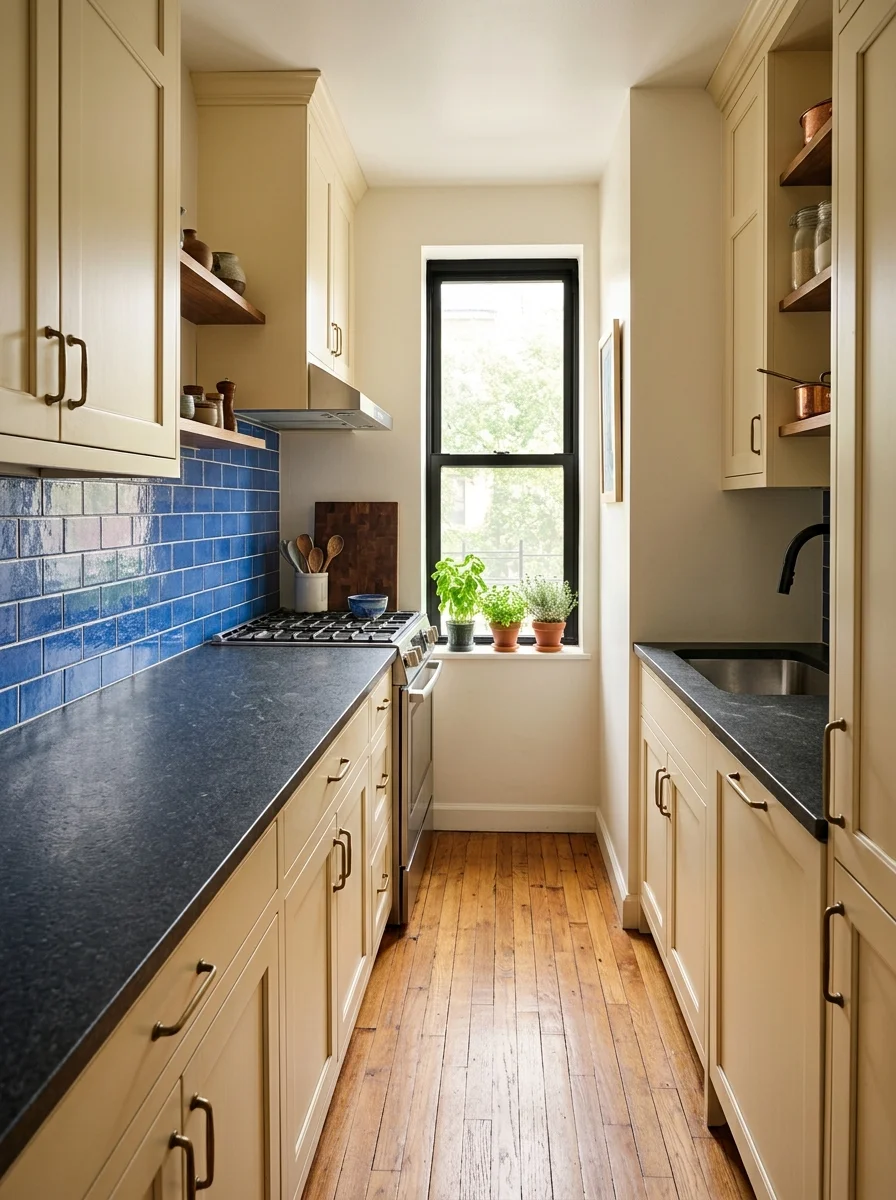
Small Kitchen Ideas for Making a Compact Space Work Harder
Make a compact kitchen feel more functional with practical small kitchen ideas for storage, layout, work surfaces, lighting, seating, and everyday organization.
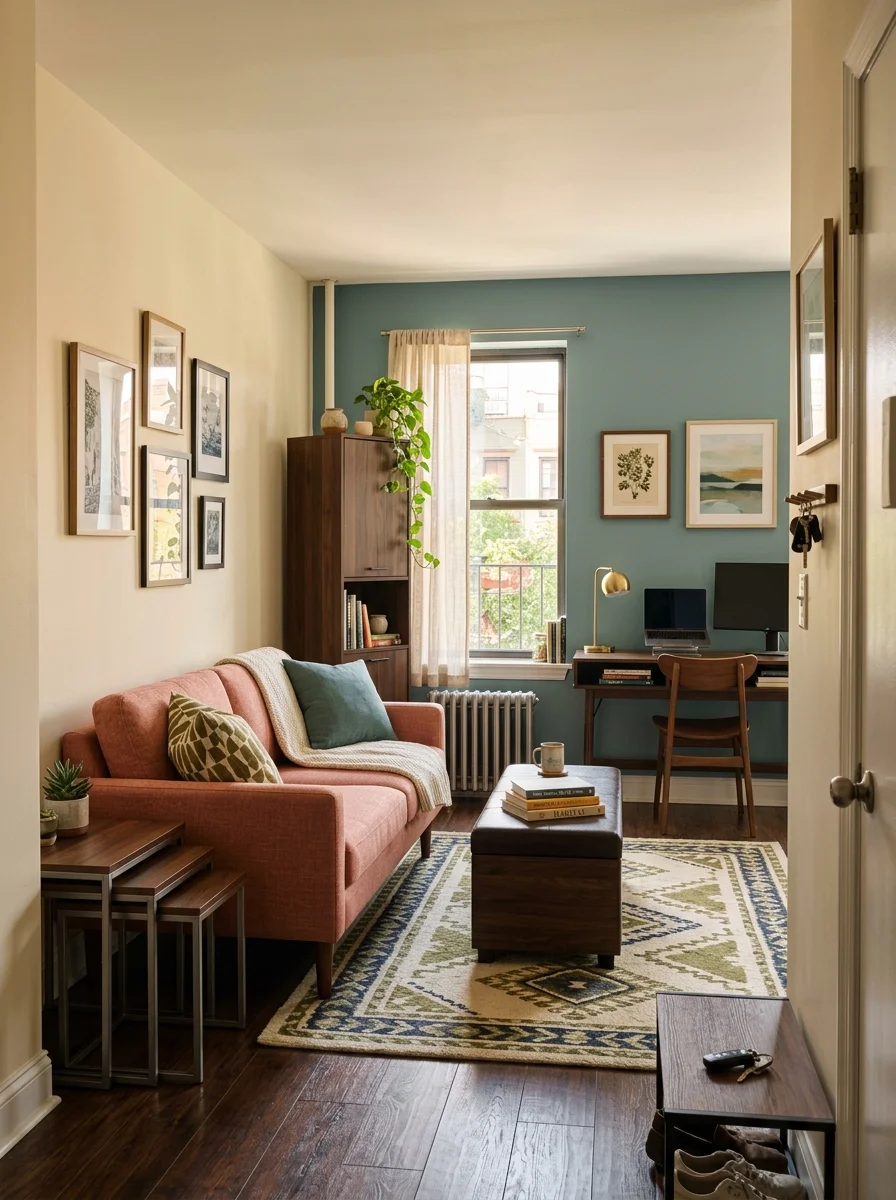
Space-Saving Furniture Ideas for Small Homes and Apartments
Discover space-saving furniture ideas that make small homes and apartments more comfortable, functional, and visually open without sacrificing style.