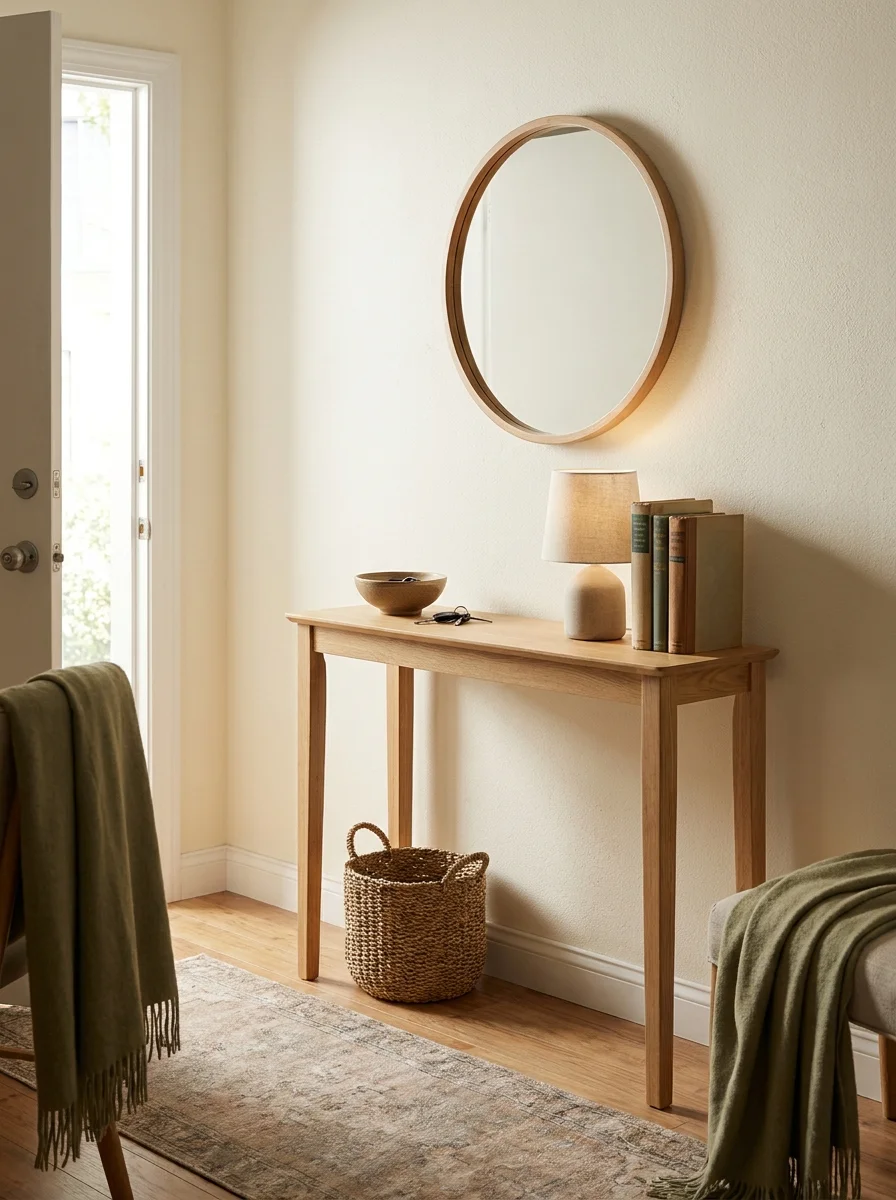
A small entryway doesn’t need much space to make a strong first impression.
In fact, the best small entrances tend to be simple. A narrow console, a useful mirror, a few well-placed hooks, or a bench that quietly hides shoes can completely change how the space feels.
The challenge is that an entryway has to do several jobs at once. It needs to welcome you home, hold the things you carry every day, accommodate coats and shoes, and still leave enough room for people to actually walk through.
That makes a small entryway less about adding more and more decor and more about choosing the right pieces for the space you have.
Whether you’re working with a tiny apartment entrance, a narrow hallway, a small foyer, or simply an awkward wall beside the front door, these ideas can help you create an entrance that feels intentional without feeling crowded.
1. Use a Slim Console Instead of a Full-Size Table
A console table can give a small entryway structure without taking over the walkway.
Look for a narrow design with a depth of roughly 10–14 inches. That is often enough room for a lamp, small tray, keys, or a few decorative objects without creating a major obstruction.
If you need additional storage, choose a console with drawers or a lower shelf rather than simply choosing a wider piece. The goal isn’t to fill the wall—it’s to give the entrance one useful anchor.
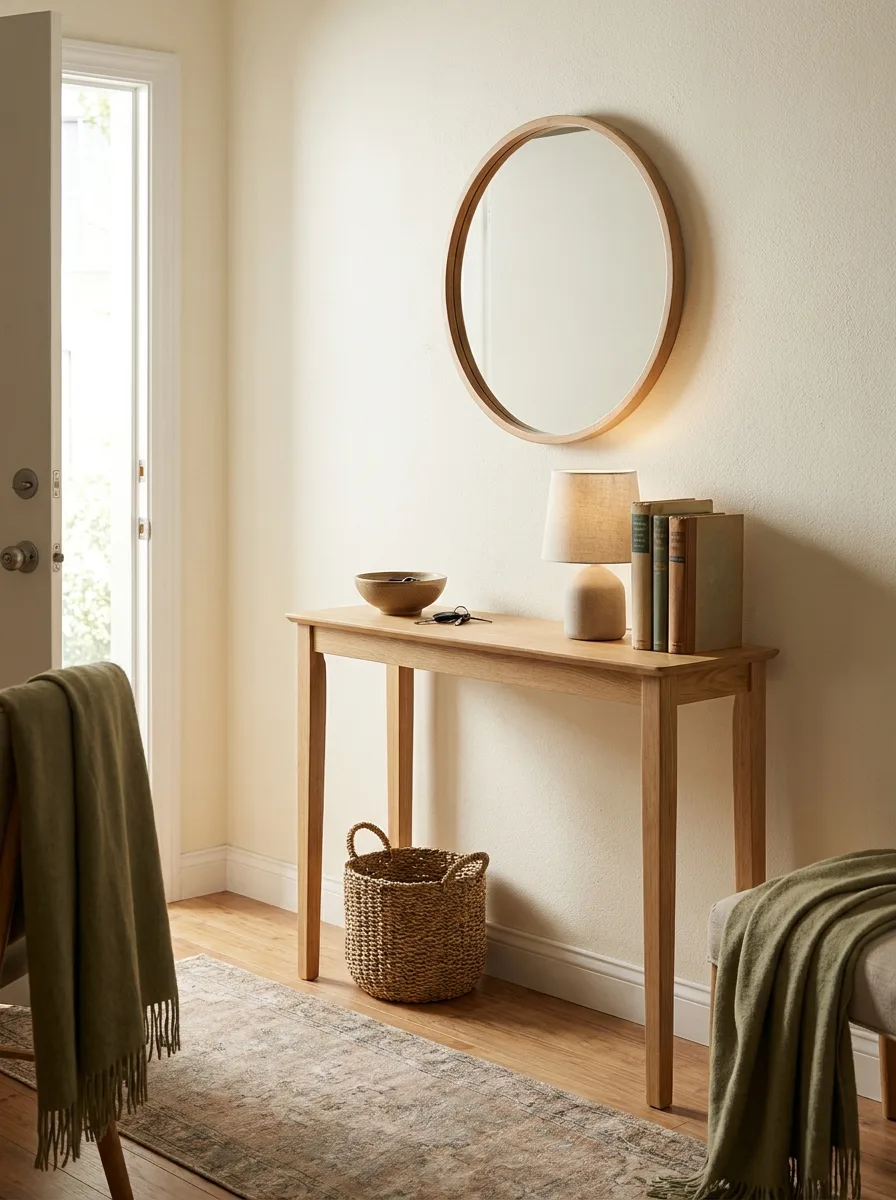
Design Tip: Leave enough clearance for comfortable movement between the console and the opposite wall or furniture.
2. Make a Mirror the Main Feature
A mirror is one of the easiest ways to make a small entrance feel more open.
Instead of covering the wall with several decorative pieces, consider using one generously sized mirror above a console or bench. A large vertical mirror can emphasize height, while a wider mirror can visually expand a narrow wall.
It also has a practical role: an entryway is one of the few places where a mirror is naturally useful before you leave the house.
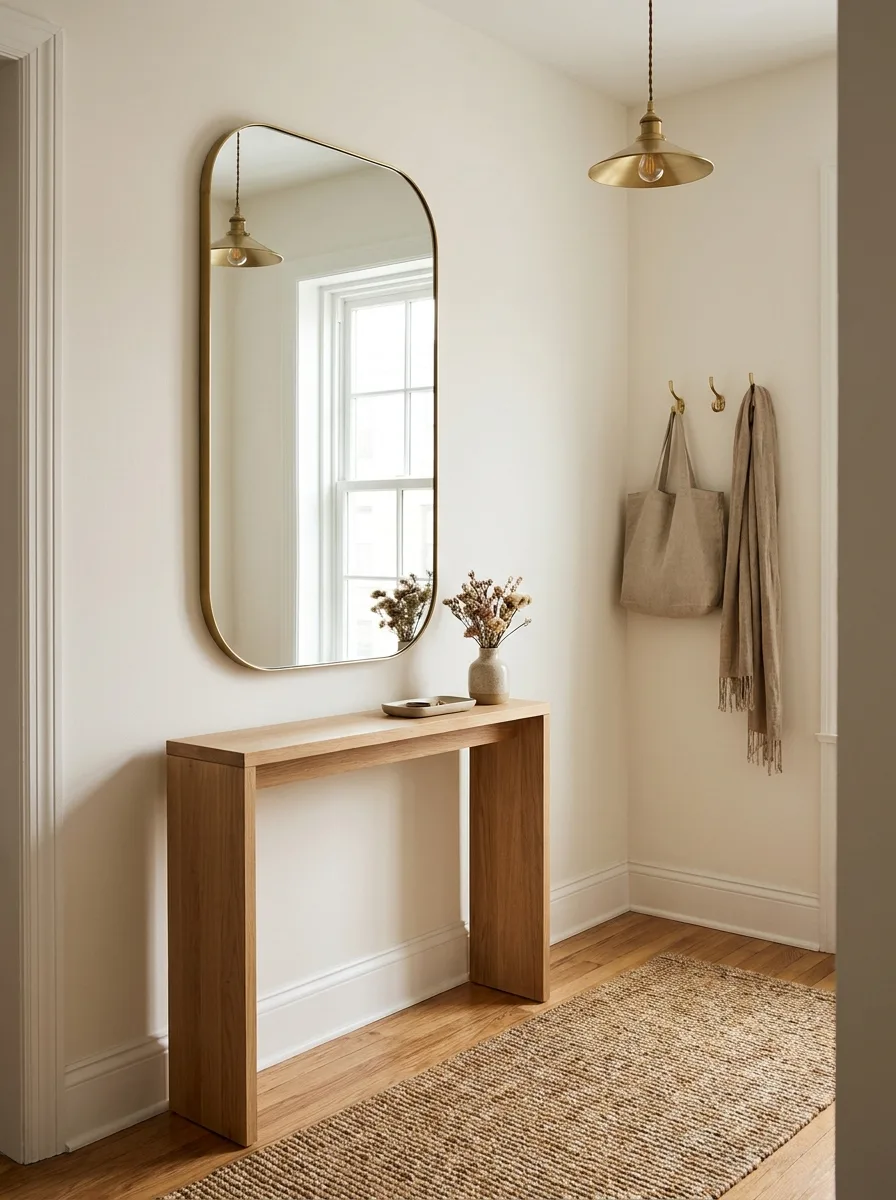
Design Tip: Position the mirror where it can reflect natural light or an attractive view into the living room rather than a cluttered storage corner.
3. Turn an Empty Wall Into a Drop Zone
An unused wall can become some of the most valuable storage in a small entryway.
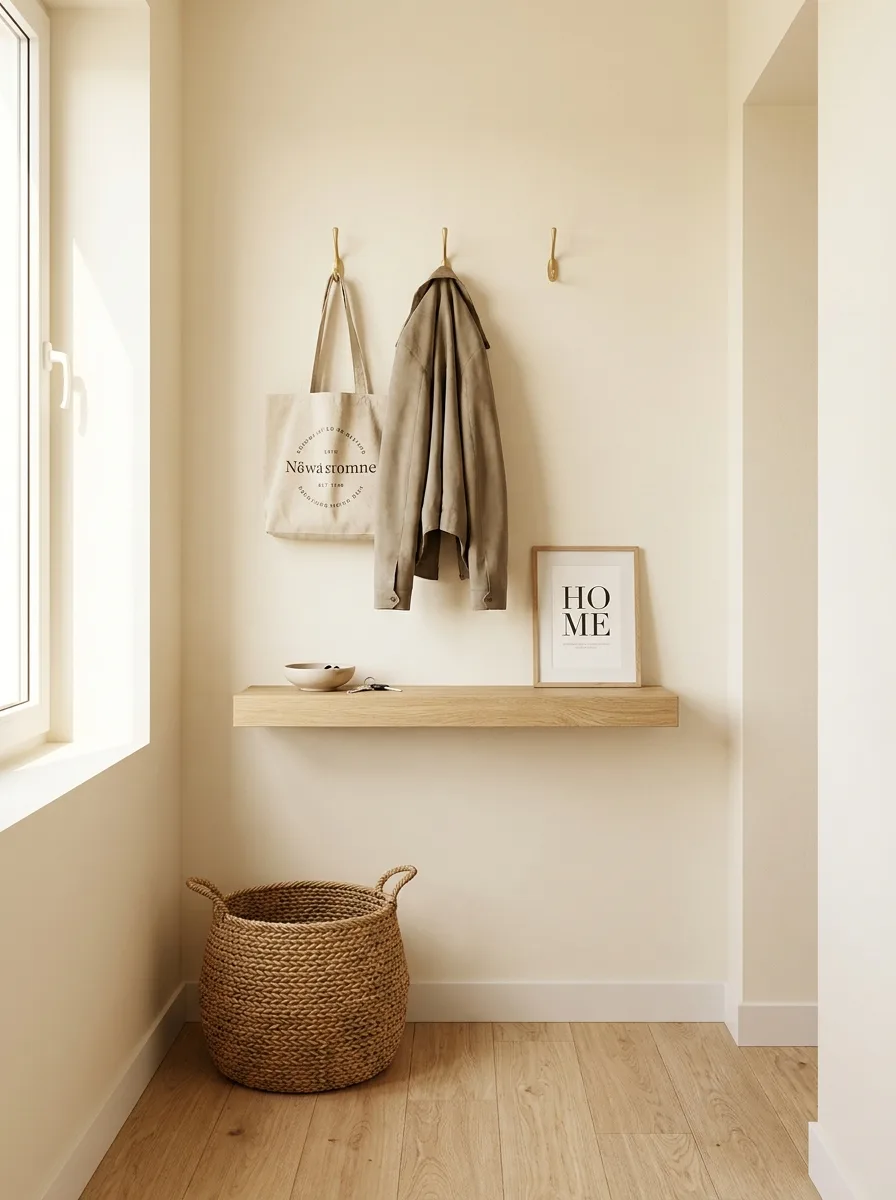
A simple combination of hooks, a narrow shelf, and a small basket can create a dedicated place for bags, keys, hats, and other everyday items. This works particularly well when there isn’t enough floor space for a cabinet or console.
Keep the arrangement visually simple. The objective is to contain everyday clutter rather than create another place for things to accumulate.
4. Choose a Bench With Hidden Storage
A small bench can perform two jobs at once: comfortable seating and concealed storage.
This is especially useful if shoes tend to collect near the front door. A bench with a lift-up seat, drawers, or open compartments underneath can keep them contained while giving you somewhere to sit when putting them on.
For a narrow entrance, choose a compact bench with a relatively shallow profile.
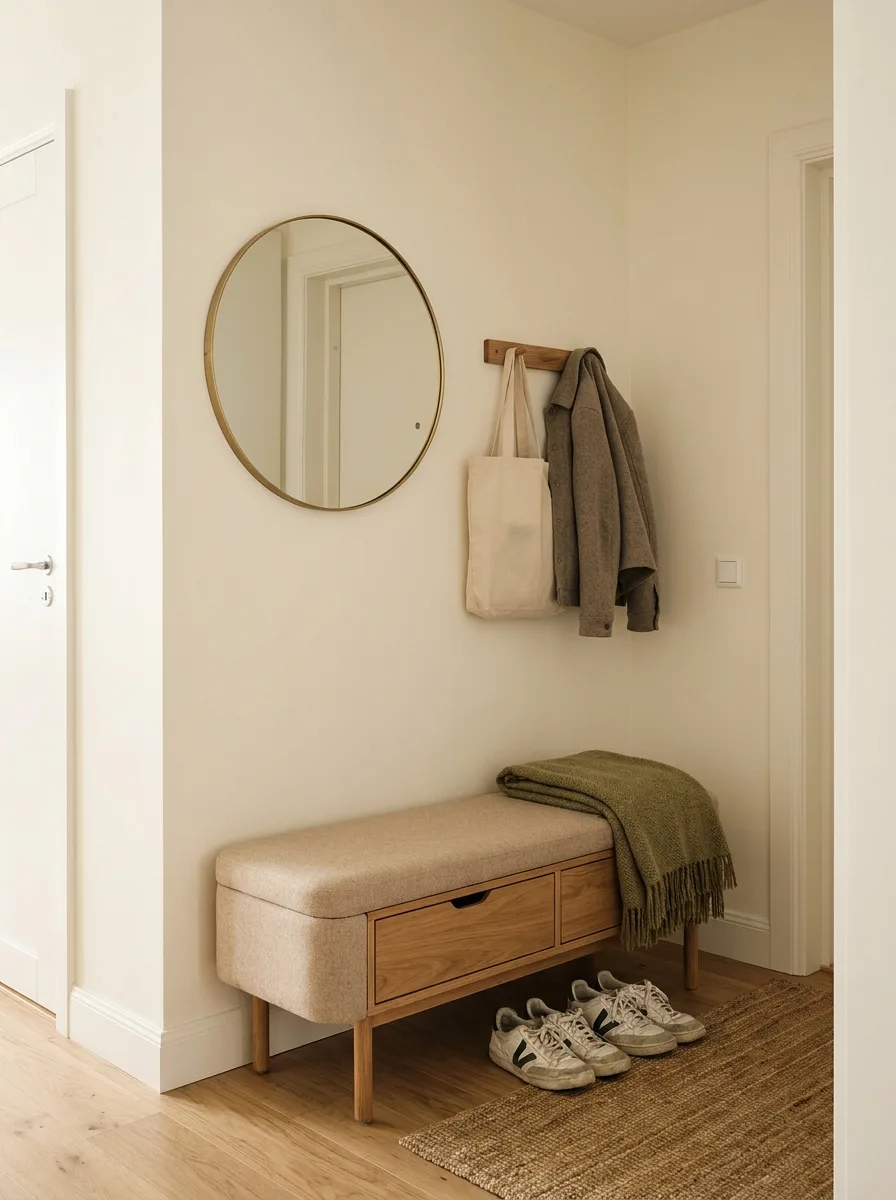
Design Tip: If the bench has open cubbies, use matching woven baskets to keep the contents visually calm and cohesive.
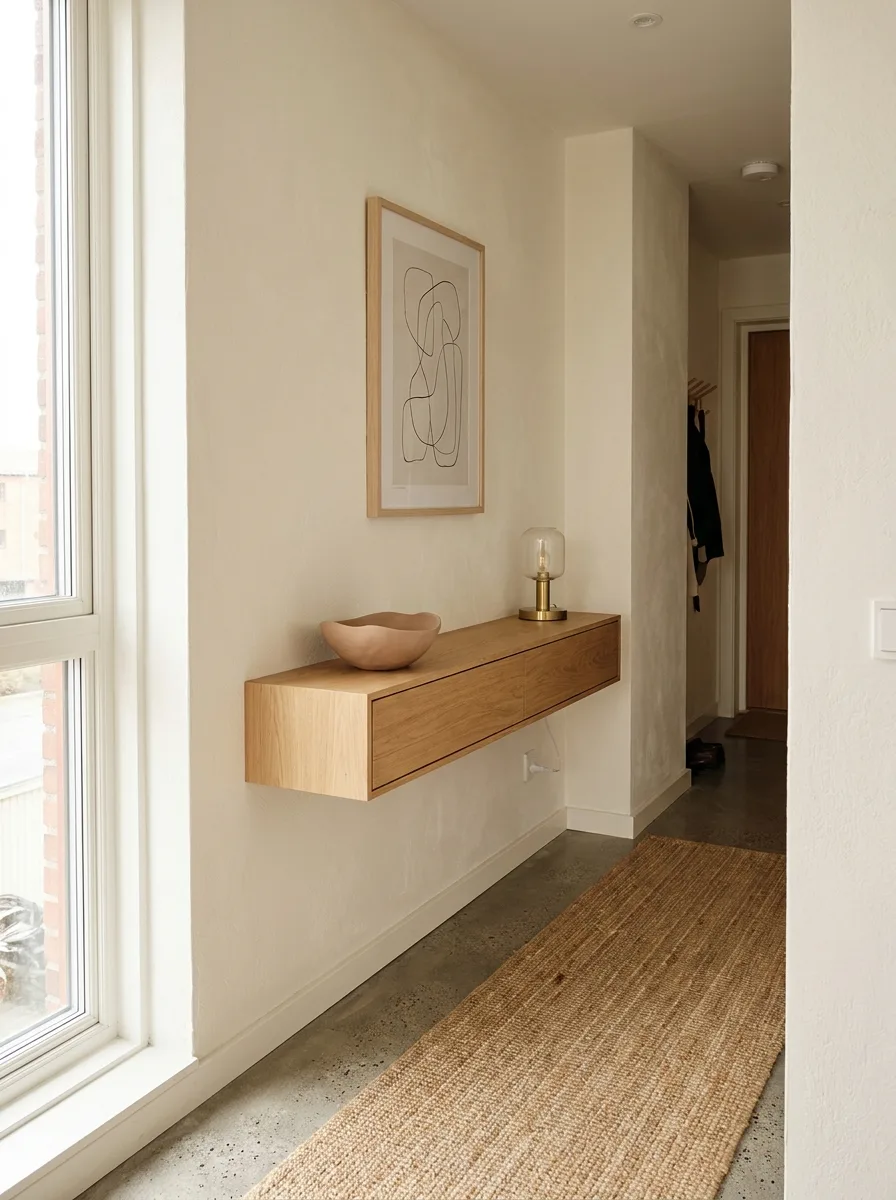
5. Use Floating Furniture
When floor space is limited, floating furniture can make a noticeable difference.
A wall-mounted shelf, floating console, or small wall-mounted cabinet leaves the floor visible underneath. That visual openness tricks the eye into perceiving the entrance as larger and less crowded.
It also makes cleaning and vacuuming easier, which is a small but welcome benefit in a high-traffic area. Floating furniture works particularly well in apartments and narrow entrances where every inch of floor space matters.
6. Give Shoes a Specific Home
Shoes are one of the quickest ways for a small entryway to look cluttered.
Instead of simply telling yourself that shoes should be “kept tidy,” give them a defined storage location. That could be a slim tip-out shoe cabinet, baskets beneath a bench, a small shelf, or even a dedicated section inside an entryway closet.
The best solution depends on how many pairs actually need to live near the door.
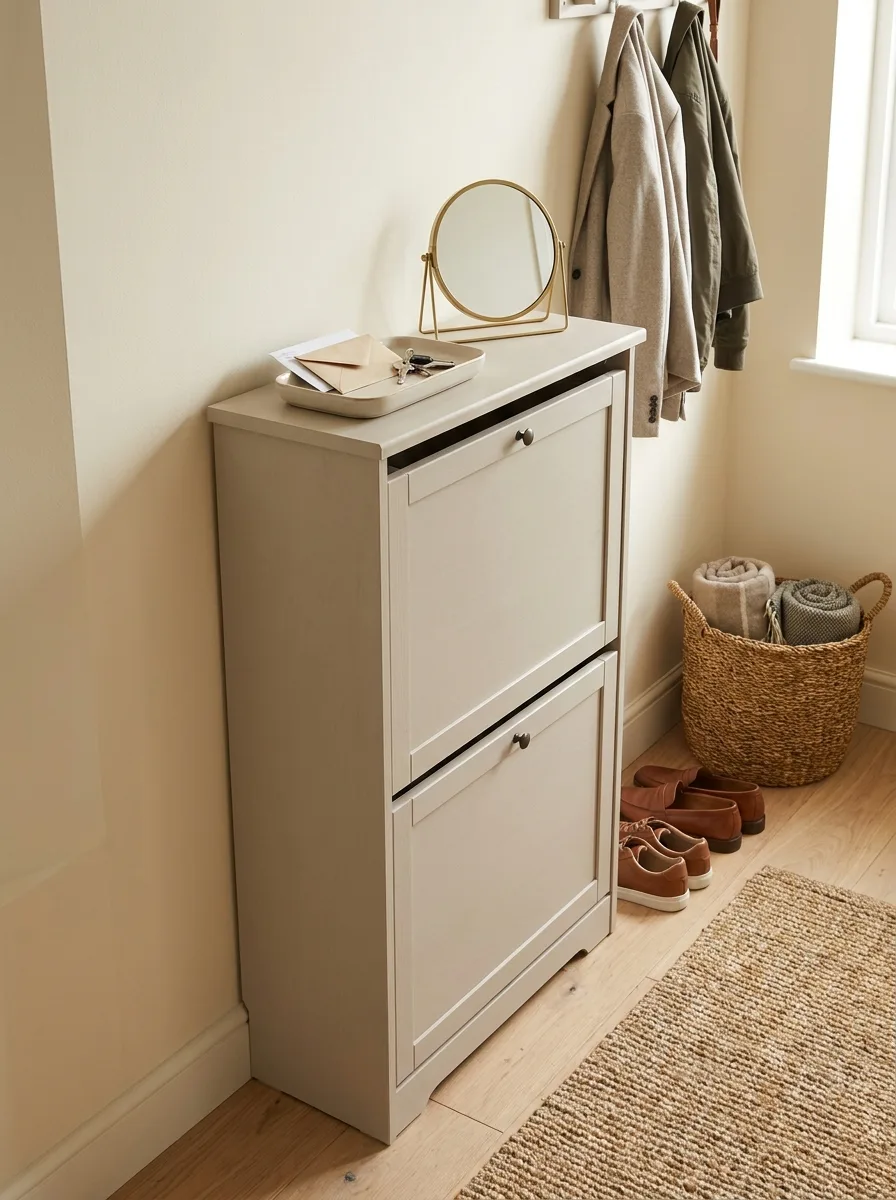
Design Tip: Store only the shoes used regularly in the entrance (two to three pairs per person). Seasonal or rarely worn pairs can live in bedroom closets.
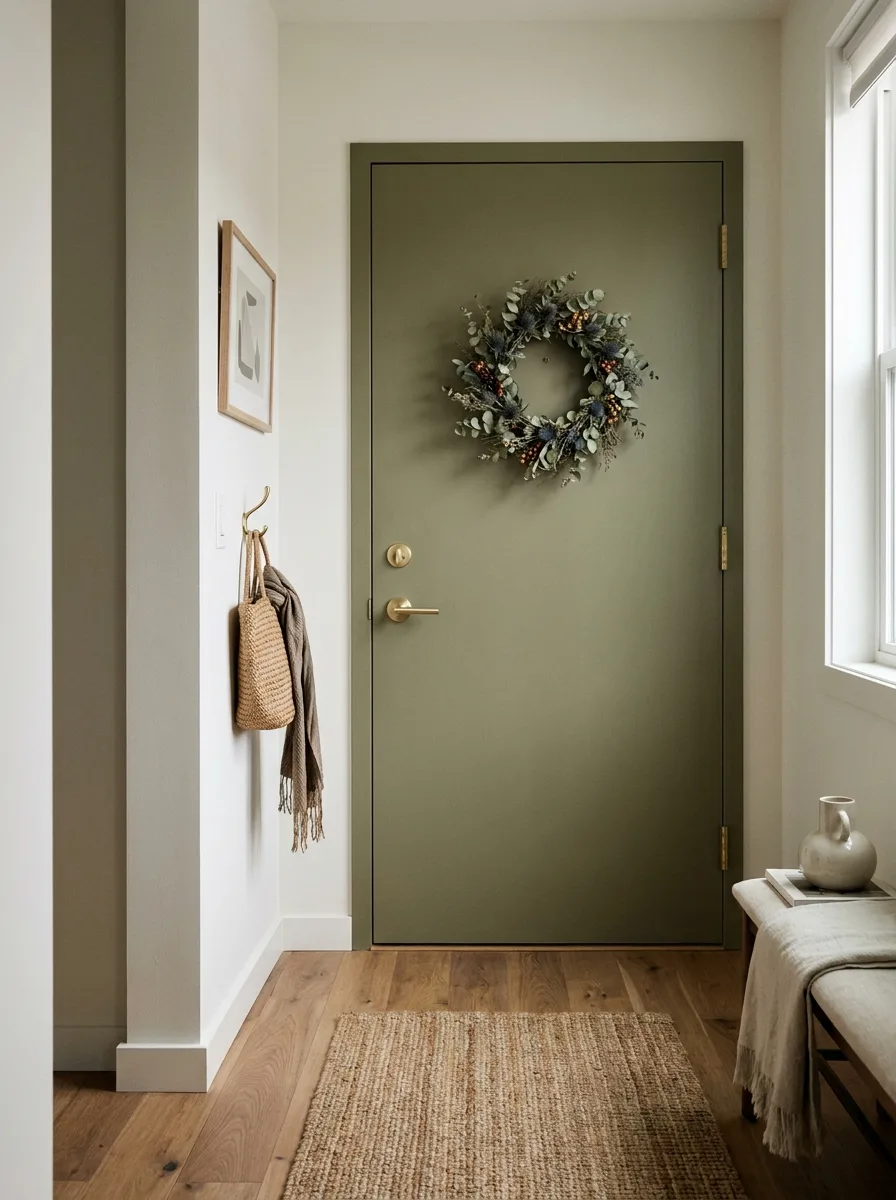
7. Use the Door as Part of the Design
The entry door itself can contribute to the overall look of your home’s threshold.
A beautiful paint color, simple hardware, or a restrained seasonal botanical wreath can give a tiny entrance personality without requiring additional floor or wall space.
If the entryway is extremely small, this can be a much better place for visual interest than trying to squeeze in another piece of furniture. Just make sure anything mounted to or near the door doesn’t interfere with its swing.
8. Add a Narrow Runner to Define the Entrance
A runner can visually establish an entryway even when there isn’t a clearly defined foyer.
This is particularly helpful in apartments or open-plan homes where the front door opens directly into a living room or kitchen. Choose a runner that leaves some visible floor around its edges rather than filling the entire passage.
A washable or durable material makes practical sense because the entryway receives more foot traffic and outdoor dirt than many other parts of the home.
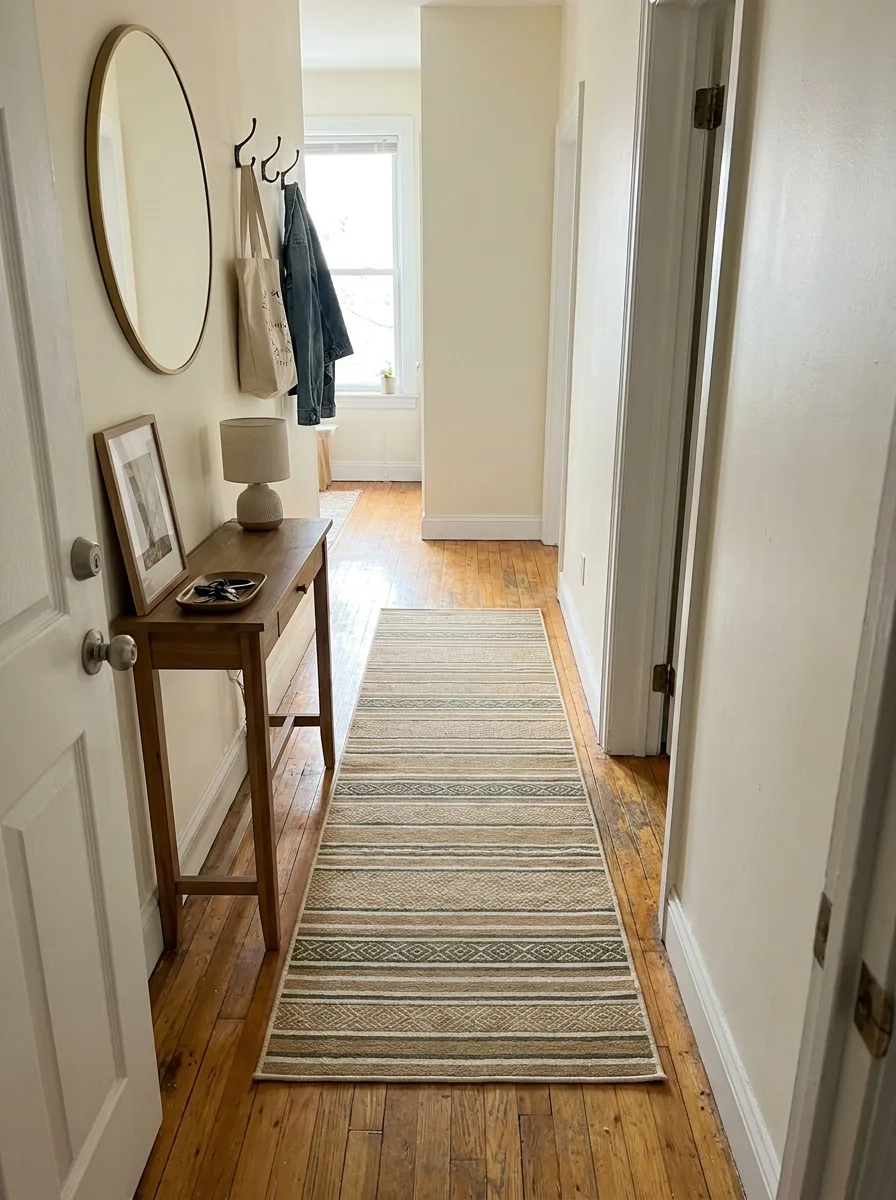
Design Tip: Keep the pattern relatively restrained if the rest of the entrance already contains several visual textures.
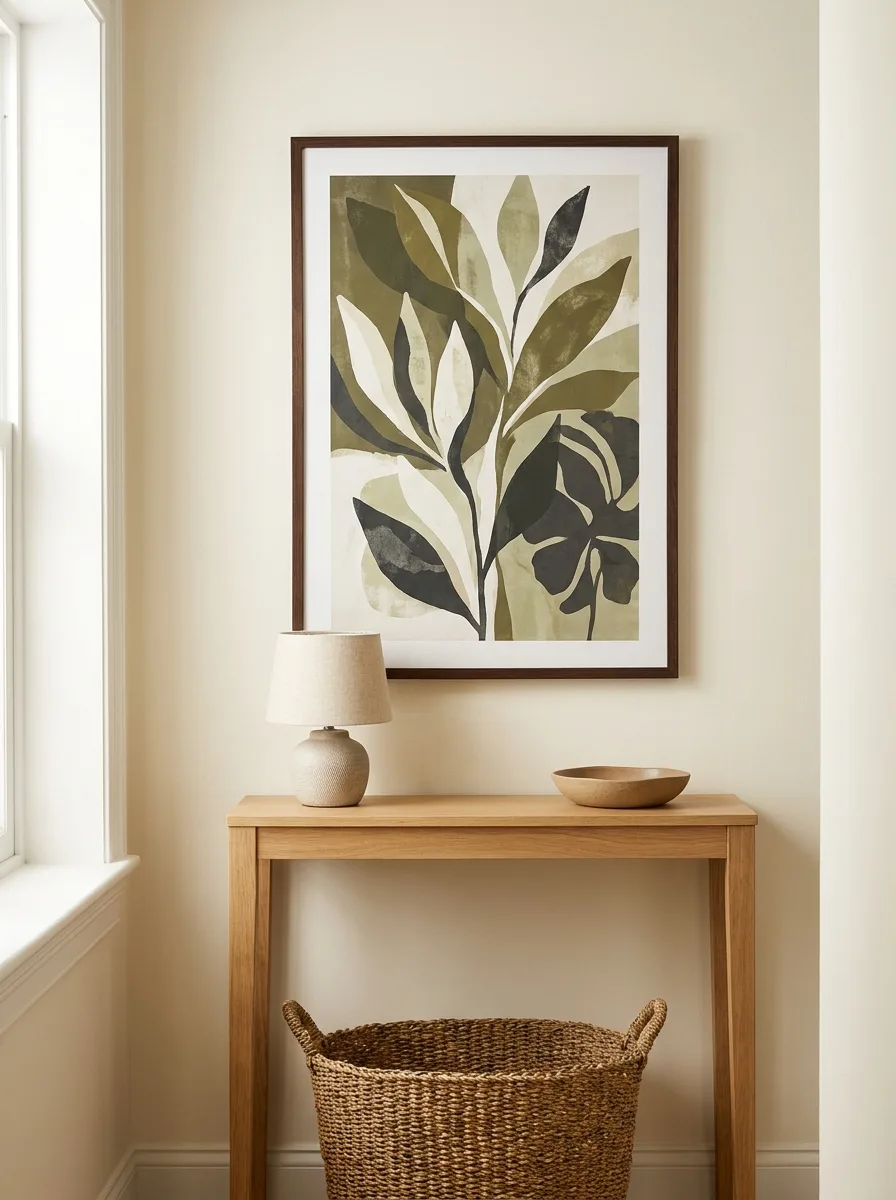
9. Use One Strong Piece of Wall Art
Small spaces don’t necessarily require small decoration.
One substantial piece of artwork can often make a greater impact than a collection of tiny frames. Hang it above a console or on an otherwise empty wall, allowing generous breathing room around its perimeter.
The artwork can introduce color, warmth, or personality while keeping the overall arrangement clean and uncluttered.
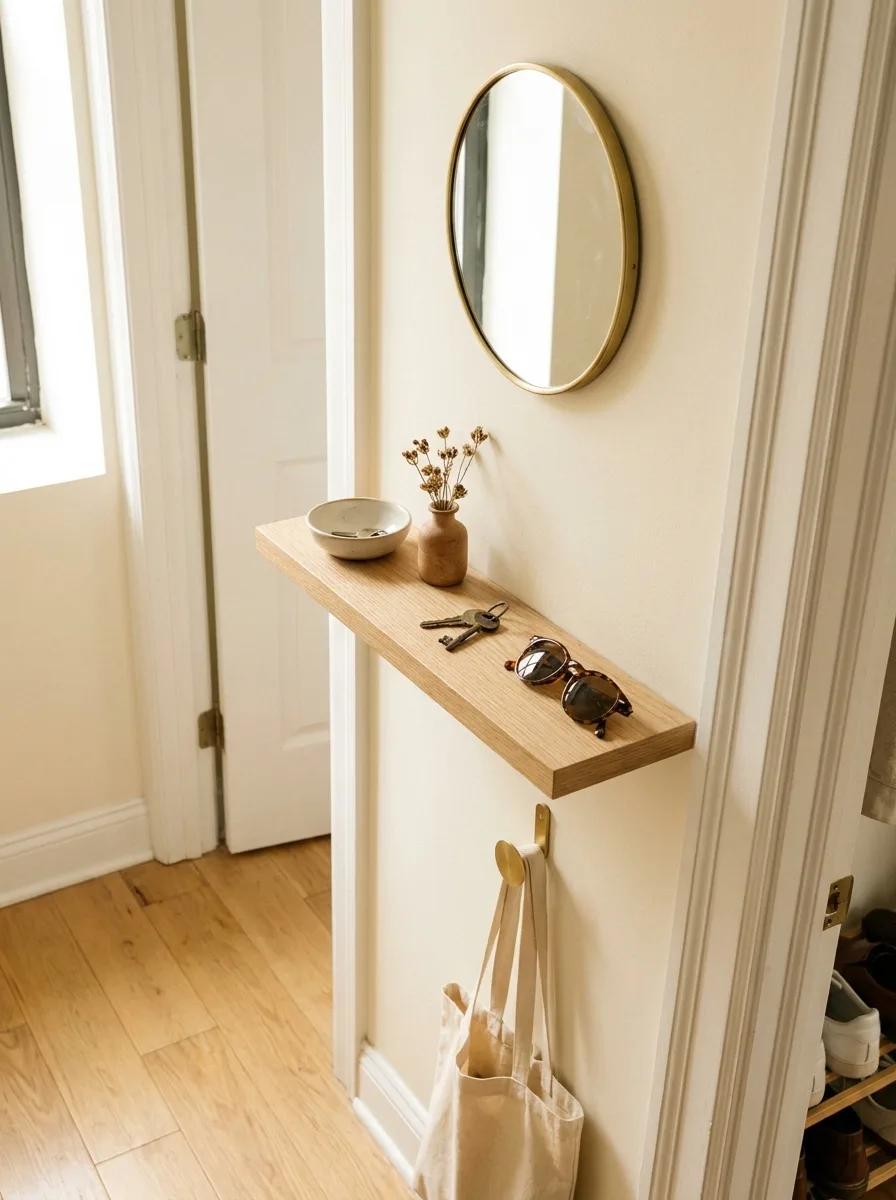
10. Create a Tiny Landing Shelf
If you don’t have room for a console, a small wall-mounted shelf can provide just enough space for everyday essentials.
Use it for keys, sunglasses, a small stoneware dish, or a single decorative stem. The key is to keep the shelf intentionally limited. A tiny shelf becomes cluttered quickly if it is expected to hold everything.
Think of it as a landing place for the few things you reach for every single day.
11. Use Vertical Storage in a Narrow Entrance
When an entryway is short on floor space, look upward.
Tall shelving, stacked hooks, vertical cabinets, and narrow wall-mounted storage make use of wall height without extending too far into the walkway. This is particularly effective in narrow hallways where horizontal furniture can make circulation uncomfortable.
Keep the lower section focused on everyday necessities and use higher storage for items that don’t need to be accessed constantly.
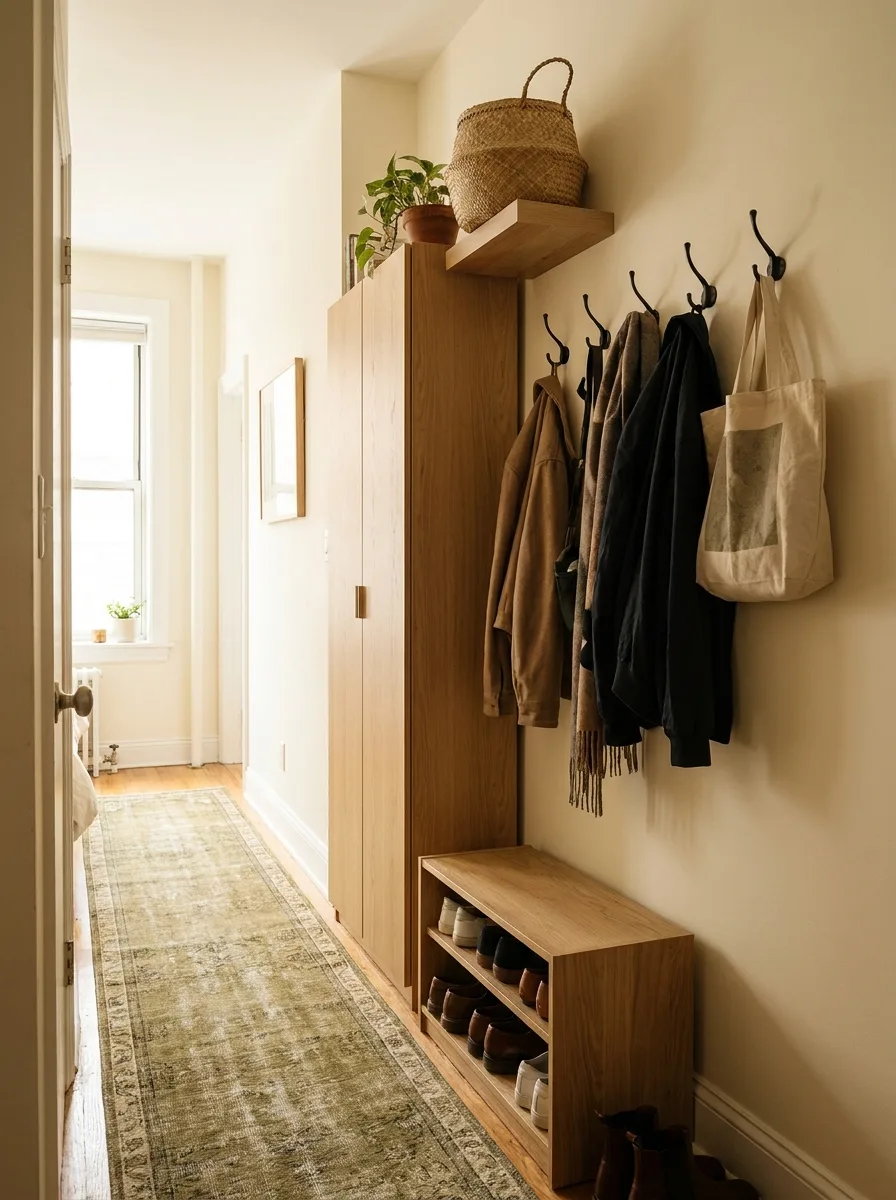
12. Add Hooks Instead of a Coat Rack
A freestanding coat rack can easily take up valuable floor space and tip over under heavy winter coats.
Wall hooks provide the same basic function while keeping the floor completely open. Install several hooks at a comfortable height and consider adding a shallow shelf above them for hats, baskets, or mail organizers.
For households with several people, assigning each person a hook also makes daily morning routines easier.
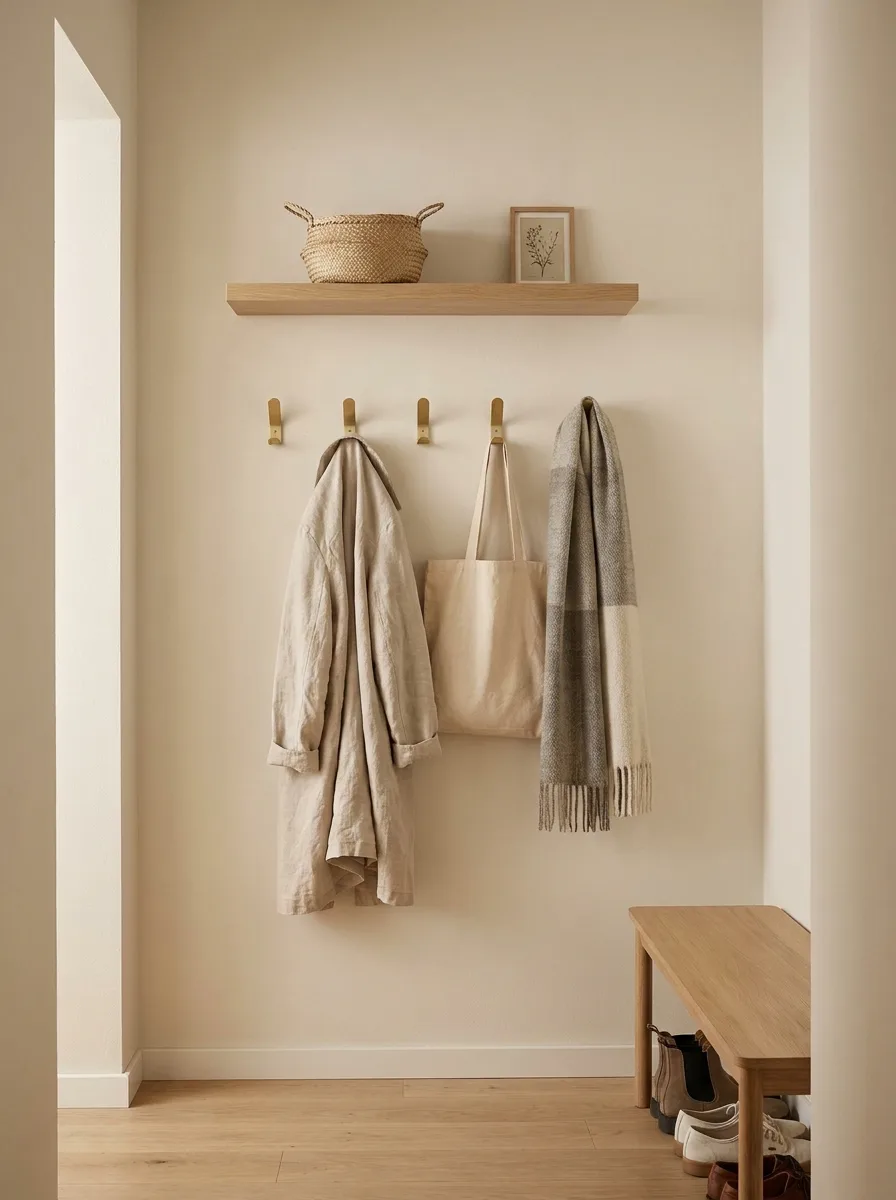
13. Use Baskets to Hide Everyday Clutter
Open storage becomes much more practical when it doesn’t require everything inside it to look impeccably arranged.
Baskets can hide shoes, scarves, dog leashes, market bags, or small accessories while keeping them within arm’s reach of the door. Choose baskets that fit your furniture precisely rather than buying baskets first and trying to make the storage work afterward.
A small entryway usually looks calmer when there are fewer visible categories of objects.
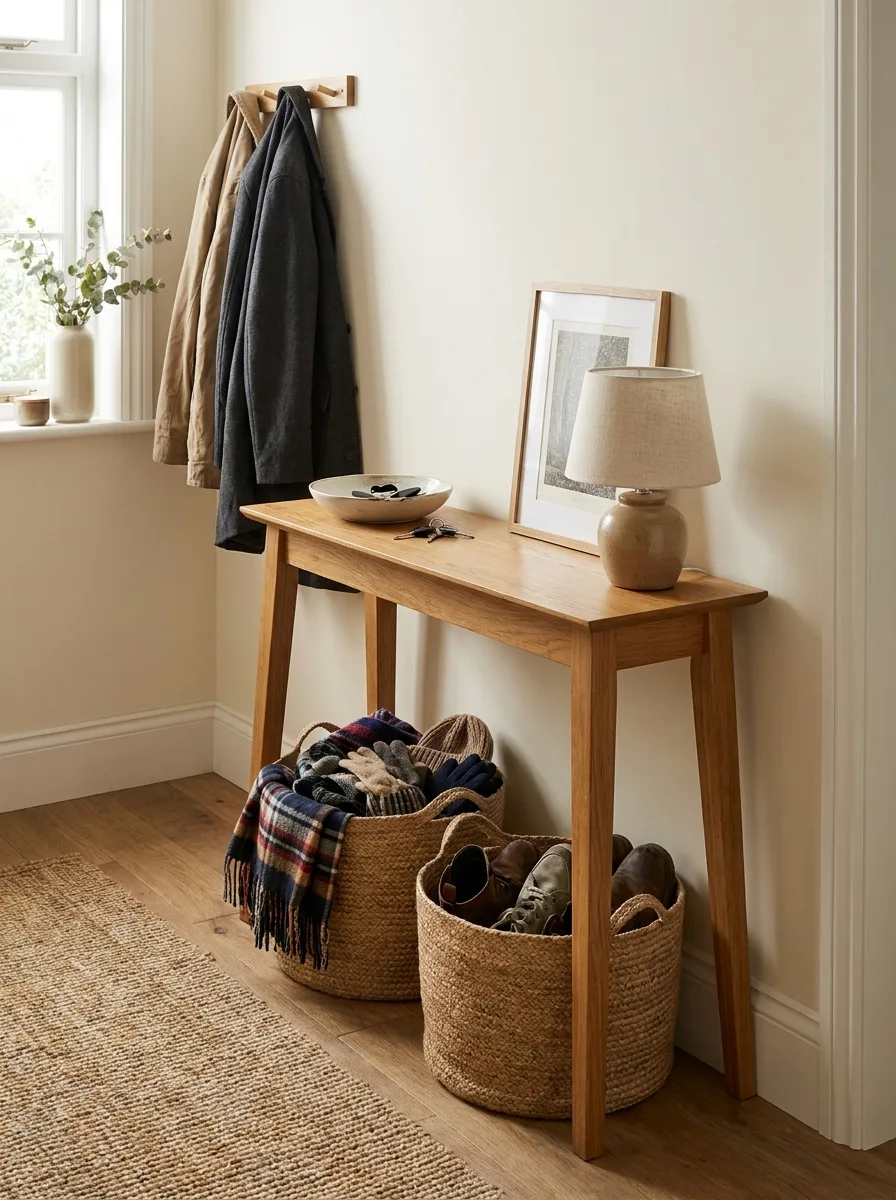
14. Let Lighting Do More Work
Good lighting can make a small entrance feel considerably more intentional and welcoming.
If there is enough room, a wall sconce provides both illumination and architectural interest without taking up any console surface space. A small shaded table lamp works beautifully when there is a console or shelf available.
Warm, comfortable 2700K lighting is far more welcoming than a harsh ceiling spotlight used on its own.
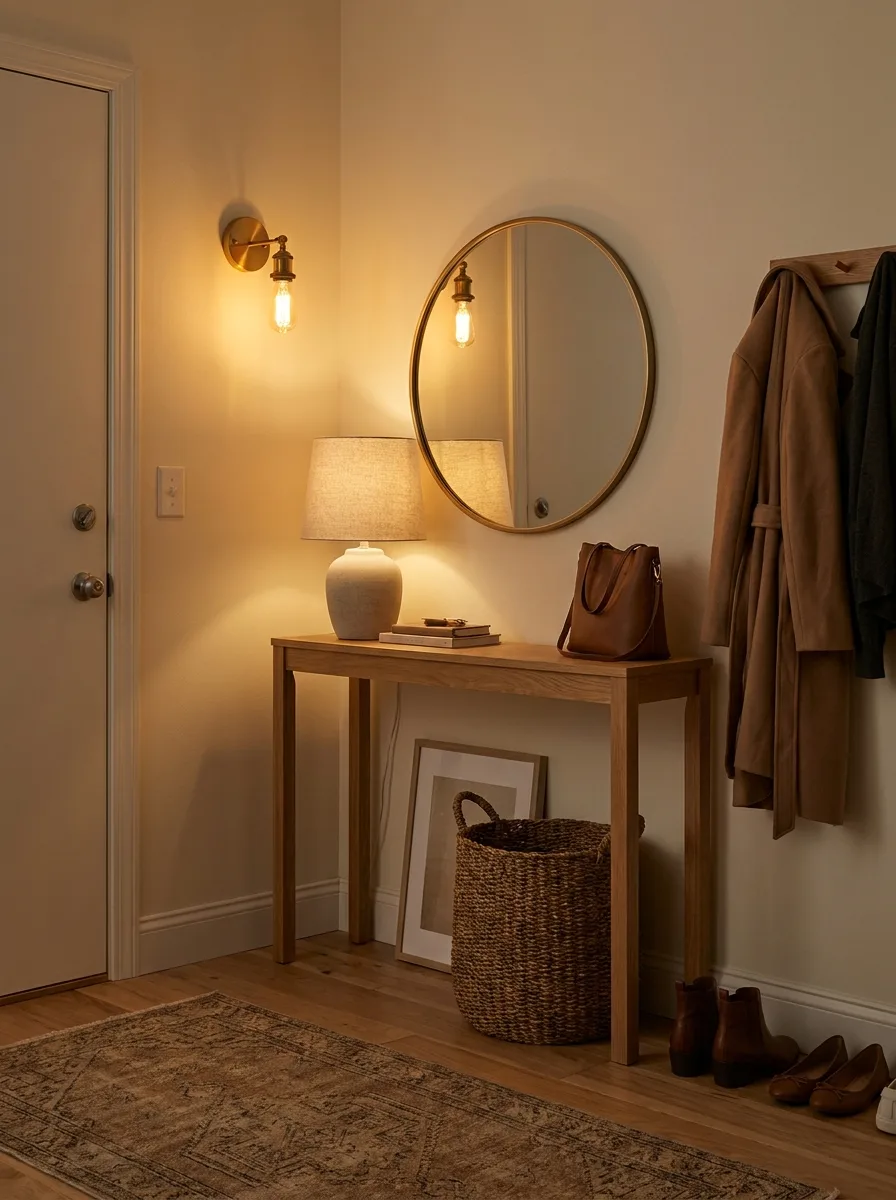
Design Tip: If you’re renting, a plug-in wall sconce can deliver a built-in, layered lighting effect without permanent electrical work.
15. Make the Entryway Feel Like Part of the Home
One common mistake in a small entrance is treating it as an isolated utility closet.
Instead, allow the entryway to borrow colors, materials, and textures from the rooms that surround it. If the living room features warm oak and soft linen neutrals, repeat those elements near the front door. If the rest of the home has darker bronze accents, introduce one subtle version of that finish in the entry hardware.
This creates architectural continuity and makes the entrance feel like an intentional prelude to your home.
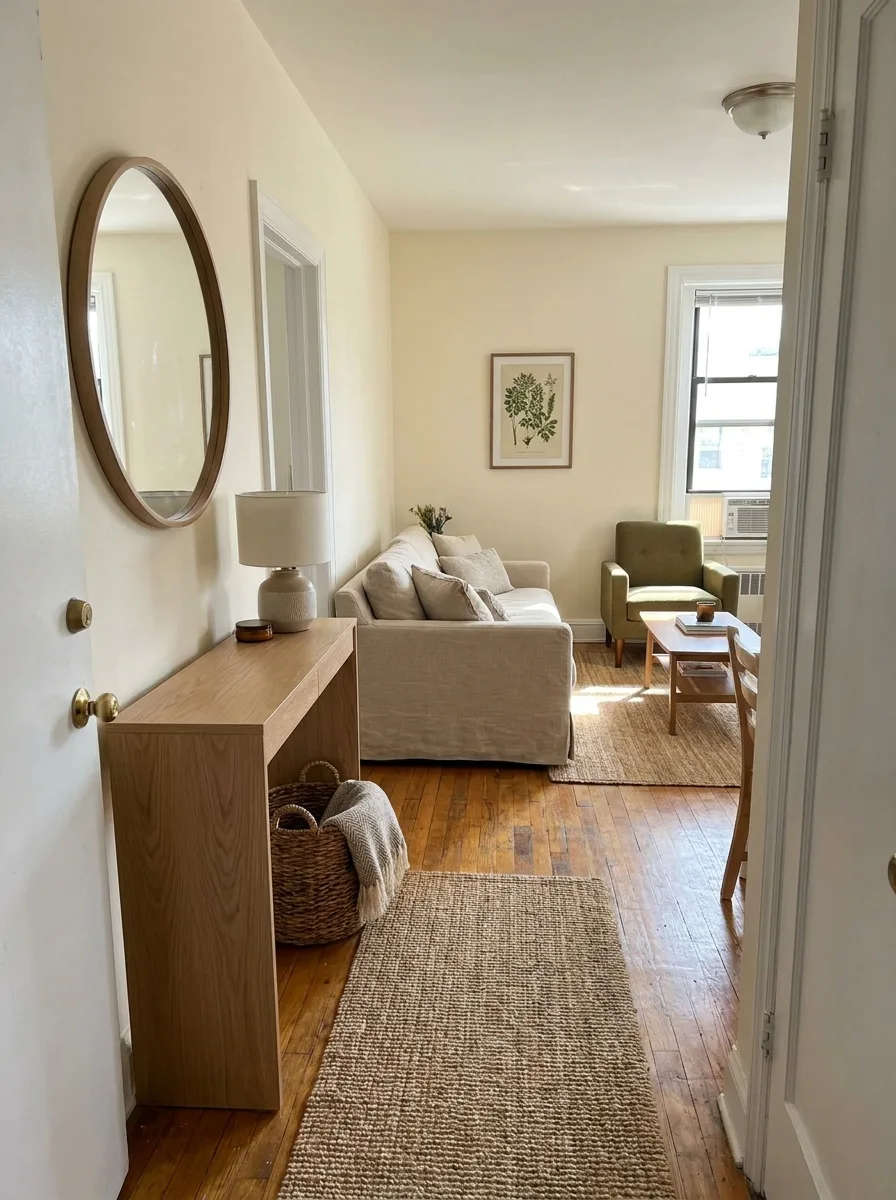
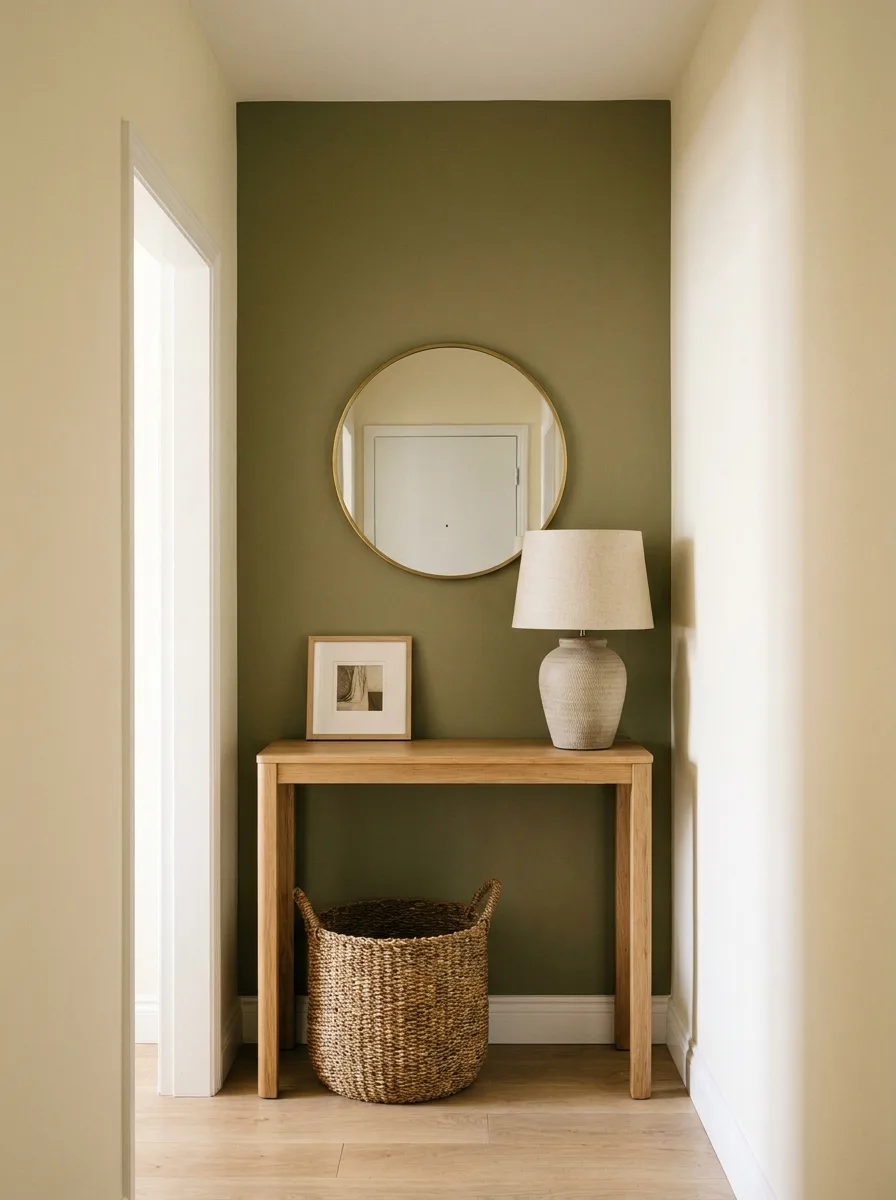
16. Use an Accent Wall Instead of More Furniture
When floor space is strictly limited, the walls can carry the visual personality.
Paint, subtle wallpaper, vertical tongue-and-groove paneling, or even a carefully curated artwork arrangement can turn a blank wall into a feature. This approach is especially useful when adding furniture would choke the entrance.
Keep the surrounding elements restrained so the wall has room to breathe and make its statement.
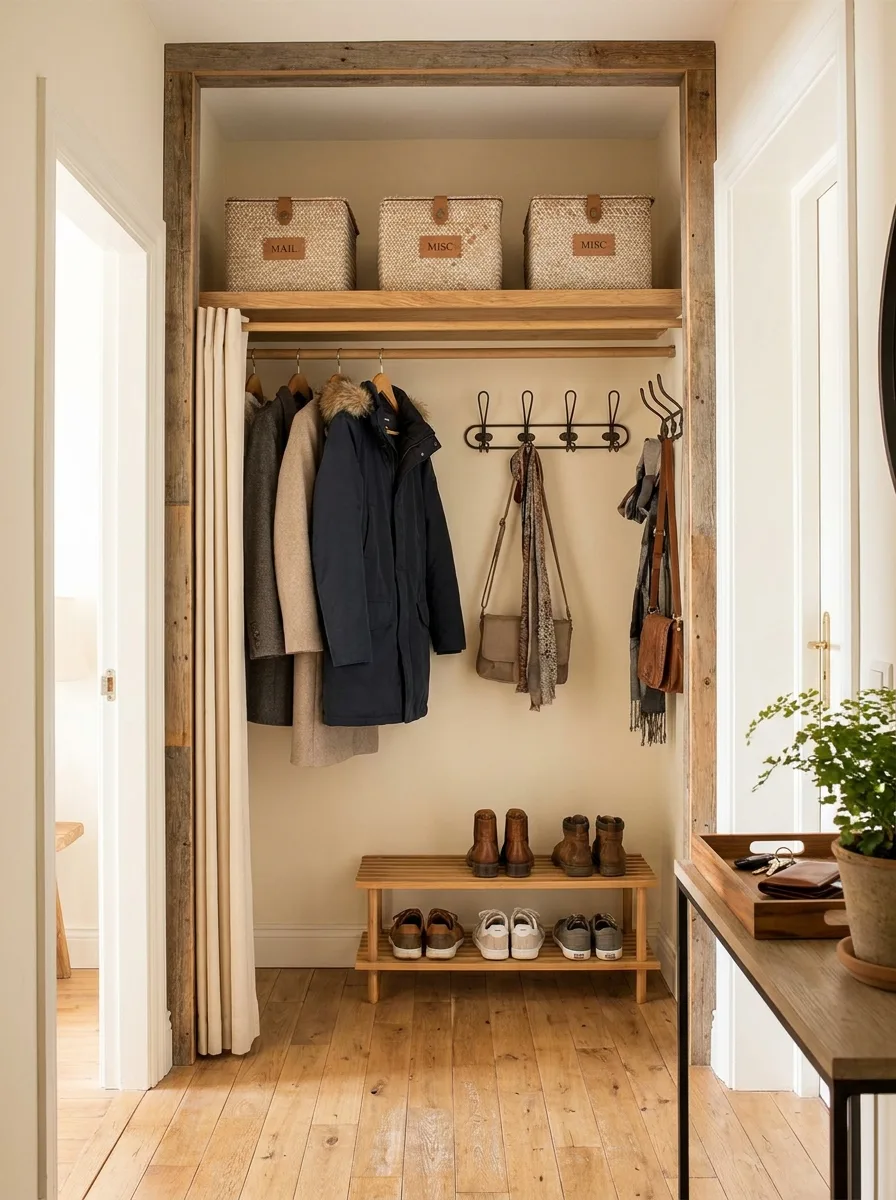
17. Create a Drop Zone Inside a Closet
If your entryway has a closet, don’t automatically dedicate the entire interior to hanging coats.
A portion of the closet can become a hidden drop zone for bags, shoes, umbrellas, keys, and daily accessories. Add a few hooks, a narrow shelf, baskets, or an over-the-door organizer tailored to what your household actually needs.
This keeps the visible entryway peaceful while putting storage right where daily clutter originates.
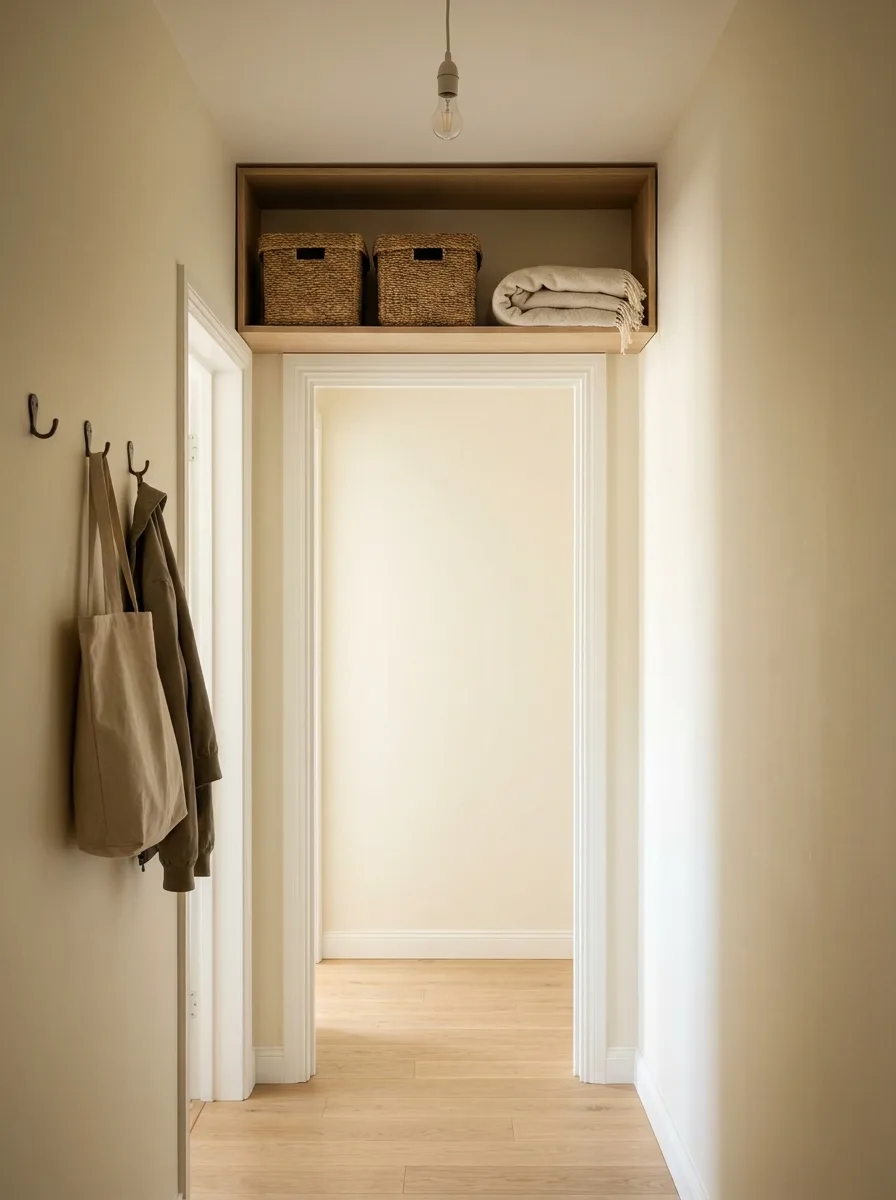
18. Use the Space Above the Door
The wall area above a doorway is frequently ignored.
A shallow shelf installed above the door frame can provide storage for items that aren’t needed every day, such as seasonal accessories, extra travel bags, or labeled storage boxes.
This works best when the shelf is visually quiet and doesn’t make the entrance feel top-heavy. For safety, avoid storing heavy objects directly above a frequently swinging door.
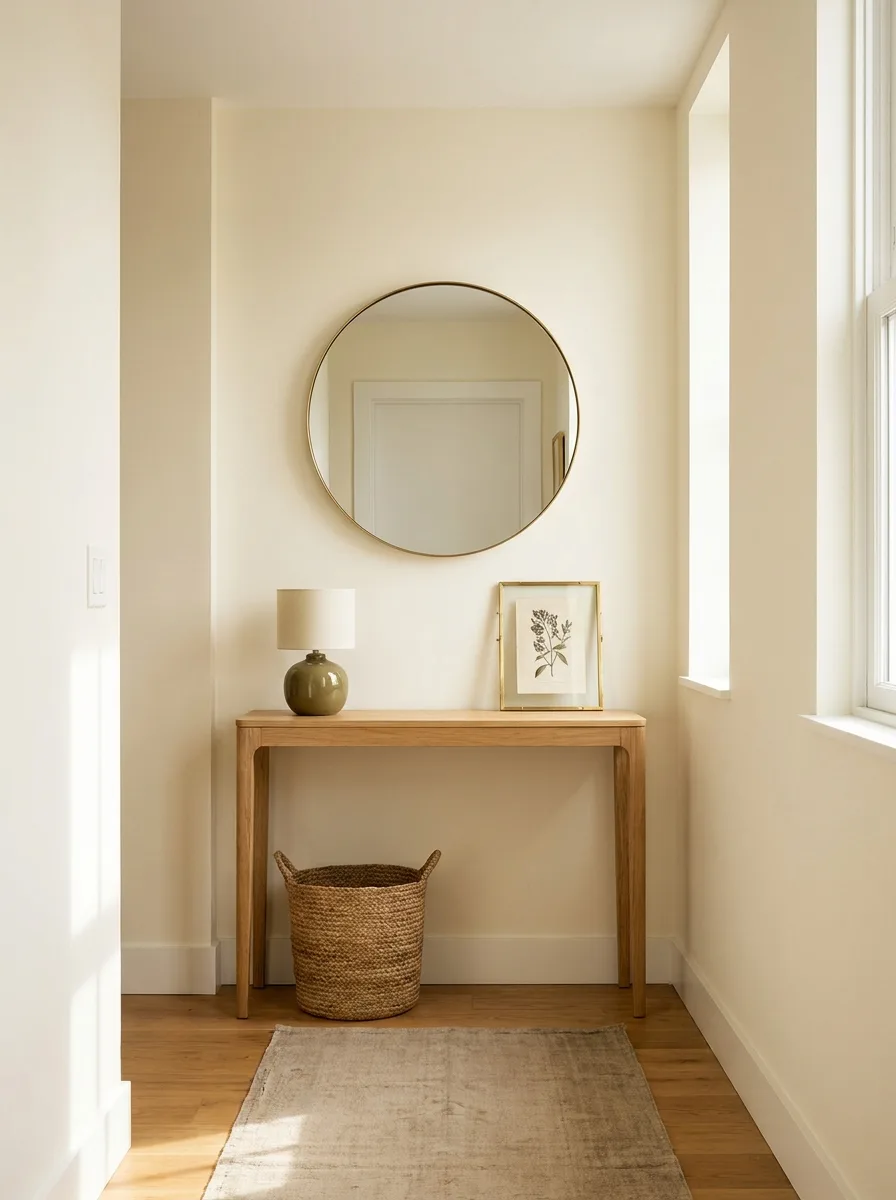
19. Keep the Color Palette Restrained
A small entryway doesn’t need to be sterile or completely monochrome, but too many competing colors can make a compact space feel chaotic.
Try choosing a simple palette of two or three main tones, allowing natural materials to provide textural warmth. Warm alabaster, natural oak, muted olive, soft beige, or deep espresso accents can all work harmoniously.
The key to visual calm is consistency across finishes.
20. Design Around the Actual Traffic Pattern
Before purchasing furniture, observe how people actually move through your entrance.
Where do you naturally pause when taking off your shoes? Which way does the door swing? Where do bags instinctively get dropped? Is there enough clearance for someone to walk past while another person is putting on their coat?
These functional questions should always dictate your layout. A beautiful console that impedes the natural walking path is ultimately the wrong console. The best small entryways are designed around daily movement first and decoration second.
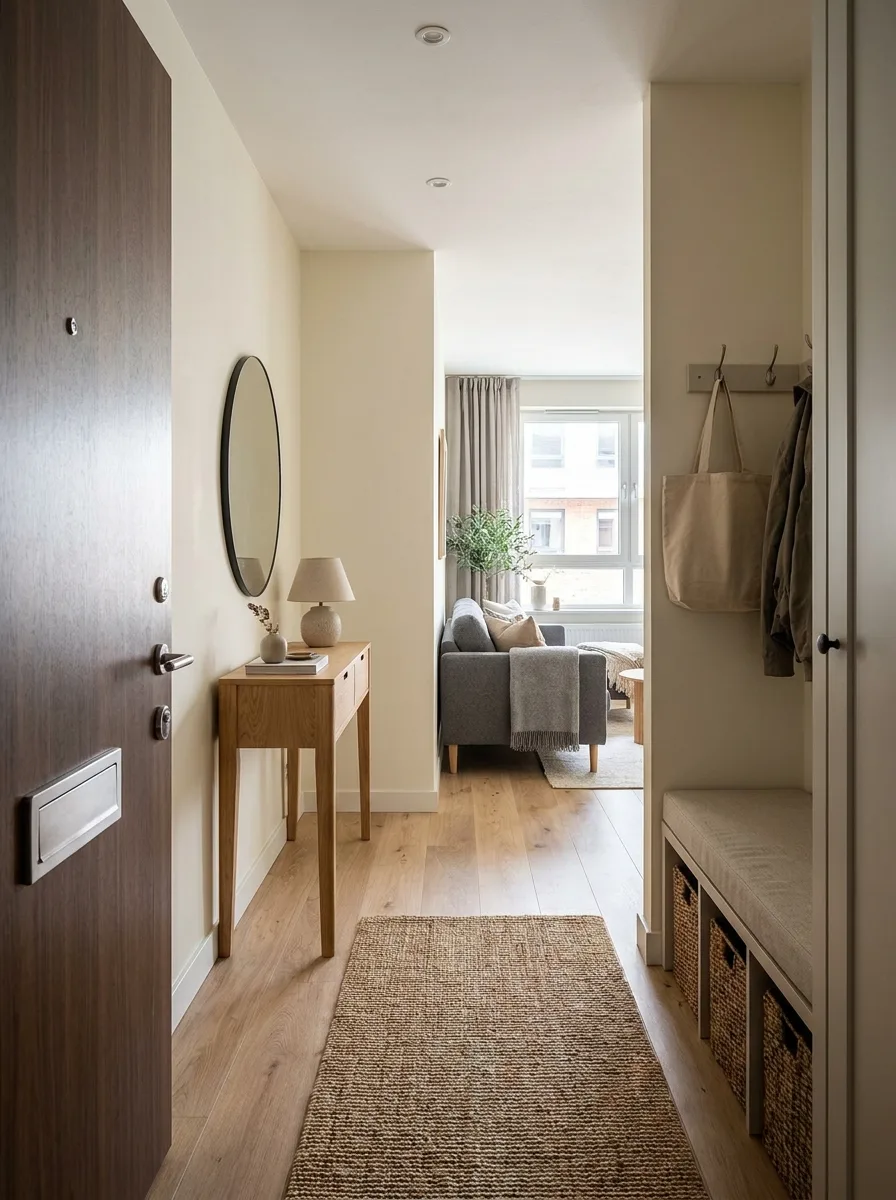
21. Keep Some Empty Space
Perhaps the most useful small-entryway idea is also the easiest to overlook: you do not have to fill every available inch.
Empty space helps furniture breathe, keeps circulation comfortable, and makes the storage pieces you do have feel intentional. Instead of asking, “What else can I put here?” ask, “What does this space actually need?”
A small entrance with a bench, a mirror, wall hooks, and clear floor space can feel far more complete than one crowded with decorative accessories.
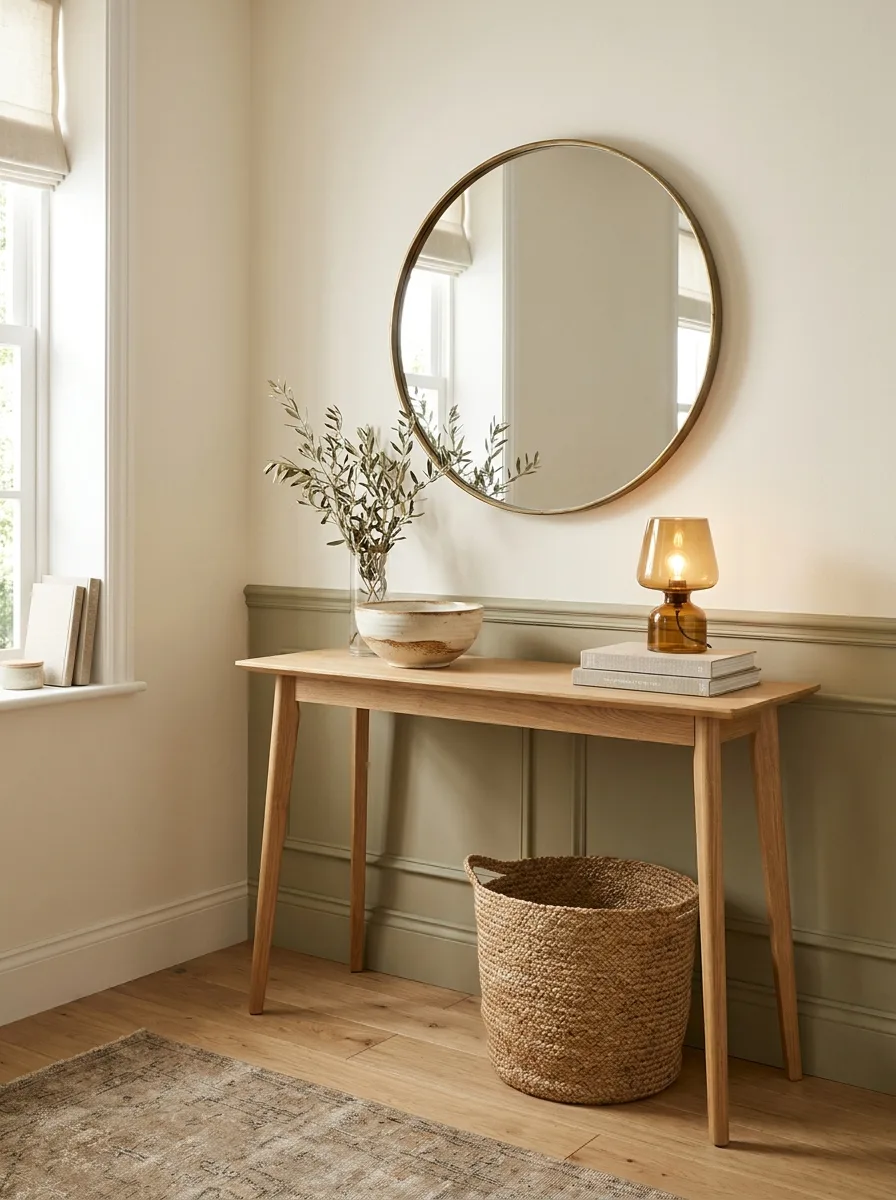
How to Make a Small Entryway Feel Bigger
You don’t need to make every small entryway visually minimal. You simply need to control where visual weight sits. A few design principles make a noticeable difference:
- Keep the floor visible: Furniture with elevated legs or floating wall mounts preserves sightlines across the floor.
- Use vertical lines: Tall mirrors, vertical artwork, and stacked hooks draw the eye toward the ceiling.
- Give large pieces breathing room: One generous mirror or framed print looks cleaner than multiple small objects competing for attention.
- Contain everyday clutter: Storage doesn’t have to be hidden behind solid doors, but it should have a clear, defined boundary.
- Use light thoughtfully: Natural light reflections and warm layered sconces brighten an entrance without physically altering its dimensions.
How Much Furniture Does a Small Entryway Actually Need?
Usually less than you think. Start by identifying the functions the entrance must perform:
- Where will keys and mail go?
- Where will shoes be kept?
- Where will coats and bags hang?
- Is seating necessary for putting on shoes?
- Do you prefer open display or concealed cabinetry?
- How much clear walking clearance must remain?
Once those questions are answered, select furniture around the functions rather than shopping for a complete “entryway set.” For some homes, that might mean a console and mirror. For another, it might simply be wall pegs, a shallow shelf, and a woven basket. The right entryway is the one that supports how you actually live.
Final Thought
A small entryway doesn’t have to do everything. It simply needs to do the right things well.
Give everyday belongings a dedicated home. Keep the walking path comfortable. Add one or two elements that make the threshold feel like part of your home, and resist the temptation to fill every empty surface.
The most successful small entryways aren’t necessarily the ones with the most furniture or the most decoration. They are the ones where every piece has a clear reason to be there.
Editorial Guidelines: Quick Practical Rules
- Keep the floor visible: Furniture that sits close to the wall or floats above the floor maintains a sense of openness.
- Use vertical lines: Tall mirrors, vertical artwork, and stacked hooks draw the eye upward.
- Give large pieces breathing room: One substantial mirror or framed print looks cleaner than multiple small objects competing for attention.
- Contain everyday clutter: Storage doesn't have to be hidden, but it must have a defined boundary.
- Use light thoughtfully: Layer warm 2700K lighting with a shaded wall sconce or small table lamp rather than relying solely on harsh overhead fixtures.
What Often Goes Wrong (And How to Fix It)
- Choosing furniture that is too deep: Depth matters more than width in a tight entrance. A beautiful console quickly becomes an obstacle if it extends too far into the walkway.
- Trying to store everything by the front door: Your entrance doesn't need to become the storage room for the entire house. Keep only the items that genuinely need to be there.
- Adding too many small decorative objects: A collection of tiny accessories can make a small surface look cluttered very quickly.
- Ignoring the door swing: Always check how the door opens before positioning furniture, hooks, or baskets.
- Buying storage before measuring: Measure the available wall and floor space first, then measure the furniture you're considering.
- Forgetting the rest of the home: The entrance should feel connected to the rooms beyond it rather than looking like an isolated design scheme.
Frequently Asked Questions
How do you decorate a very small entryway?
Start with the essentials: a place for keys and everyday belongings, shoe storage if necessary, and one strong visual element such as a mirror or artwork. Wall-mounted pieces are particularly useful when floor space is limited.
What furniture works best in a small entryway?
Slim consoles, narrow benches, floating shelves, wall hooks, and compact shoe cabinets are among the most useful options. Choose based on the functions your entrance actually needs.
How can I make a small entryway look bigger?
Keep the floor relatively open, use mirrors, choose furniture with a shallow profile, make use of vertical space, and avoid filling every available surface.
How do you organize shoes in a small entryway?
Use a slim shoe cabinet, baskets beneath a bench, a dedicated shelf, or a section of an entryway closet. The best solution depends on how many pairs need to remain near the door.
What can I do if I don't have an entryway?
Create a small visual and functional zone near the front door using a wall shelf, hooks, mirror, runner, or compact storage piece. You don't need a separate foyer to create an effective entrance.
The House Chapter Editorial
Interiors & Styling Editors • The House Chapter
Curated by our team of interior designers, home organizers, and editorial stylists dedicated to practical, beautiful living.
Entryways & Hallways
A little inspiration for your next chapter at home.
Receive curated decorating dispatches, practical hallway storage blueprints, and quiet design moments delivered straight to your inbox.
No spam. No daily noise. Unsubscribe at any time with one click.
Related Chapters
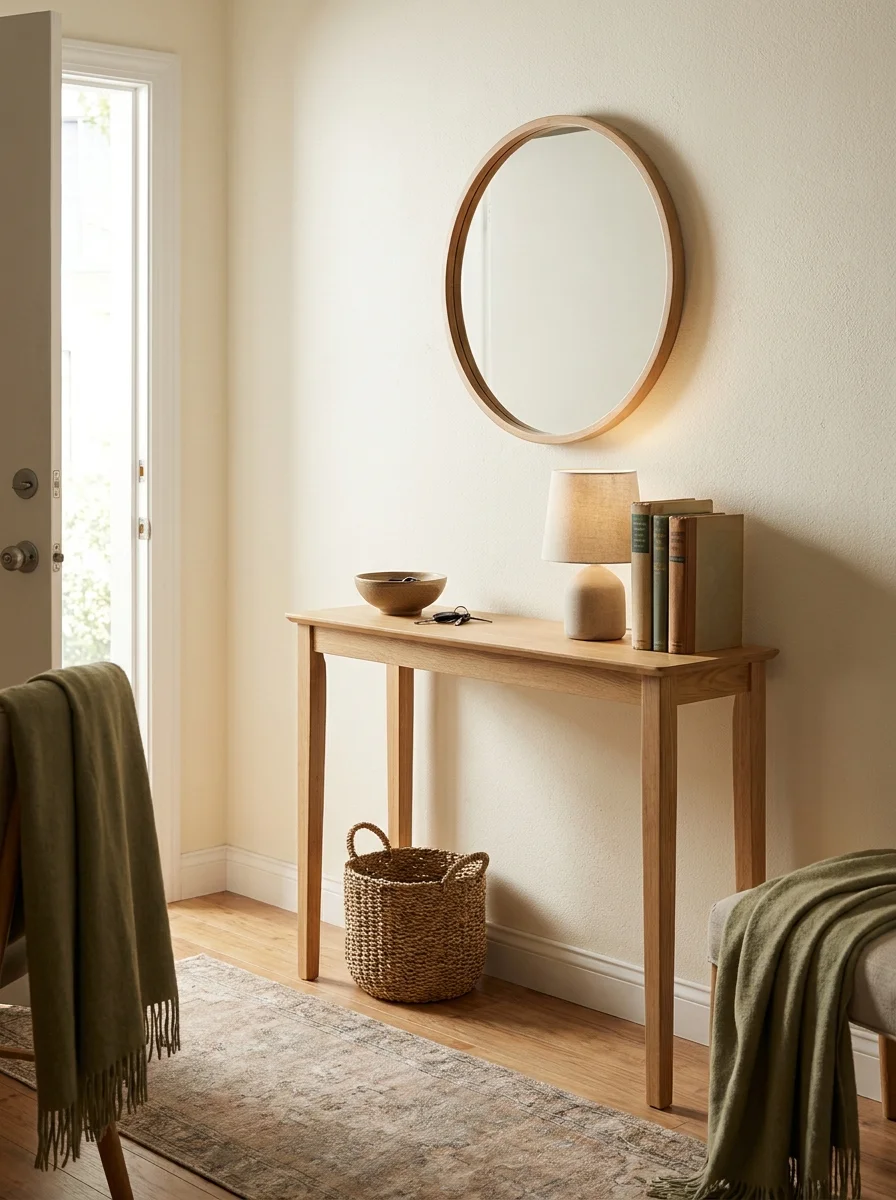
23 Entryway Storage Ideas That Keep Clutter Under Control
Discover practical entryway storage ideas for shoes, coats, bags, keys, and everyday clutter, including smart solutions for small entrances, apartments, and narrow hallways.
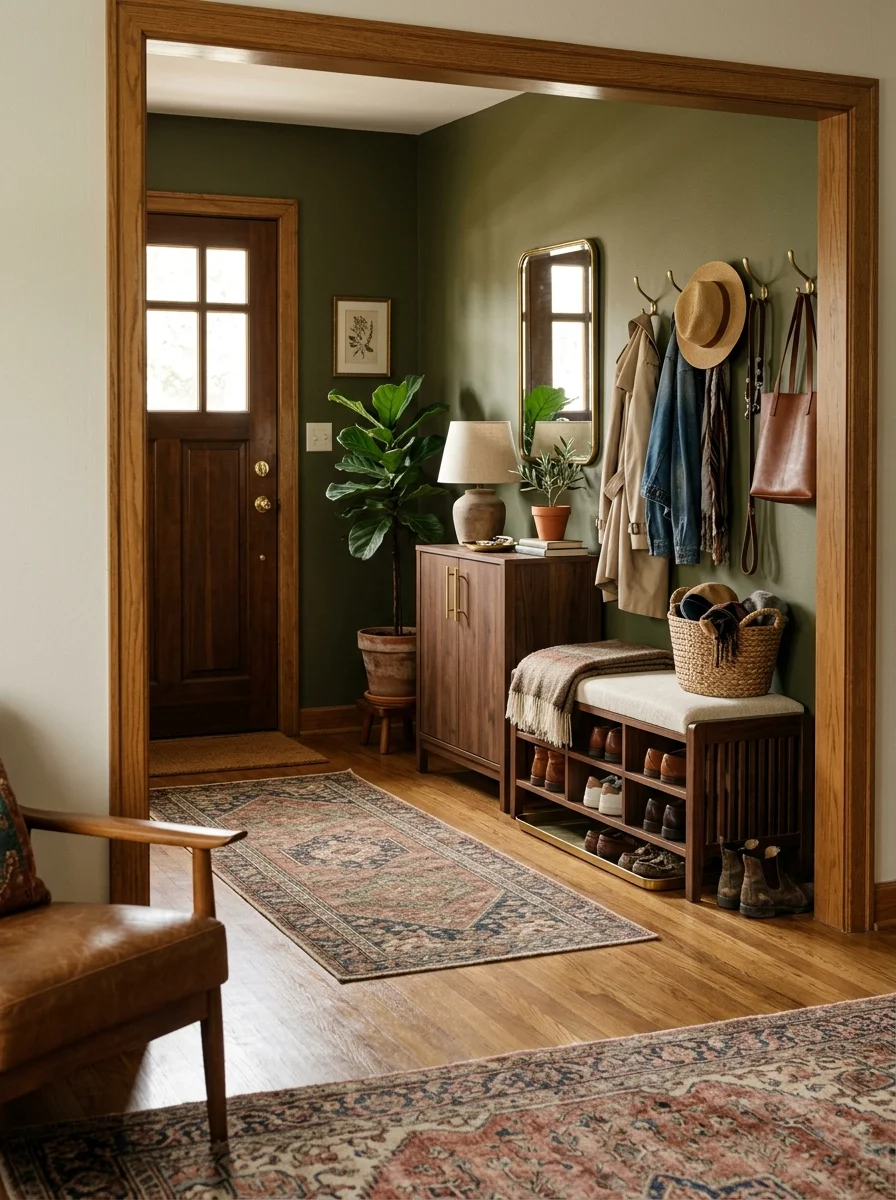
Entryway Shoe Storage Ideas That Actually Work
Discover practical entryway shoe storage ideas for small foyers, apartments, narrow hallways, and busy family homes without making the entrance feel cluttered.
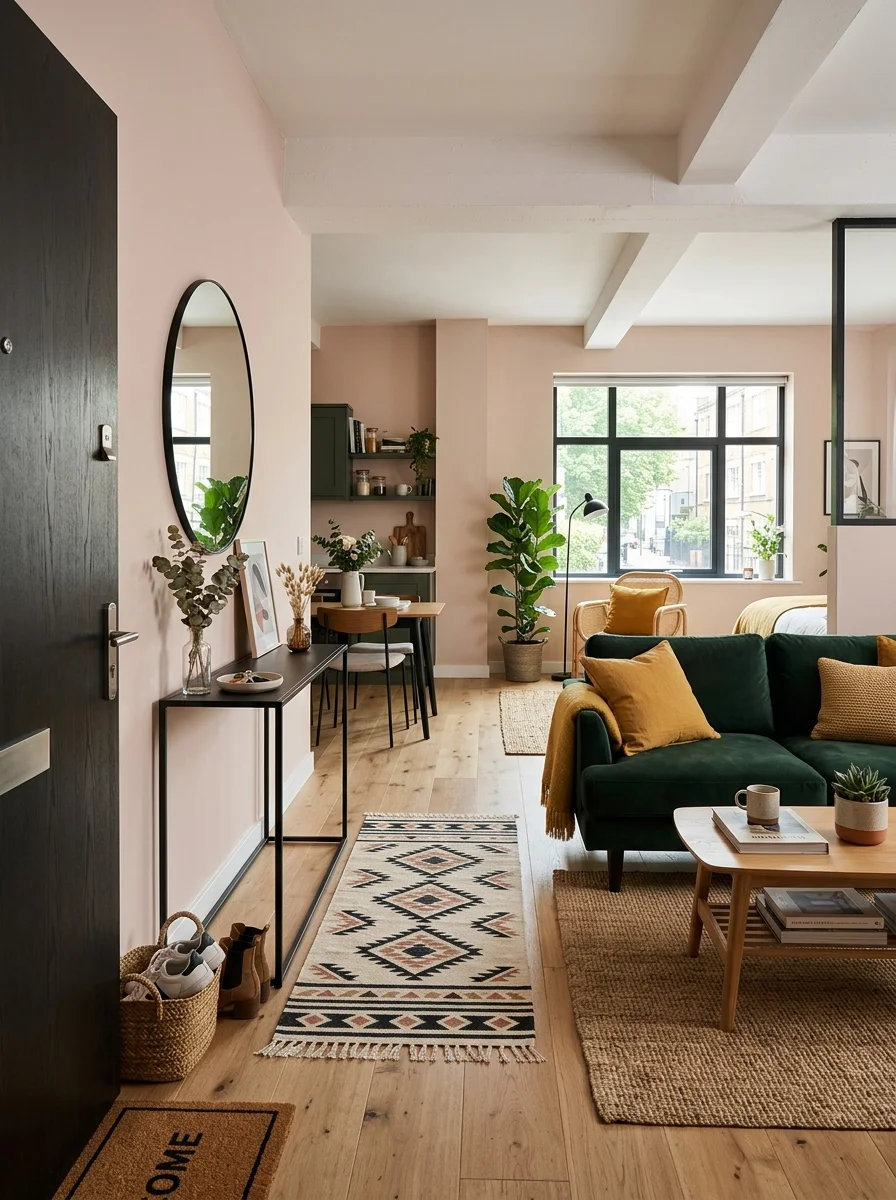
Apartment Entryway Ideas for a More Welcoming Entrance
Make an apartment entrance feel welcoming with practical entryway ideas for storage, furniture, lighting, mirrors, narrow spaces, and renter-friendly decorating.
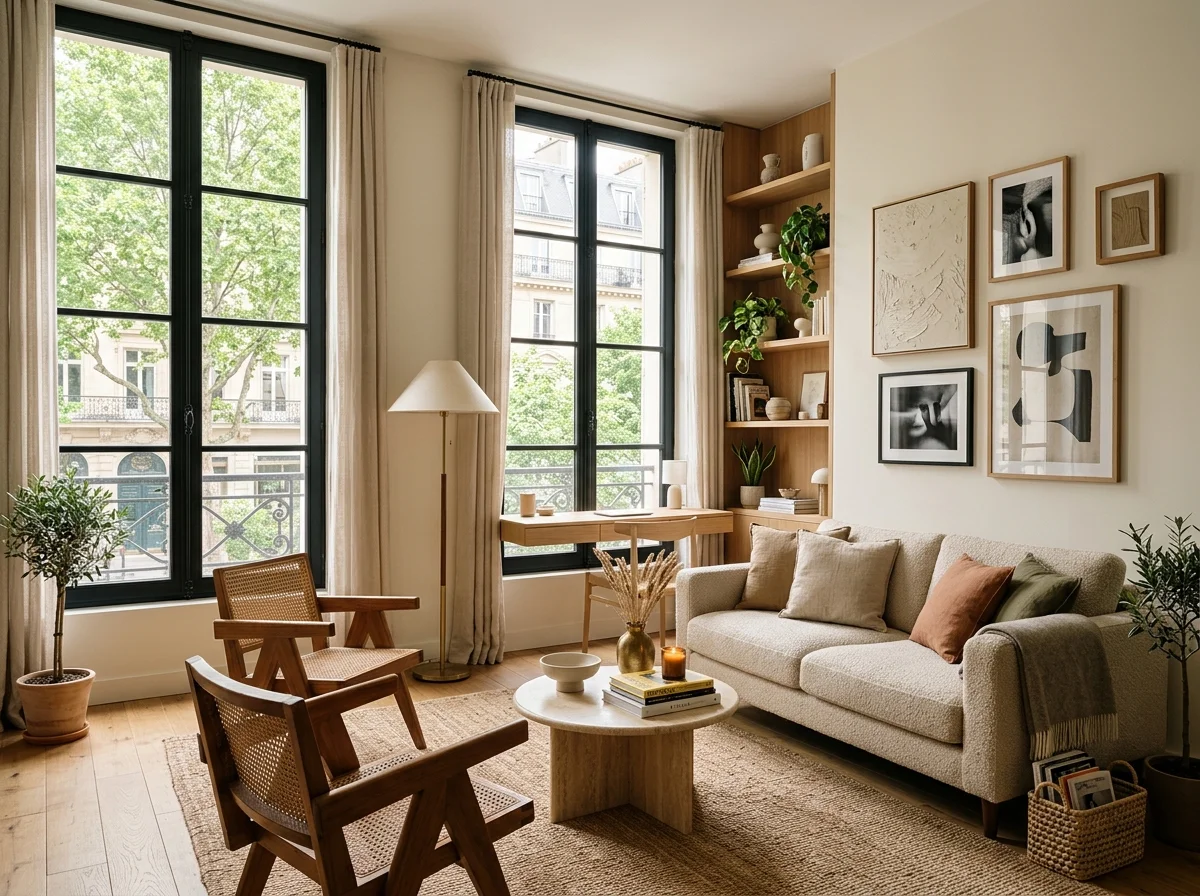
21 Small Space Ideas That Make a Home Feel Bigger
Make a small home feel more spacious and functional with these practical small space ideas for furniture, storage, layout, lighting, and everyday living.